India's Rarest Marten Gets Spotlight After Viral Photo
A wildlife photograph introduced millions to the Nilgiri marten, a chocolate-brown carnivore found only in India's Western Ghats. With fewer than 1,000 left, every sighting of this elusive species helps scientists protect its mountain home.
A single photograph just reminded the world that some of nature's rarest creatures are hiding in plain sight.
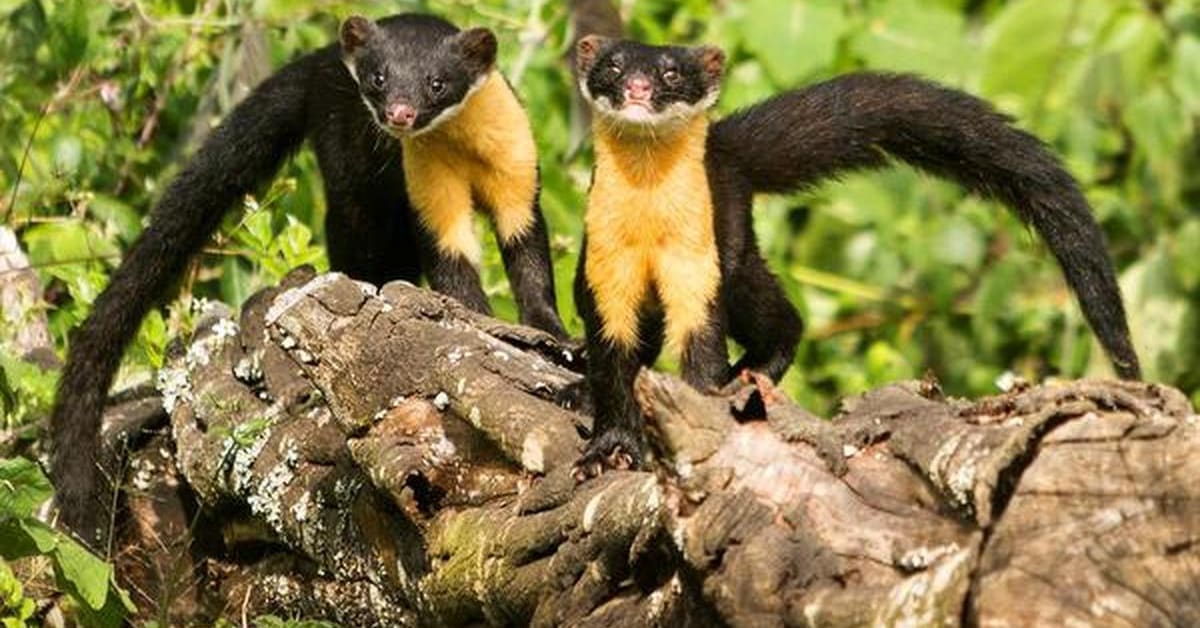
When wildlife photographer R Vidhya Vigashini captured an image of a Nilgiri marten in the Western Ghats, thousands of people admitted they'd never even heard of the animal. The chocolate-brown carnivore with its distinctive orange throat is found nowhere else on Earth, yet it rarely appears in conversations about Indian wildlife.
That's starting to change. After an Indian civil servant shared the photo online around Endangered Species Day, responses poured in from people discovering the species for the first time. Many thanked her for introducing them to what she called "one of nature's happiest little secrets."
The Nilgiri marten lives only in the high-elevation forests of Karnataka, Kerala and Tamil Nadu. Adults weigh about 2 kg and measure roughly 55 to 65 cm from head to body, with another 40 cm of bushy tail trailing behind them.
Unlike most carnivores that hunt at night, these martens are active during the day. They spend much of their time in trees hunting birds and insects, though they also come down to eat fruits and seeds.
Scientists estimate fewer than 1,000 mature individuals remain in the wild. The IUCN lists the species as Vulnerable, and researchers have struggled for years to gather basic information about where they live and what they need.
Between 2013 and 2015, researchers in Pampadum Shola National Park recorded just 42 sightings, many lasting less than a minute. A larger study examining 165 records over 10 years found that 67% of sightings came from shola forests, the unique high-altitude ecosystems that cover parts of the Western Ghats.
Why This Inspires
Every new photograph and sighting adds another puzzle piece to understanding how to protect this rare carnivore. The marten's story is really the story of its landscape: the connected forests, grasslands and mountain ecosystems it calls home.
Researchers discovered that 11% of marten records came from plantations and unprotected forest patches, not just formal wildlife sanctuaries. That means conservation efforts need to extend beyond park boundaries to protect the corridors these animals travel through.
When people see the Nilgiri marten for the first time, they're not just discovering a single species. They're connecting with an entire ecosystem that needs protection, one that shelters countless other creatures living quietly in the mountains.
The marten moves through the forest as both predator and seed disperser, linking different parts of the food web together. Protecting the landscapes it depends on safeguards not just one elusive carnivore, but the whole community of species sharing its home.
One viral photograph proved that awareness is the first step toward action, and sometimes the rarest treasures are simply waiting to be seen.
More Images
%2Fenglish-betterindia%2Fmedia%2Fmedia_files%2F2026%2F08%2F25%2Fmarten-2026-08-25-18-38-00.png)
%2Fenglish-betterindia%2Fmedia%2Fmedia_files%2F2025%2F11%2F20%2Fwild-at-heart-banner-image-microsite-banner-2025-11-20-16-17-04.jpg)
%2Ffilters%3Aformat(webp)%2Fenglish-betterindia%2Fmedia%2Fmedia_files%2F2026%2F08%2F25%2Fmarten-1-2026-08-25-18-39-14.png)
Based on reporting by The Better India
This story was written by BrightWire based on verified news reports.
Spread the positivity!
Share this good news with someone who needs it