India's Silent City Runs on Trust, Not Traffic Lights
In Aizawl, India, drivers wait their turn at unmarked junctions without honking, while shopkeepers in Nagaland leave stores unattended as customers pay on the honor system. Northeast India is proving that civic order can flourish through culture, not enforcement.
What if a city of 400,000 people could run without traffic lights, and roadside shops could operate without anyone watching the cash box?
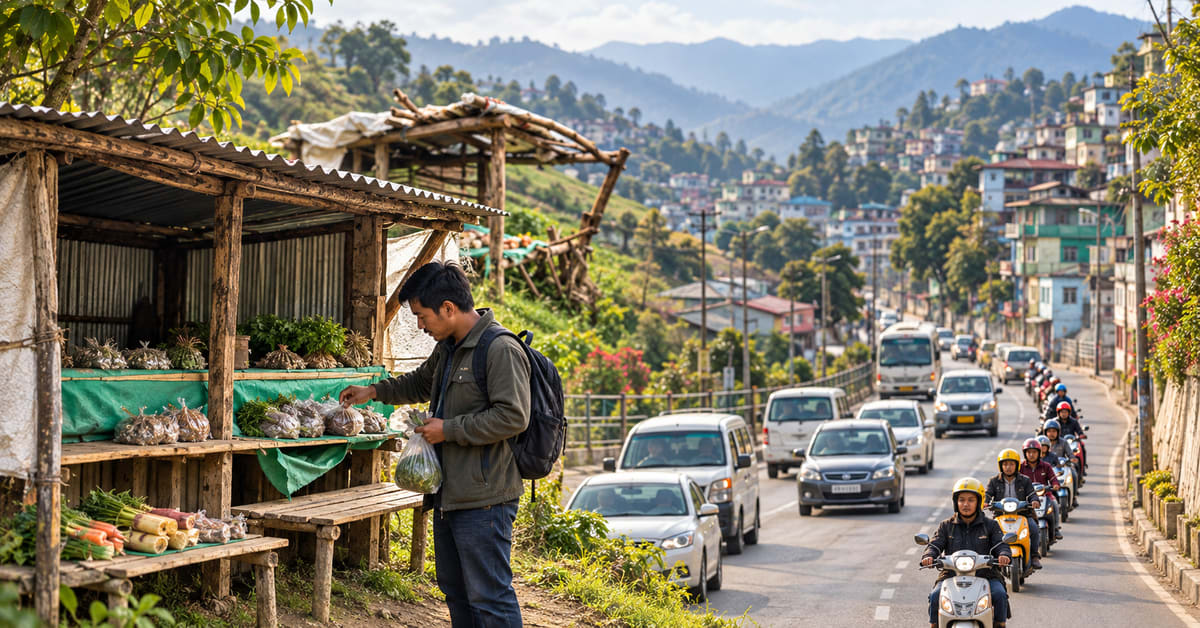
In Aizawl, the capital of Mizoram in northeast India, drivers navigate busy intersections with hand signals and polite thank-you beeps instead of honking and gridlock. The city has earned the nickname "Silent City" because most junctions have no traffic lights at all. Cars stay left, motorcycles keep right, and cutting lanes is considered deeply embarrassing in local culture.
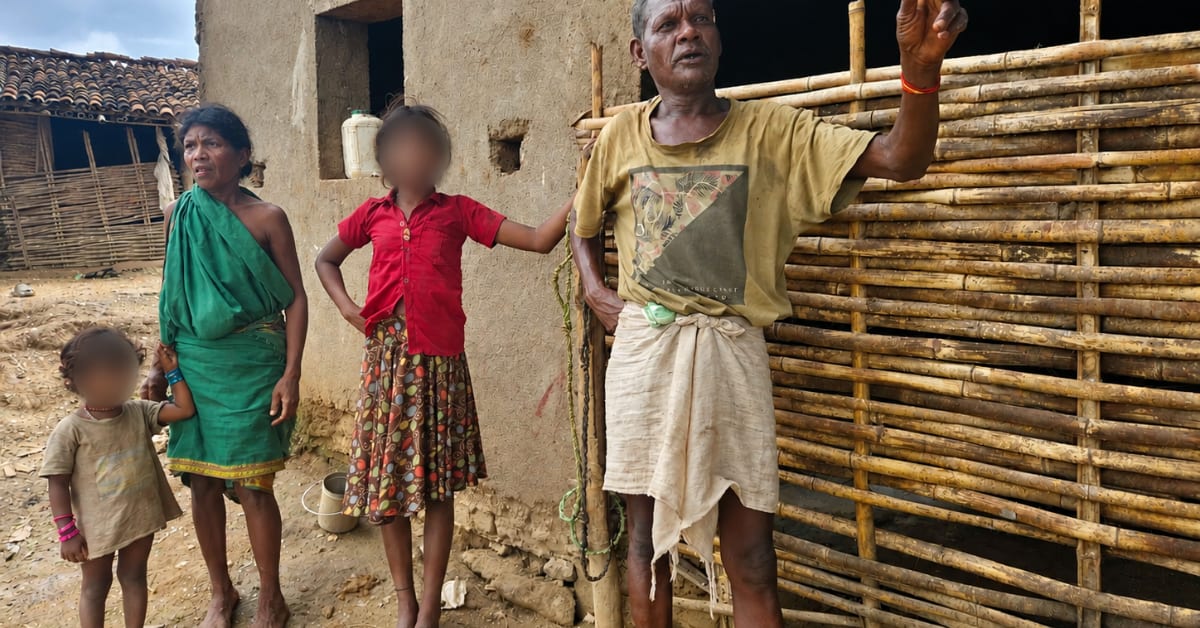
Nine hundred kilometers away in Bade village, Nagaland, 83-year-old Shevotso Keyho hasn't sat behind his shop counter since 2021. Each morning he leaves out organic vegetables, a handwritten price list, and a collection jar. Customers take what they need and drop in the right money, or leave a note promising to pay later when they're short on cash.
This honor system, called "nghah loh dawr" in the local language, has spread across highways throughout Mizoram and Nagaland. Farmers set out fruits, vegetables, and flowers on wooden racks beside the road. Travelers stop, check the prices, and leave payment in a jar with nobody watching.
Fellow shopkeeper Riteu Khamo says her daily earnings swing between 200 and 3,000 rupees depending on the harvest. She reports that customers who can't pay the full amount often return later to settle their debt. The practice has now traveled to Assam's Golaghat district, where tea garden workers adopted the idea after seeing it on social media.
The Ripple Effect
This culture of trust reaches far beyond roads and shops. In Meghalaya, Mawlynnong village keeps itself spotless through a customary council with no municipal staff, a practice dating back to an 1880s cholera outbreak when cleanliness became survival. The village is now recognized as one of Asia's cleanest.
Mizoram became India's first fully literate state in May 2025 after 292 volunteer teachers, many of them students and homemakers, helped 1,692 adults push the literacy rate to 98.2%. In Nagaland's Khonoma, village elders banned hunting and logging across 125 square kilometers in 1998 after recognizing they'd nearly wiped out an endangered bird species. No forest department ordered it; the village council acted entirely on its own.
In Manipur, Imphal's "Ima Keithel" or Mothers' Market has been run entirely by women since the 16th century. Around 5,000 vendors decide who trades, pass down stalls from mother to daughter, and run internal credit unions with no state oversight.
Mizoram Police credits years of school awareness programs for building these habits, but residents say the real force is simpler: mutual respect becomes easier when everyone practices it daily. A driver waits their turn, a farmer trusts a stranger with payment, a village agrees to protect its forest, and suddenly an entire region operates on something stronger than laws or cameras.
The lesson is quiet but powerful: the most durable systems are the ones nobody has to police.
More Images
%2Fenglish-betterindia%2Fmedia%2Fmedia_files%2F2026%2F09%2F18%2F1-2026-09-18-09-05-52.png)
%2Ffilters%3Aformat(webp)%2Fenglish-betterindia%2Fmedia%2Fmedia_files%2F2026%2F09%2F18%2F2-2026-09-18-09-12-16.png)
%2Ffilters%3Aformat(webp)%2Fenglish-betterindia%2Fmedia%2Fmedia_files%2F2026%2F09%2F18%2F3-2026-09-18-09-11-00.jpeg)
Based on reporting by The Better India
This story was written by BrightWire based on verified news reports.
Spread the positivity!
Share this good news with someone who needs it