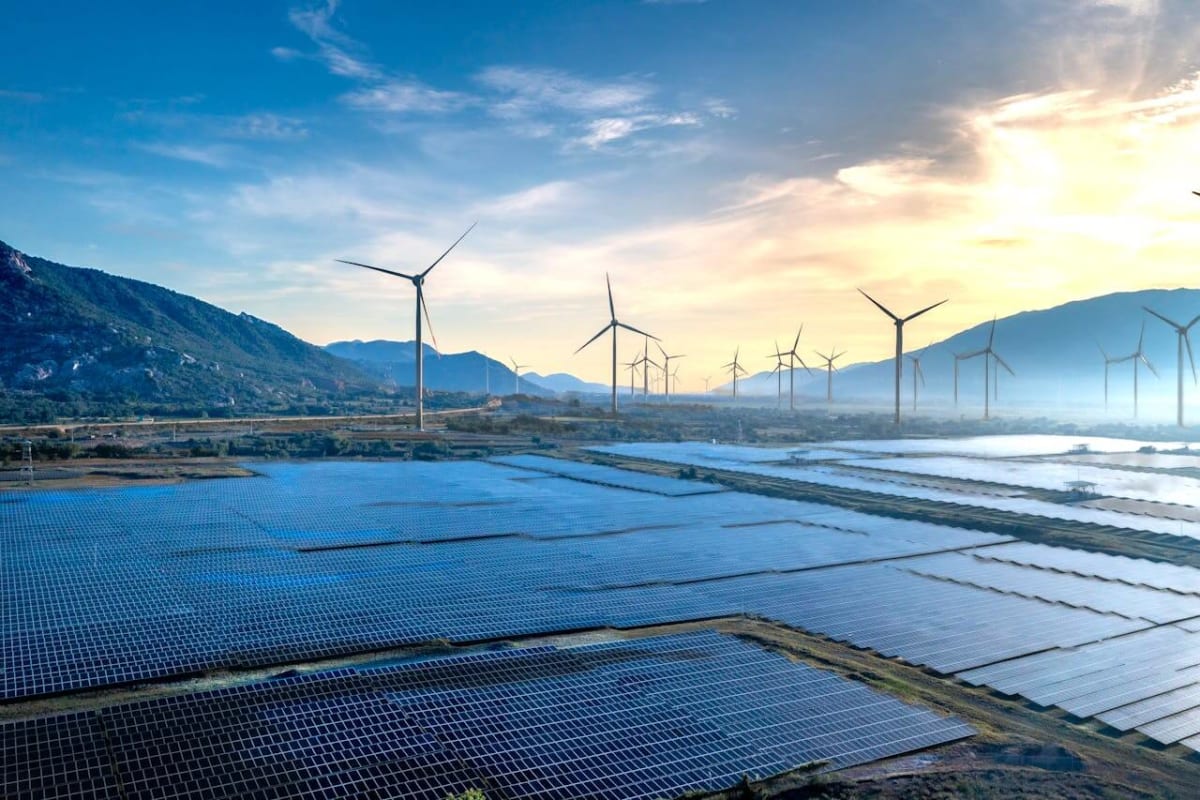
India's Solar Power Costs Now Cheapest in the World
India now produces the world's cheapest solar electricity among major economies while fossil fuel-free power reaches 50% of capacity five years ahead of schedule. The UN climate chief compared India's clean energy journey to cricket legends, celebrating both massive achievements and even bigger potential ahead. ##
India just became the world's most competitive solar market, producing cheaper electricity from sunshine than any other major economy. The milestone comes as the country hits fossil fuel-free power for half its electricity capacity, a target achieved five years early.
UN climate chief Simon Stiell traveled to New Delhi this week to celebrate India's clean energy transformation. He reached for a cricket analogy that would resonate with Indian audiences, comparing the country's progress to both legendary batsman Sachin Tendulkar and teenage sensation Vaibhav Sooryavanshi.
"India's clean energy growth is like these cricketers rolled into one," Stiell explained. "A stellar record with the story just getting started."
The numbers tell a remarkable story of rapid transformation. India's solar capacity has surged more than 50 times since 2014, turning the country into what Stiell calls "a solar superpower." Solar manufacturing capacity has grown 75 times in the same period.
The savings are just as impressive as the growth. India avoided $18 billion in fossil fuel purchases last year alone thanks to renewable energy expansion, according to the International Renewable Energy Agency.
Electric vehicle sales are accelerating across the country, led by domestic manufacturers like Tata Motors, Mahindra-Mahindra, and MG Motors India. The combination of cheaper solar power and growing EV adoption is reducing India's dependence on imported fossil fuels while strengthening energy security.
Lower generation costs mean Indian families and businesses pay less for electricity while the country reduces carbon emissions. The renewable energy boom has created jobs across manufacturing, installation, and maintenance sectors.
The Ripple Effect
India's success is creating a roadmap for other developing nations seeking rapid clean energy transitions. Stiell emphasized that if India continues investing heavily in renewables and clean technology, "the next chapters promise to be truly extraordinary."
The progress demonstrates that economic growth and climate action can advance together. India has turbocharged its economy, raised living standards, and positioned itself as a global leader in affordable clean energy at the same time.
At the recent COP30 climate conference, every nation unanimously declared the global energy transition irreversible. Last year saw over $2 trillion invested in clean energy worldwide, with India claiming a growing share of that investment.
Stiell credited the Modi government for working effectively with Indian people and businesses to accelerate the transition. The combination of supportive policies, growing domestic manufacturing, and falling technology costs has created powerful momentum.
The cricket analogy captures something important: India has already scored impressive runs in the clean energy game, but plenty of innings remain to be played.
##
Based on reporting by Google: clean energy investment
This story was written by BrightWire based on verified news reports.
Spread the positivity!
Share this good news with someone who needs it