India's Tribal Leaf Plates Replace Plastic Across Europe
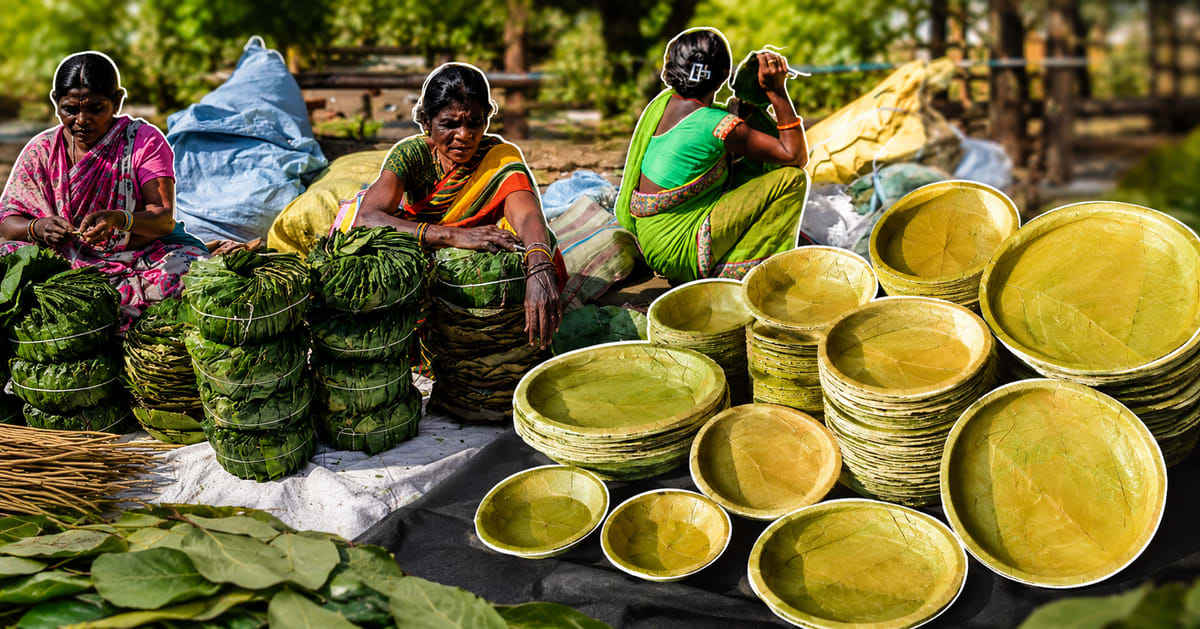
Handcrafted plates made from fallen sal leaves by tribal communities in India are now being sold across Europe as a sustainable alternative to single-use plastic. The ancient tradition is creating new income opportunities for forest communities while helping solve Europe's plastic problem.
While leaf plates quietly disappeared from Indian streets, they're now showing up on dining tables across Europe as the solution to plastic waste.
For generations, tribal communities in Jharkhand and Odisha have handstitched plates and bowls from fallen sal leaves. The practice is so old it appears in ancient Ayurvedic texts. Today, these same plates are selling on European marketplaces for about €32 (roughly Rs 3,500) per pack, marketed as innovative eco-friendly tableware.
The irony runs deep. When German startup Leaf Republic launched similar leaf plates in 2016, the world celebrated it as groundbreaking innovation. For Indian forest communities, it was simply Tuesday.
The plates solve problems Europe is desperate to fix. They're completely biodegradable, decomposing in about 28 days. They contain no plastic, glue, or chemicals. They meet European food safety standards. After use, they can even be fed to cattle.
Every plate is handstitched using thin bamboo splints to hold the leaves together. No two look alike because each leaf is unique. The leaves are harvested without damaging the trees, making the entire process sustainable from forest to table.
India generates about 26,000 tonnes of plastic waste daily, and over 43% comes from single-use products. Yet the solution has been hiding in plain sight in forest villages for centuries.
The craftsmanship has always belonged to India's Adivasi families. For them, these leaves represent far more than forest produce. They're income, tradition, and identity passed down through generations.
European restaurants and eco-conscious businesses continue stocking these plates even after Leaf Republic shut down due to supply chain issues. Online marketplaces like Etsy and Tapari feature them prominently. The demand never disappeared because the need is real.
The Ripple Effect
This story captures something remarkable happening at the intersection of tradition and modern sustainability. Ancient wisdom that Indian communities perfected over centuries is now helping solve one of Europe's most pressing environmental challenges.
The growing demand is creating new livelihoods for tribal families who know exactly which leaves to harvest and when. Rural incomes are rising as global markets discover what local communities always knew: nature already designed the perfect disposable plate.
The tradition even enhances the dining experience, according to the Charaka Samhita, one of India's oldest medical texts. Eating with your hands from a leaf plate creates a richer sensory connection to food through touch.
What makes this transformation inspiring isn't just the environmental win. It's watching marginalized forest communities gain recognition and income for knowledge systems the modern world dismissed as primitive, only to realize they were sophisticated solutions all along.
The path forward seems clear: India could lead a global shift away from plastic by scaling up what its tribal communities have been doing sustainably for centuries.
More Images
%2Fenglish-betterindia%2Fmedia%2Fmedia_files%2F2026%2F07%2F27%2Fchatgpt-image-2026-07-27-13-55-19.png)

%2Ffilters%3Aformat(webp)%2Fenglish-betterindia%2Fmedia%2Fmedia_files%2F2026%2F07%2F27%2Fsal-leaf-1-2026-07-27-14-14-10.png)
%2Ffilters%3Aformat(webp)%2Fenglish-betterindia%2Fmedia%2Fmedia_files%2F2026%2F07%2F27%2Fsal-leaf-2-2026-07-27-14-16-45.png)
Based on reporting by The Better India
This story was written by BrightWire based on verified news reports.
Spread the positivity!
Share this good news with someone who needs it