Indonesia Saves Rare Cockatoo by Updating Sacred Ritual
A community on Seram Island changed their coming-of-age ceremony to use naturally shed feathers instead of hunting endangered cockatoos. The solution protects both a vanishing species and a tradition that defines Huaulu identity.
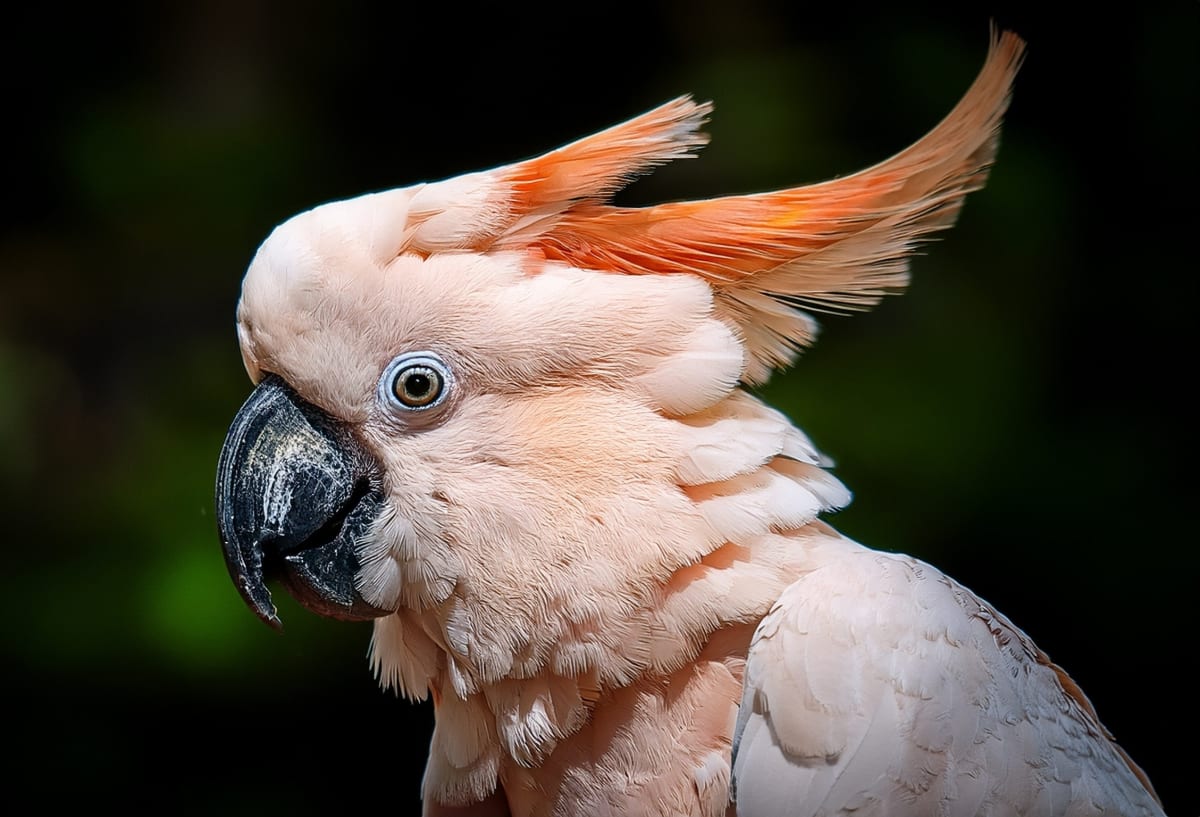
For generations, becoming a man in the Huaulu community meant hunting one of the world's rarest birds. Today, boys still wear the sacred pink crest feathers of the salmon-crested cockatoo during their Cidaku ceremony, but no bird has to die for it.
The Huaulu people of Seram Island in eastern Indonesia have celebrated this coming-of-age ritual for centuries. The cockatoo's pink crest symbolizes strength, while its white plumage represents peaceful living, making the feather essential to proving a boy's readiness for manhood.
But the salmon-crested cockatoo population crashed by up to 40 percent through the 1990s. The bird vanished completely from three nearby islands and now lives nowhere else on Earth.
Here's what made the problem urgent: Indonesian law banned all hunting of the bird to stop illegal pet traders, who were driving the real collapse. The Huaulu felt blamed for a crisis they didn't cause, while their young men couldn't complete the ceremony that made them adults.
Researchers from Australian National University worked with the community for years to find an answer. The elders offered a surprisingly simple solution: as long as the feathers were real, the spiritual meaning stayed intact.
In 2019, the community signed a formal agreement to create a "feather bank" of naturally molted plumage. Rescue centers and zoos now donate hundreds of shed feathers each year, with 400 arriving in early 2026 alone.
Some older community members initially worried that skipping the hunt would drain the courage the ritual was meant to prove. The elders responded with their own wisdom: becoming an honest adult who rejects falsehood mattered more than the violence of the hunt, and real feathers honored that truth better than fake ones.
Younger men welcomed the change immediately. Wild cockatoos had become so scarce that initiations were being delayed indefinitely for lack of birds.
The Ripple Effect
The agreement does something bigger than saving a species. It proves that Indigenous communities can evolve their practices without losing their identity, achieving what researchers call "outcomes that benefit both biodiversity and cultural continuity."
The approach is already inspiring similar solutions worldwide, from artificial feathers for Bolivian macaw ceremonies to longer-lasting headdresses in Papua New Guinea. Co-researcher Dwi Agustina points out the core lesson: "You don't have to choose between cultural continuity and ecological survival."
The plan includes one crucial safeguard. Publicizing how prized these feathers are could attract outside poachers, so the community revived local taboos against any commercial trade.
The salmon-crested cockatoo population is stabilizing, young Huaulu men are completing their sacred ceremonies again, and a culture that reveres the bird is helping ensure both survive together.
Based on reporting by Google: species saved endangered
This story was written by BrightWire based on verified news reports.
Spread the positivity!
Share this good news with someone who needs it