Intel's Ultra-Thin Chip Solves AI Power Crisis
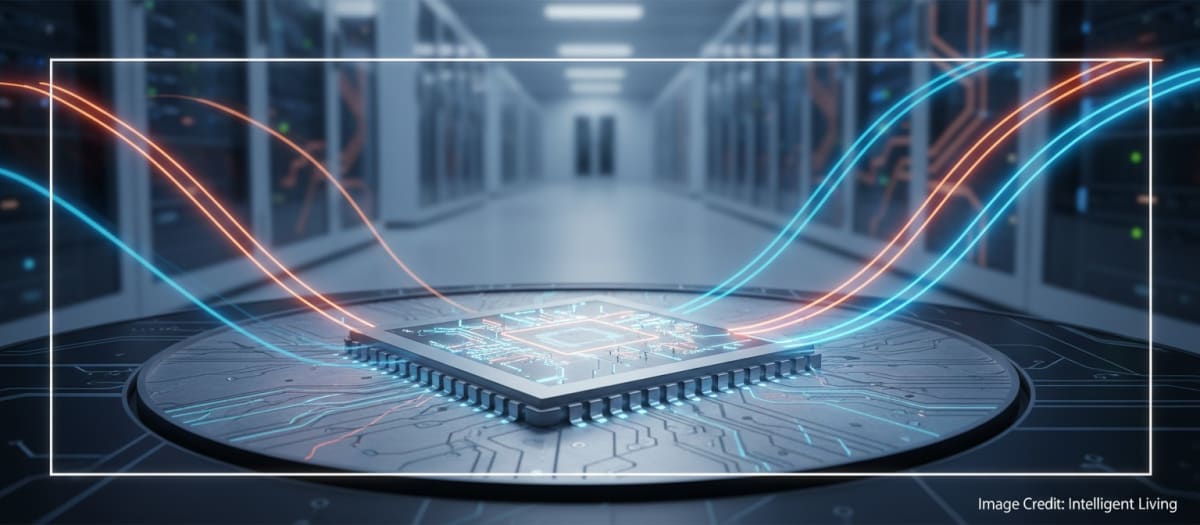
Intel just created a breakthrough chip thinner than a human hair that could slash the massive power bills drowning AI data centers. The 19-micrometer chiplet brings power conversion right next to processors, cutting energy waste and heat.
AI data centers are drowning in their own power demands, but Intel Foundry just thinned a chip down to 19 micrometers and solved a problem that's been choking the industry.
The new gallium nitride chiplet is roughly as thick as several stacked blood cells. That extreme thinness isn't just impressive engineering—it's the key to fixing how AI servers waste enormous amounts of electricity.
Modern AI hardware racks consume megawatts of power, and much of that energy vanishes as heat before it ever reaches the processors doing actual work. Moving power converters closer to the chips reduces those losses dramatically, but conventional silicon can't handle the heat and voltage demands when packed that tight.
Intel's team built the chiplet from a full 300-millimeter wafer using gallium nitride on silicon. The material's physics allow it to switch faster and handle higher voltages with far less energy loss than traditional silicon can manage.
The breakthrough includes digital control circuits built right into the same chip. That integration means the power converter can respond instantly to the violent load swings that happen when thousands of AI processors ramp up and down simultaneously.
Why This Inspires
Data centers currently account for a growing share of global electricity consumption, with AI training pushing some facilities past their grid capacity limits. This technology directly addresses that sustainability challenge without asking companies to slow their AI ambitions.
The chiplet approach also opens doors for smaller organizations to build efficient AI infrastructure. When power conversion becomes compact and integrated, the entire cooling and electrical architecture simplifies, reducing both construction costs and ongoing operating expenses.
Intel reported successful reliability testing alongside the core performance metrics. The chip maintains high-voltage blocking and peak switching speeds while occupying a fraction of the space conventional power components require.
Handling dies this thin presents serious yield challenges—they're fragile enough that Intel uses specialized cutting methods called stealth dicing just to separate individual chips without destroying them. But solving those manufacturing hurdles means the technology can scale across Intel's foundry production.
The timing matters because industry roadmaps are converging on 800-volt power distribution standards for next-generation GPU clusters. Intel's chiplet arrives ready to work with that architecture, positioning it as infrastructure rather than experimental tech.
This single component won't eliminate data center power concerns overnight, but it represents the kind of fundamental packaging shift that makes the next decade of AI growth physically possible.
Based on reporting by Google News - AI Breakthrough
This story was written by BrightWire based on verified news reports.
Spread the positivity!
Share this good news with someone who needs it