Israel's Grid-Fixing Drones Replace Helicopters
Power line workers in Israel no longer need to risk their lives dangling from helicopters 200 feet in the air. A new drone system does the dangerous job for them, and it's working beautifully.
Power line workers in Israel no longer need to risk their lives dangling from helicopters 200 feet in the air. A new drone system does the dangerous job for them, and it's working beautifully.
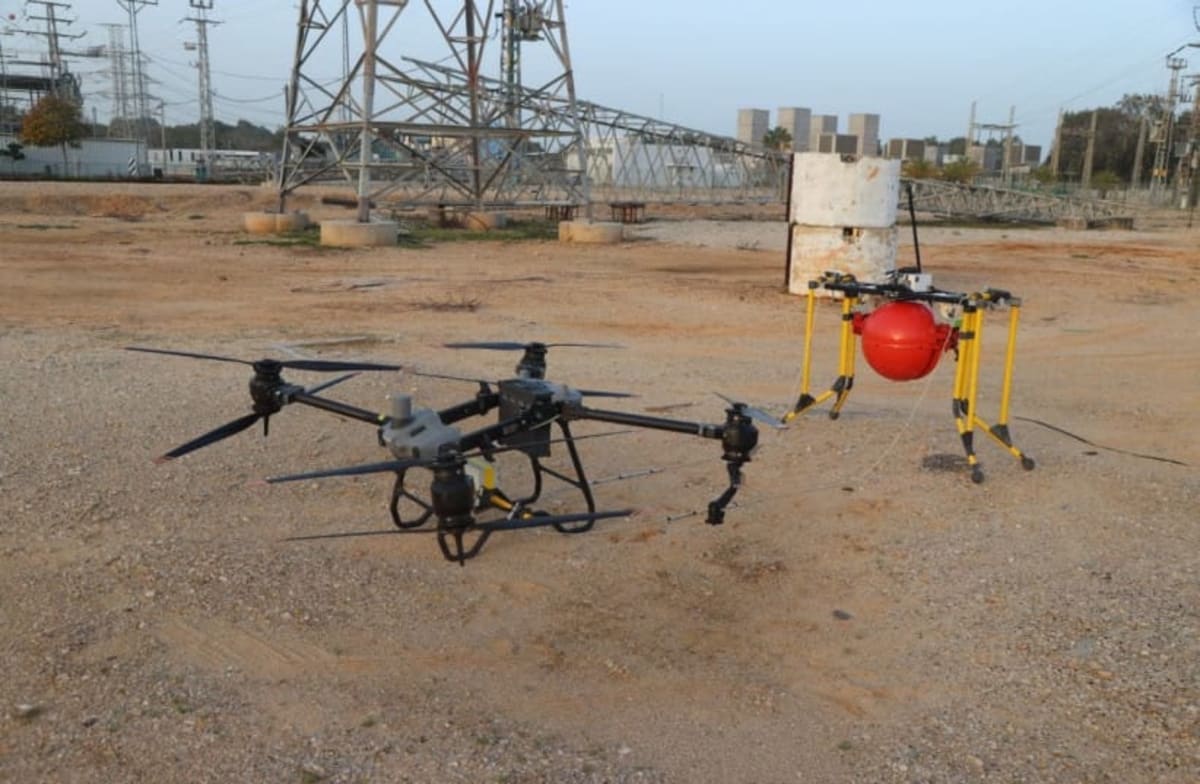
The Israel Electric Corporation just unveiled the world's first robotic drone that installs and removes those bright orange warning balls on high-voltage power lines. These markers alert low-flying aircraft to transmission lines, especially over flat farmland where wires are hard to spot.
The company installs thousands of these markers every year as the grid expands and weather damages existing ones. Until now, workers did this using helicopters or sky-high platforms, both expensive and nerve-wracking for crews working near live electrical lines that could kill instantly.
The new system, developed with Israeli robotics company Kronos, uses a specially designed drone carrying robotic arms. It operates at heights between 65 and 230 feet, attaching and removing warning balls with an automatic click-and-clamp mechanism that never requires human hands to touch the wires.
Ground operators control everything remotely. The precision is remarkable, the risk to human life is gone, and the cost savings are substantial compared to deploying helicopters and specialized crews.
Herzl Friedman, the company's vice president of engineering and strategy, emphasized what drove the innovation. "Technological innovation must first and foremost serve the safety of our employees, as well as the continuity and reliability of the power grid," he said.
The Ripple Effect
This isn't just about Israel's power grid. The technology has serious export potential, positioning the country as a pioneer in automated grid maintenance that other nations desperately need.
As populations grow and electrical grids expand worldwide, every country faces the same challenge of maintaining increasingly complex infrastructure safely. This solution offers a blueprint that protects workers while cutting costs, a combination that makes adoption almost inevitable.
The IEC is already pushing forward with robotics integration. Last month, they unveiled another maintenance robot designed for high-voltage environments, developed with Israeli company Axioma Robotics.
Workers get to go home safe, power stays reliable, and innovation creates new economic opportunities.
More Images

Based on reporting by Google: robotics innovation
This story was written by BrightWire based on verified news reports.
Spread the positivity!
Share this good news with someone who needs it