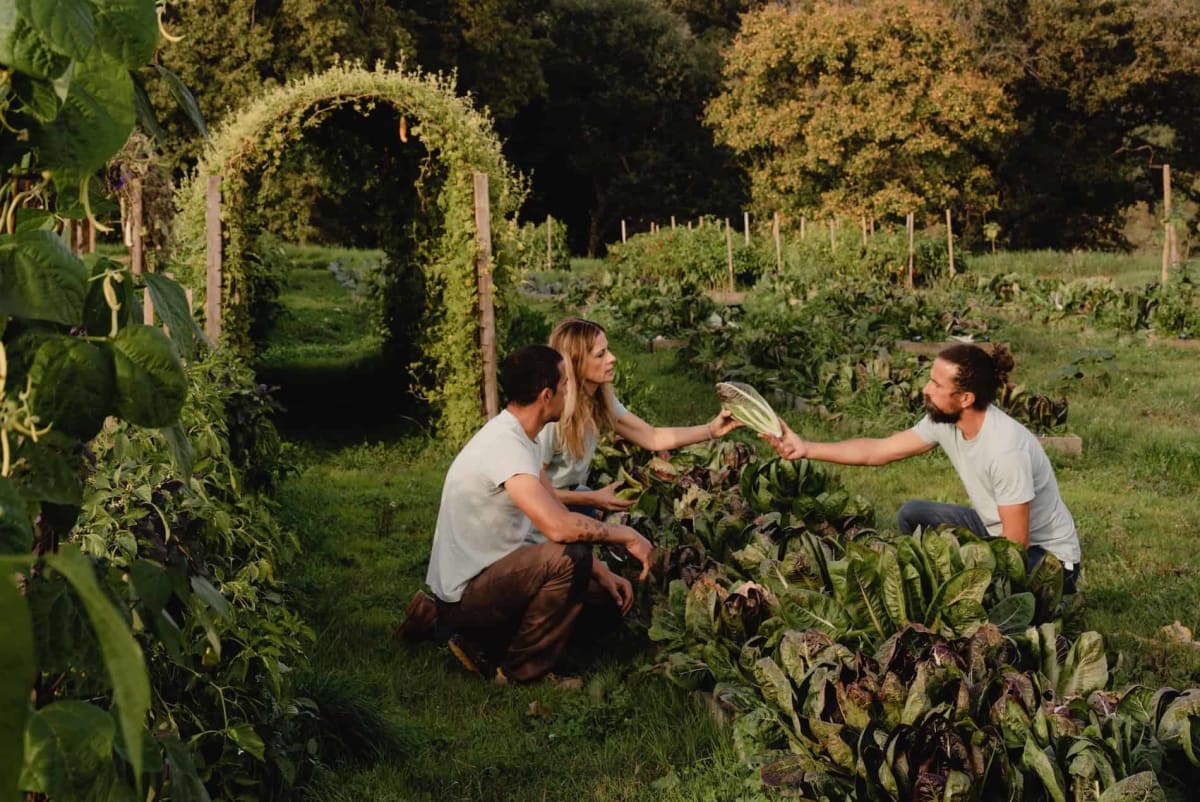
Italian Farm Grows 1,500 Crops Without Chemicals or Tilling
Twin brothers in Italy transformed depleted farmland into a thriving 62-acre laboratory growing 1,500 varieties of fruits and vegetables using nature's intelligence instead of synthetic chemicals. Their radical approach cuts costs by 30% while doubling revenue each year.
When drought scorched Umbria in 2022 and temperatures hit 45°C, twin brothers Alessandro and Nicola Giuggioli noticed something remarkable. While neighboring crops withered, 30% of their plants thrived in the brutal heat.
The brothers, an ex-actor and former CEO turned farmers, decided to save seeds from those survivors. What started as a pandemic pivot has grown into a living laboratory that challenges everything we think we know about modern agriculture.
Their family farm, Quintosapore, now grows 1,500 varieties of fruits and vegetables across 62 acres of Umbrian hillside. The estate includes 140 types of chili peppers, 15 kinds of heirloom strawberries, and rare treasures like black tomatoes and white aubergines that have virtually disappeared from European supermarkets.
The secret? They broke the rules. No pesticides, no tilling, and zero synthetic fertilizers.
Instead, the twins use natural microorganisms developed in Japan that act like probiotics for the earth. These biological helpers cost 30% less than synthetic fertilizers while building long-term soil health instead of depleting it.
"Synthetic fertilizers are like protein shakes," Alessandro explains. "They give a direct hit but do nothing for the long-term health of the ground."
The farm plants fast-growing paulownia trees alongside crops and uses recycled paper mulch instead of plastic sheets to suppress weeds. At 50% cheaper than plastic and fully biodegradable, these switches actually improve their bottom line.
Perhaps most surprising is their quantum approach. The brothers treat irrigation water with electromagnetic frequencies of essential minerals like calcium, teaching the plants what they need without dumping chemicals into soil. Solar-powered speakers broadcast specific frequencies that naturally deter pests.
The Ripple Effect
The timing couldn't be more critical. As Europe's industrial agriculture model shows cracks and global supply chains remain fragile, Quintosapore offers a blueprint for food independence.
"We are not affected by the Strait of Hormuz closing," Alessandro says, referring to recent tensions threatening oil and fertilizer flows. "We are self-sufficient."
The farm is doubling revenue every year. This year they've already hit their December sales target for preserved goods, proving that sustainable farming doesn't mean sacrificing profits.
Their crops carry biological memory, adapting to climate challenges through natural selection rather than genetic modification in labs. It's nature's efficiency working with human creativity instead of against it.
The brothers are now teaching their staff quantum physics and sharing their methods with other farmers breaking free from the industrial agriculture death spiral that has controlled 95% of the seed and fertilizer industry for a century.
Based on reporting by Positive News
This story was written by BrightWire based on verified news reports.
Spread the positivity!
Share this good news with someone who needs it