
Italy's 6-Seat Theater Turns Abandoned Newsstand Into Art
A rusted newsstand in southern Italy reopened as the world's smallest theater, bringing live performances to six people at a time. The $3,000 project sold out instantly and sparked a new way to revive forgotten public spaces.
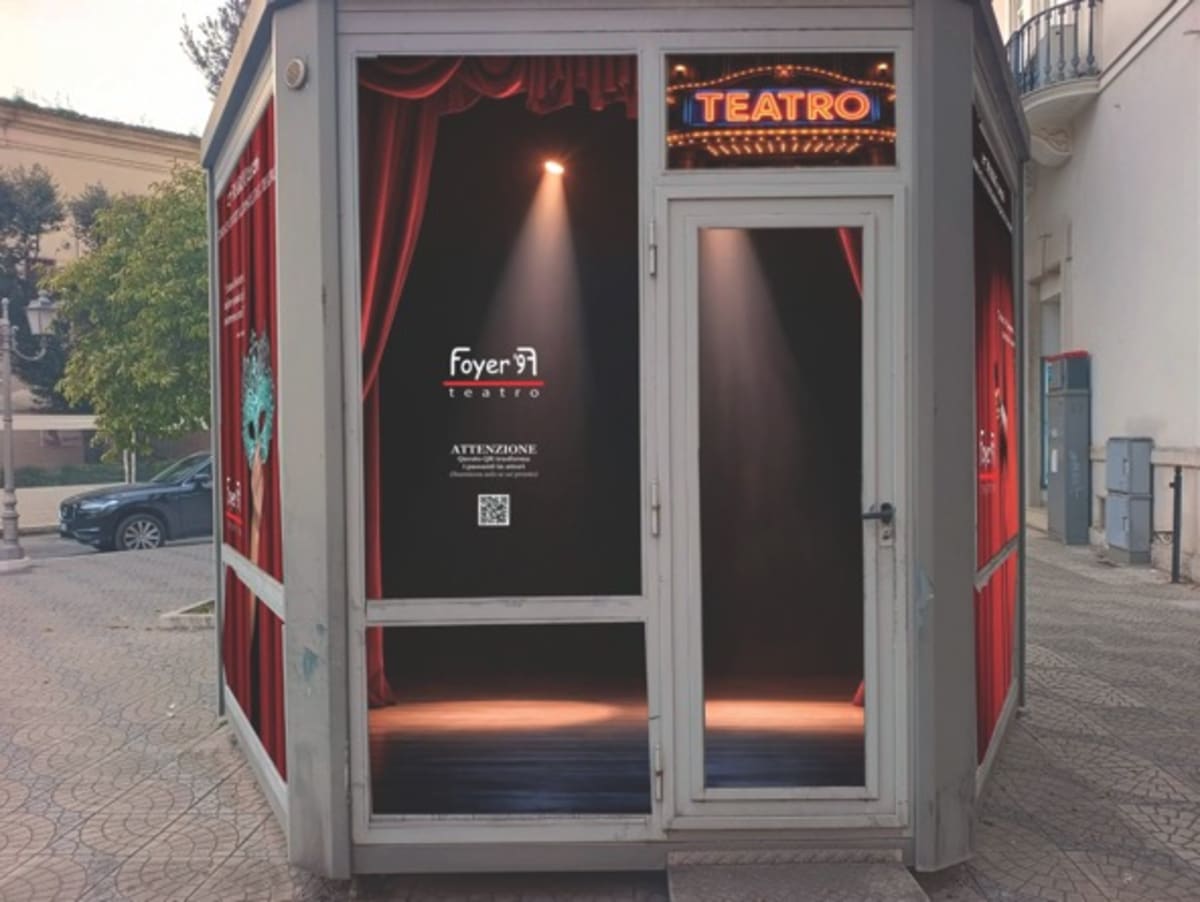
On World Theatre Day in March 2026, residents of San Severo, Italy walked past a newsstand that had been abandoned for years and discovered something magical. Inside the tiny kiosk, an actor was performing for just six people squeezed onto chairs.
Francesco Gravino, who has run the nonprofit Foyer '97 Teatro for nearly 30 years, looked at that forgotten newsstand and saw an opportunity. Newsstands used to be where people stopped every morning to connect with the world, a physical social hub before smartphones existed.
He asked a simple question: What if the next thing you find there is a story, told live, just for you?
After months of negotiations with the town and careful structural modifications, Teatro Edicola opened as the world's smallest theater. The entire structure measures just 43 square feet, with less than 22 square feet for performing.
Every 15 minutes, six new audience members entered for performances lasting five to 12 minutes. In a single afternoon, more than 60 people experienced live theater. The inaugural three-day season sold out completely.
The intimacy changes everything about the theatrical experience. Actor and audience share the same air, eye contact is unavoidable, and nobody can hide in the anonymity of a darkened hall.
For people in small towns, Gravino explains, real theater often feels like something that happens somewhere else, in Rome or big venues for educated people. Teatro Edicola flips that logic by bringing art directly to streets people walk every day.
The Ripple Effect
The project cost less than $3,000 but reached hundreds of people and generated national media coverage. Thousands of abandoned newsstands, tobacco shops, and phone booths sit empty across Italian and European cities, casualties of digital life.
Most municipalities try to fill them with artisanal shops or civic services. Teatro Edicola proves that performing arts can breathe new life into these forgotten spaces with minimal investment and maximum community impact.
Southern Italy faces the same challenges as performing arts everywhere: declining attendance, aging audiences, shrinking public funding, and growing distance between institutions and communities. Small towns feel especially left behind, their rich theatrical traditions undervalued.
This four-square-meter theater offers a replicable answer. When the barrier to experiencing culture is a 15-minute stop at a familiar street corner rather than an intimidating venue across town, participation transforms from transactional to relational.
The project proves that the minimum spatial requirement for genuine theatrical experience is less than most people think. Art doesn't need grand buildings or expensive infrastructure to matter. Sometimes it just needs six chairs and someone willing to reimagine what's possible in the space everyone walks past but nobody sees anymore.
More Images


Based on reporting by Stanford Social Innovation
This story was written by BrightWire based on verified news reports.
Spread the positivity!
Share this good news with someone who needs it