James Webb Spots Mysterious Changes in Distant Object's Rings
A small body orbiting between Saturn and Uranus has rings that appear to be changing dramatically, and scientists are excited to understand why. The James Webb Space Telescope captured stunning new details that could rewrite what we know about distant solar system objects.
Scientists just discovered something remarkable happening at the edge of our solar system, and it's changing what we thought we knew about distant objects in space.
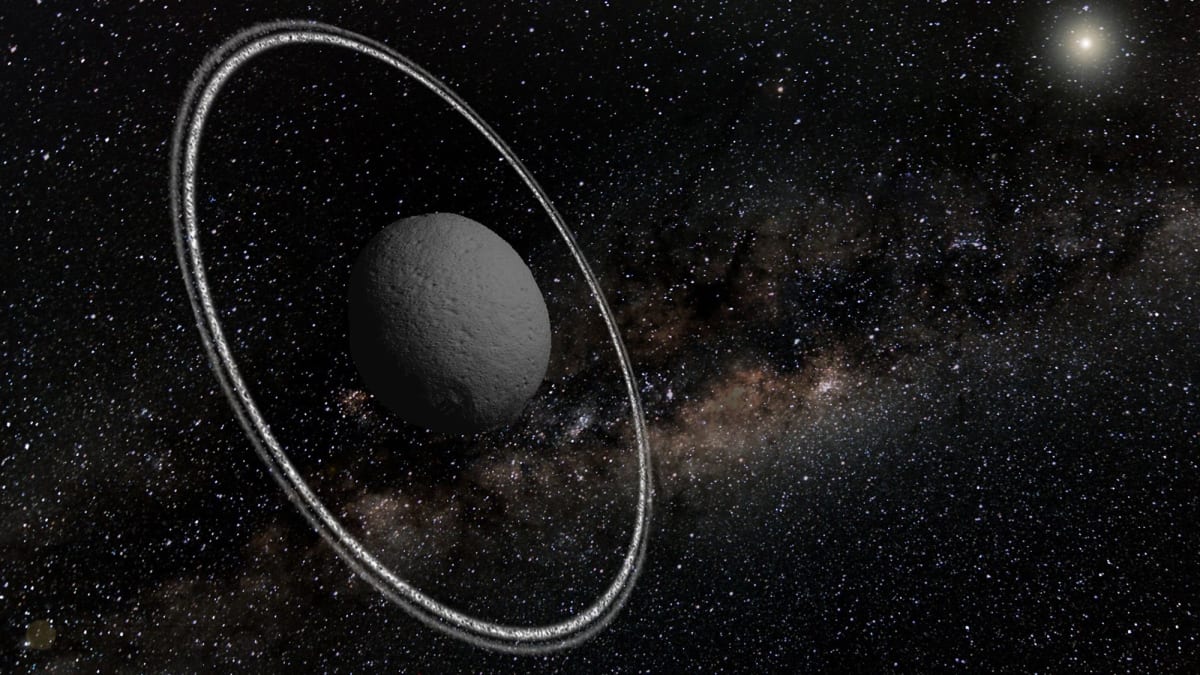
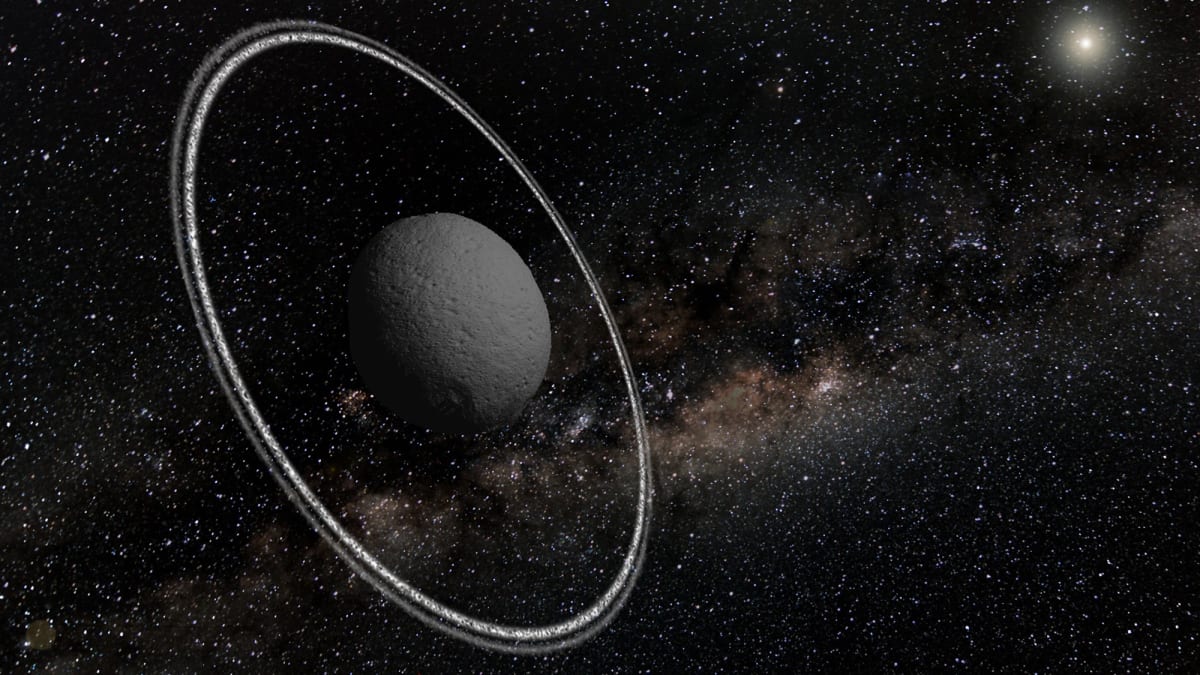
Chariklo, a small asteroid-like body only 250 miles across, sports two mysterious rings that circle around it. When the James Webb Space Telescope looked at it in 2022, the rings looked completely different from observations made just a decade earlier.
The inner ring had become significantly brighter and denser, while the outer ring had faded. For researchers, this was a stunning surprise.
"By comparing JWST observations with those obtained over the last decade, we discovered opposite changes in the two rings," said Pablo Santos-Sanz from the Institute of Astrophysics of Andalusia. Scientists had no idea these tiny, distant ring systems could change so dramatically.
Chariklo belongs to a group called centaurs, objects that share characteristics of both asteroids and comets. It made history in 2013 when astronomers discovered it was the first small solar system body ever found to have rings, a feature usually reserved for giant planets like Saturn.
Observing Chariklo required incredible precision and teamwork. The telescope had to capture the exact moment Chariklo passed in front of a distant star, measuring tiny dips in light as the rings blocked the starlight. Scientists used data from over 2 billion star positions to time the observation perfectly.
Why This Inspires
This discovery shows us that even in the distant reaches of space, change and evolution are constant. Small bodies far from planets might have much more dynamic ring systems than anyone imagined.
The findings open exciting new questions about how these rings form, what keeps them stable, and why they change. Each answer brings us closer to understanding the incredible variety of objects that call our solar system home.
Santos-Sanz noted that the results "force us to rethink how they form, how they evolve, and what mechanisms maintain their stability." Future observations when Chariklo passes in front of another star will help confirm these remarkable changes.
The mission also marked a milestone: the first time scientists planned a James Webb viewing specifically around a stellar occultation. The same technique used to study alien planet atmospheres now reveals secrets about mysterious objects in our own cosmic neighborhood.
Our solar system keeps finding new ways to surprise us, reminding us that discovery never stops.
More Images

Based on reporting by Google News - Science
This story was written by BrightWire based on verified news reports.
Spread the positivity!
Share this good news with someone who needs it