James Webb Telescope Confirms Asteroid Will Miss Moon in 2032
The most dangerous asteroid ever discovered won't hit Earth or the moon after all, thanks to NASA's powerful James Webb Space Telescope tracking it 280 million miles away. Scientists now have proof that asteroid 2024 YR4 will safely pass by both worlds in December 2032.
The most menacing space rock ever spotted is officially harmless, and humanity can breathe easy knowing both Earth and its moon are safe from a 2032 collision.
Asteroid 2024 YR4 made headlines when astronomers discovered it just after Christmas 2024 and calculated a scary 3.1 percent chance it would slam into Earth on December 22, 2032. The 200-foot-wide rock carried enough punch to flatten an entire city with the force of several atomic bombs.
Scientists ruled out an Earth impact by February 2025, but then came an unexpected twist. The same asteroid had a 4.3 percent chance of crashing into the moon instead, potentially creating problems for future lunar astronauts and damaging satellites with flying debris.
Enter the James Webb Space Telescope, a $10 billion observatory never designed for asteroid defense. The telescope used its incredibly sensitive infrared vision to track the faint asteroid when it was 280 million miles from Earth in February, something no other telescope could accomplish.
"We think this is certainly the faintest solar system object that has ever been observed," says Andy Rivkin, an astronomer at Johns Hopkins Applied Physics Laboratory who led the tracking effort. The telescope spotted an object four billion times fainter than what human eyes can see.
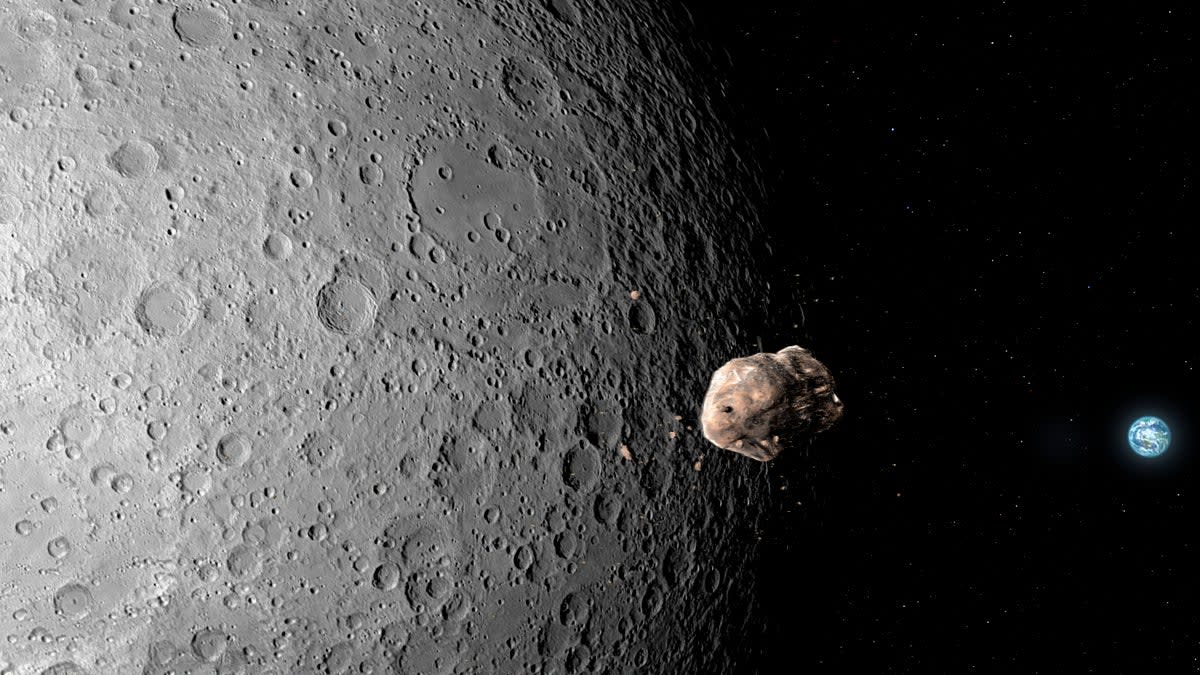
The observations revealed good news: asteroid 2024 YR4 will miss the moon by a comfortable 13,000 miles. Scientists also confirmed the asteroid measures exactly 200 feet across, giving them precise data about its size and path.
The Bright Side
This close call proved that Earth's planetary defense system works exactly as designed. Multiple telescopes worldwide quickly spotted the threat, shared data across international borders, and mobilized the most advanced space observatory ever built to solve the problem.
The timing couldn't have been better. If scientists hadn't tracked the asteroid until 2028 as originally planned, they would have had only four years to prepare a deflection mission. Eight years was already considered dangerously short to organize a spacecraft that could nudge the asteroid off course.
Scientists had sketched out backup plans if the lunar impact remained likely: ram it with a spacecraft to shatter it, vaporize it with a nuclear device, or let it hit and accept the consequences. Now those emergency measures can stay on the shelf.
Kathryn Kumamoto, head of planetary defense at Lawrence Livermore National Laboratory, summed up the relief perfectly: "It's really good that we're not being forced to mitigate this asteroid on that timescale."
The asteroid will continue its journey through space, and when 2032 arrives, both worlds will be exactly where they should be: safe, sound, and collision-free.
More Images


Based on reporting by Scientific American
This story was written by BrightWire based on verified news reports.
Spread the positivity!
Share this good news with someone who needs it