Help NASA Find Star Nurseries From Your Phone
NASA needs volunteers to train AI that will unlock mysteries about "clumpy galaxies" where stars explode into life. All you need is a smartphone and a few minutes.
You can help solve one of astronomy's biggest mysteries right from your couch.
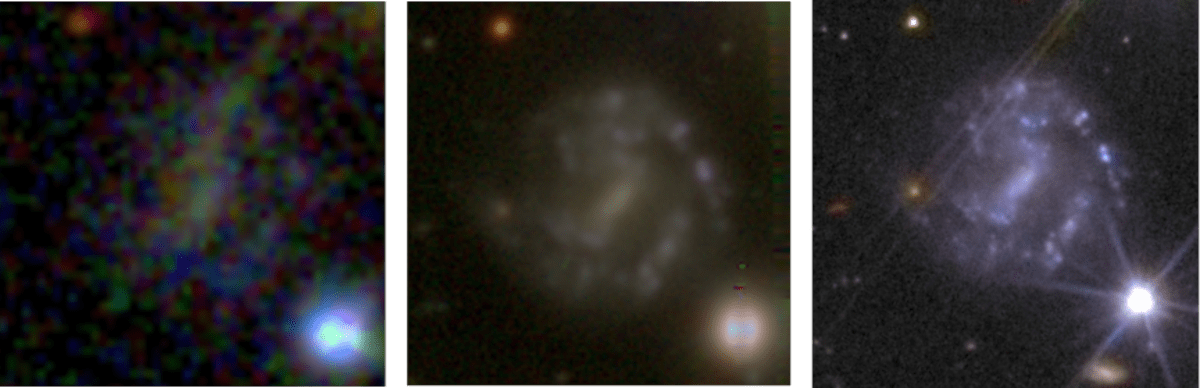
NASA and the European Space Agency need citizen scientists to help their computers learn how to spot massive star nurseries in distant galaxies. These bright blobs, found in what astronomers call "clumpy galaxies," were once common throughout the early universe but mysteriously vanished over time.
The new Euclid space telescope is capturing millions of high-definition images of these galaxies. That's far too many for professional astronomers to analyze alone, so they're recruiting volunteers for Galaxy Zoo: Clump Scout II.
Your job is surprisingly simple. You'll look at galaxy images where a machine learning algorithm has already tried to identify star-forming clumps by marking them with squares. Sometimes the AI gets confused by distant stars or camera glitches, so you'll move the squares, delete false alarms, or add ones the computer missed.
Every correction you make teaches the algorithm to get better. Think of it as gently training a very smart puppy that's learning to recognize patterns across millions of galaxies.
The project builds on an earlier volunteer effort that gave scientists their first round of training data. Now they need more human eyes to help the AI reach the accuracy needed for serious scientific discovery.
Why This Inspires
This project perfectly captures how modern science works best when everyone can participate. Professional astronomers designed the questions, engineers built the telescope, and now regular people are helping make the discoveries possible.
The mysteries volunteers help solve go deep. Why were these stellar nurseries so common billions of years ago? What made them disappear? Understanding their evolution could reveal fundamental truths about how star formation works throughout the universe.
The barrier to entry couldn't be lower. No science degree required, no special equipment needed, just a laptop or smartphone and curiosity about the cosmos.
Every square you adjust brings astronomers one step closer to understanding how the universe creates stars, and you get to be part of that discovery from wherever you are right now.
More Images
Based on reporting by NASA
This story was written by BrightWire based on verified news reports.
Spread the positivity!
Share this good news with someone who needs it