NASA Rover Finds Honeycomb Pattern on Mars After 14 Years
NASA's Curiosity rover just photographed a mysterious honeycomb texture on Mars that has scientists scratching their heads. The geometric pattern, discovered in Gale Crater, could unlock clues about ancient Martian environments.
After 14 years exploring the Red Planet, NASA's Curiosity rover just sent back photos that surprised even veteran Mars scientists.
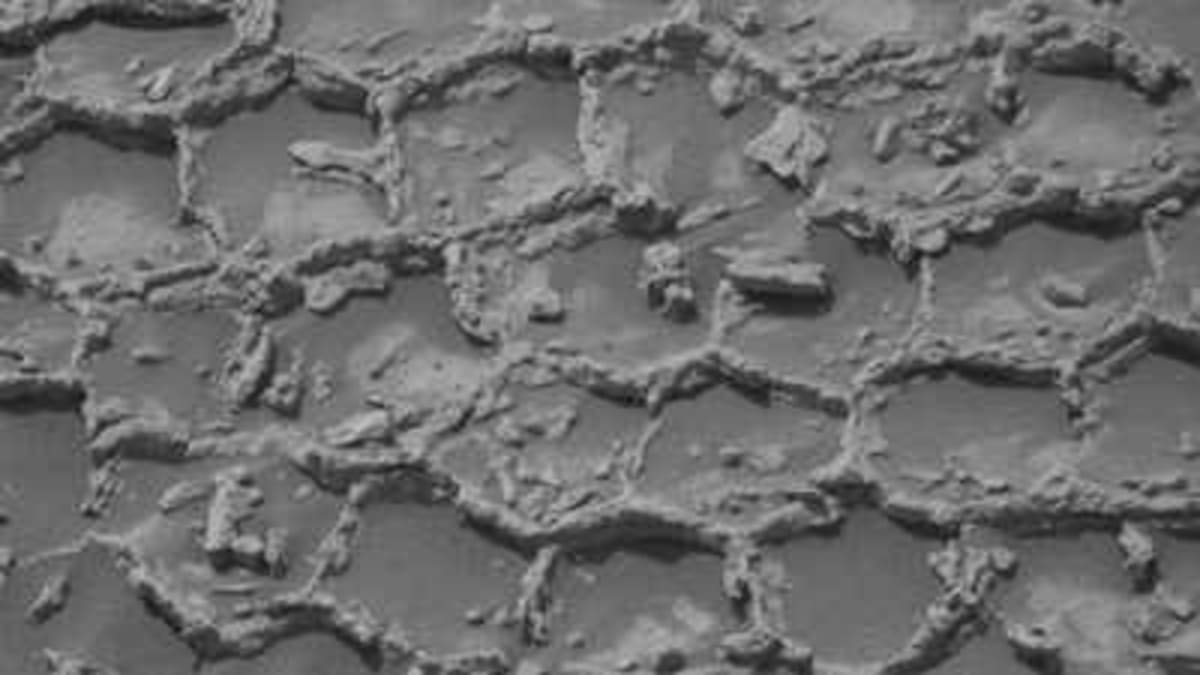
The rover discovered a striking honeycomb-like pattern etched into the Martian surface while exploring Gale Crater. The geometric formation looks remarkably similar to a giant beehive, with polygonal ridges creating an organized, repeating pattern across the ground.
Scientists weren't expecting to find anything like this. NASA's mission team said the honeycomb structures looked just as surprising in the close-up images as they did from orbital photographs taken from space.
The mystery deepens with nearby dark rocks scattered across the same area. These pebble and cobble-sized stones could have rolled down from higher ground, been ejected from ancient impact craters, or even arrived as meteorites from beyond Mars entirely.
Why This Inspires
This discovery reminds us that exploration never stops revealing surprises. Mars has experienced billions of years of volcanic eruptions, flowing water, shifting sediments, and dramatic climate changes, and any combination of these forces could have created the honeycomb pattern.
On Earth, similar geometric patterns form through drying mud, crystallizing minerals, or repeated freezing and thawing cycles. Scientists are now working to determine whether Mars experienced similar processes or whether something entirely different shaped this landscape.
The answer matters because understanding how these structures formed could reveal what environmental conditions existed on ancient Mars. If water repeatedly froze and thawed here, or if minerals crystallized over time, that tells a story about whether the planet could have once supported microbial life.
Earlier Mars missions found dark rocks containing nickel, a chemical element common in meteorites but rare in Martian geology. The team will analyze the newly discovered dark stones to see if they share that unusual composition.
Curiosity has been roaming Gale Crater since landing in 2012, studying rock layers, ancient riverbeds, and mineral deposits. The mission aims to determine whether Mars ever had conditions suitable for life.
In the coming weeks, the rover will cross into another geological band that appears darker and rougher in orbital images. Scientists will continue analyzing the honeycomb photographs and geological data to determine whether the unusual polygons and mysterious dark rocks are connected or formed from separate ancient events.
After more than a decade of exploration, Mars continues teaching us that patience in science pays off with discoveries that rewrite what we thought we knew.
More Images



Based on reporting by Google News - Science
This story was written by BrightWire based on verified news reports.
Spread the positivity!
Share this good news with someone who needs it