James Webb Telescope Finds Mystery Galaxy Cluster
NASA's James Webb Space Telescope discovered a massive galaxy cluster that formed billions of years earlier than scientists thought possible, challenging everything we know about how the universe grew. The finding opens new windows into cosmic evolution and the invisible dark matter that shapes our universe.
Scientists just spotted something in deep space that shouldn't exist yet, and it's rewriting the rules of cosmic evolution.
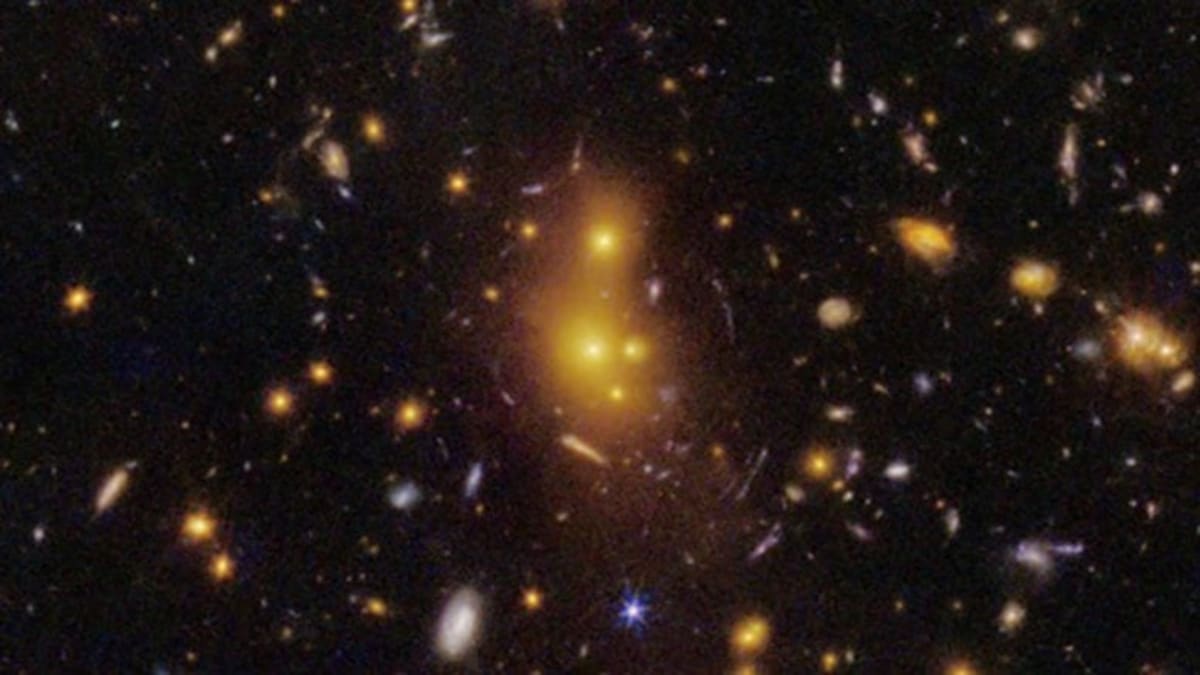
NASA's James Webb Space Telescope found a galaxy cluster called XLSSC 122 sitting more than 10 billion light years away, in an era when such massive structures weren't supposed to be fully formed. Think of it like finding a fully grown oak tree in a nursery full of seedlings.
The cluster was unusual from the moment astronomers first spotted it in 2014. While other galaxy groupings from that era were just beginning to come together, XLSSC 122 looked remarkably mature and organized, like clusters we see in our modern universe today.
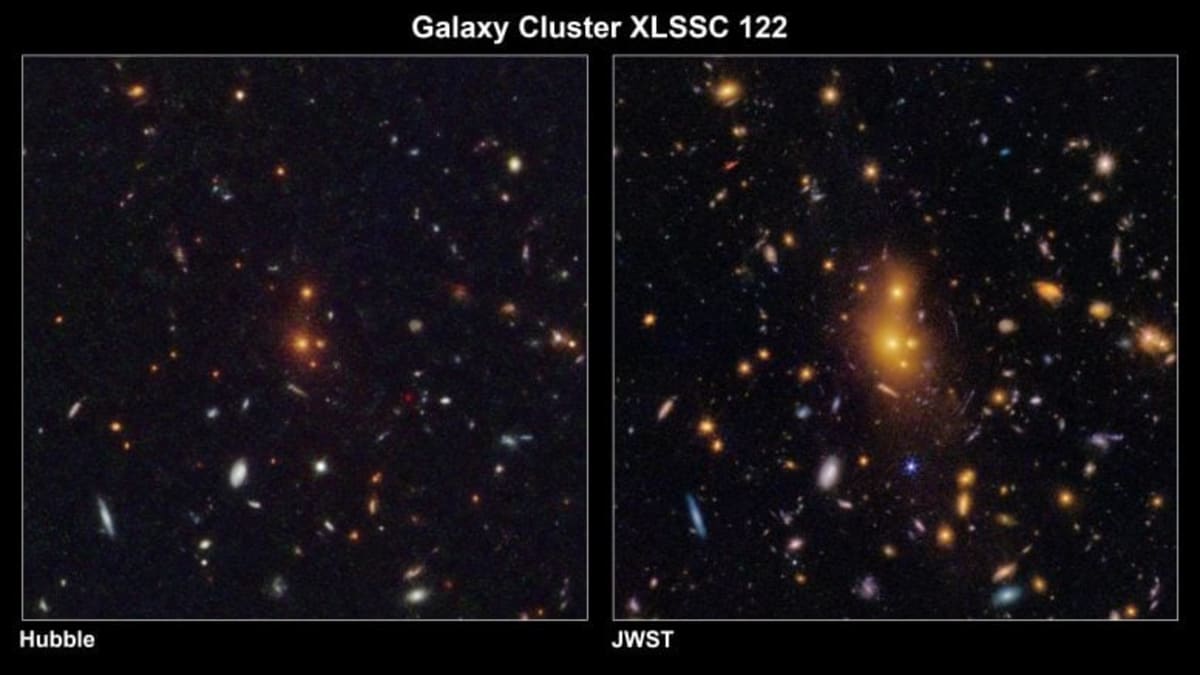
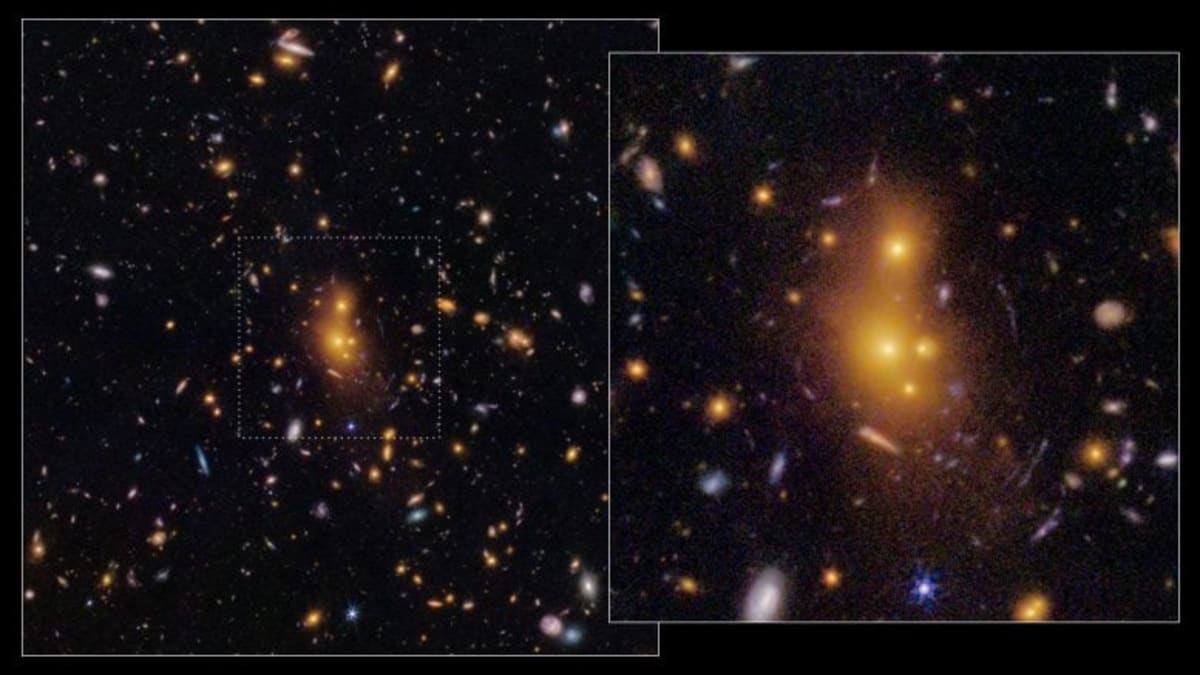
Kyle Finner, a staff scientist at Caltech's IPAC, led a team that made an even more exciting discovery when they pointed Webb's powerful instruments at the cluster. The cluster's gravity was so strong it bent light from galaxies even farther behind it, creating curved arcs of light in a rare effect called strong gravitational lensing.
"When we got those first images back from JWST, we said, 'wow, look at this, there's strong lensing coming from this cluster!'" said Finner. XLSSC 122 now holds the record as the most distant galaxy cluster ever found creating this effect.
That gravitational bending acts like a cosmic magnifying glass, letting scientists measure exactly how mass is packed inside the cluster. What they found deepened the mystery even more.
The cluster's mass is squeezed extremely tightly toward its center, far more concentrated than standard cosmological models predict should be possible this early in the universe's history. The discovery comes from a period called "cosmic noon," about 10 billion years ago, when the universe was producing stars up to 100 times faster than today.
Why This Inspires
This discovery reminds us that the universe still holds surprises that challenge even our best theories. Every mystery solved opens doors to deeper understanding.
The visible stars and glowing gas in XLSSC 122 create only a small part of the lensing effect. Most comes from dark matter, the invisible substance that outweighs ordinary matter by about five to one but remains poorly understood.
Strong gravitational lensing gives scientists a rare tool to map dark matter's distribution without actually seeing it. That matters because dark matter holds galaxies together and shapes how cosmic structures grow across billions of years.
Before Webb's launch, Hubble Space Telescope images of the same cluster showed no clear evidence of the lensing arcs. The upgrade in technology opened entirely new possibilities for studying the early universe.
The findings were presented at the American Astronomical Society meeting across three research papers. Together, they make XLSSC 122 a key example for understanding how galaxy clusters formed during the universe's most active growth period.
Scientists now face an exciting challenge: explaining how such a mature, concentrated structure could form so early contradicts current predictions about the universe's growth since the Big Bang 13.8 billion years ago.
The mystery of XLSSC 122 proves we're still learning the universe's most fundamental secrets, one stunning discovery at a time.
More Images
Based on reporting by Google: James Webb telescope
This story was written by BrightWire based on verified news reports.
Spread the positivity!
Share this good news with someone who needs it