Webb Telescope Gets Software Fix for Bright Planets
The James Webb Space Telescope just got a software upgrade that will let it photograph bright planets and moons 100 times better than before. No astronaut repair mission needed—just a clever coding solution beamed from Earth.
The world's most powerful space telescope has a funny problem: it's so good at seeing faint, distant galaxies that bright objects like Mars and Saturn practically blind it.
The James Webb Space Telescope was built to detect ancient light from the universe's first stars, billions of light-years away. But when it tries to photograph planets in our own solar system, those nearby worlds flood its sensitive cameras with too much light, creating blurry, overexposed images.
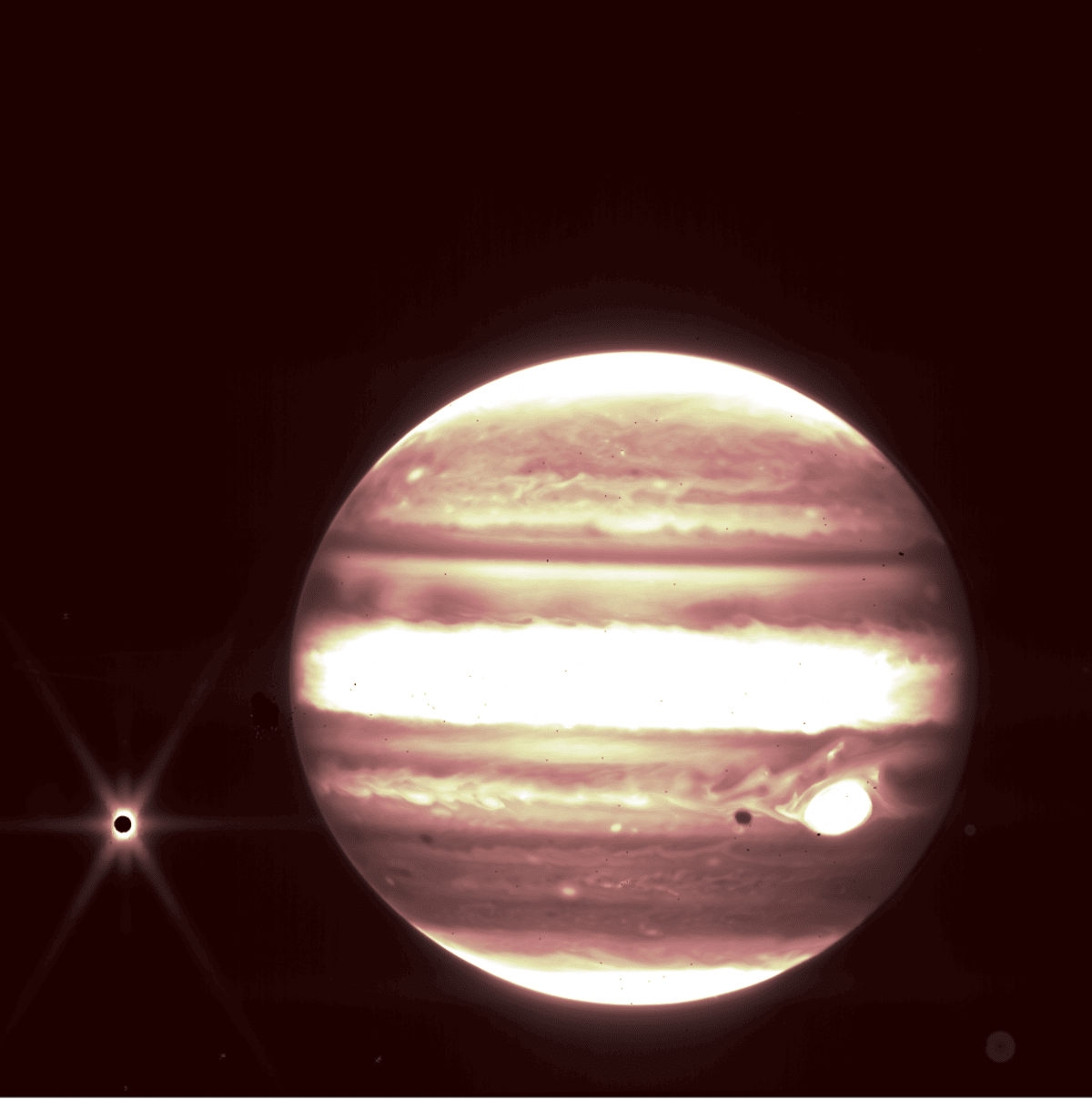
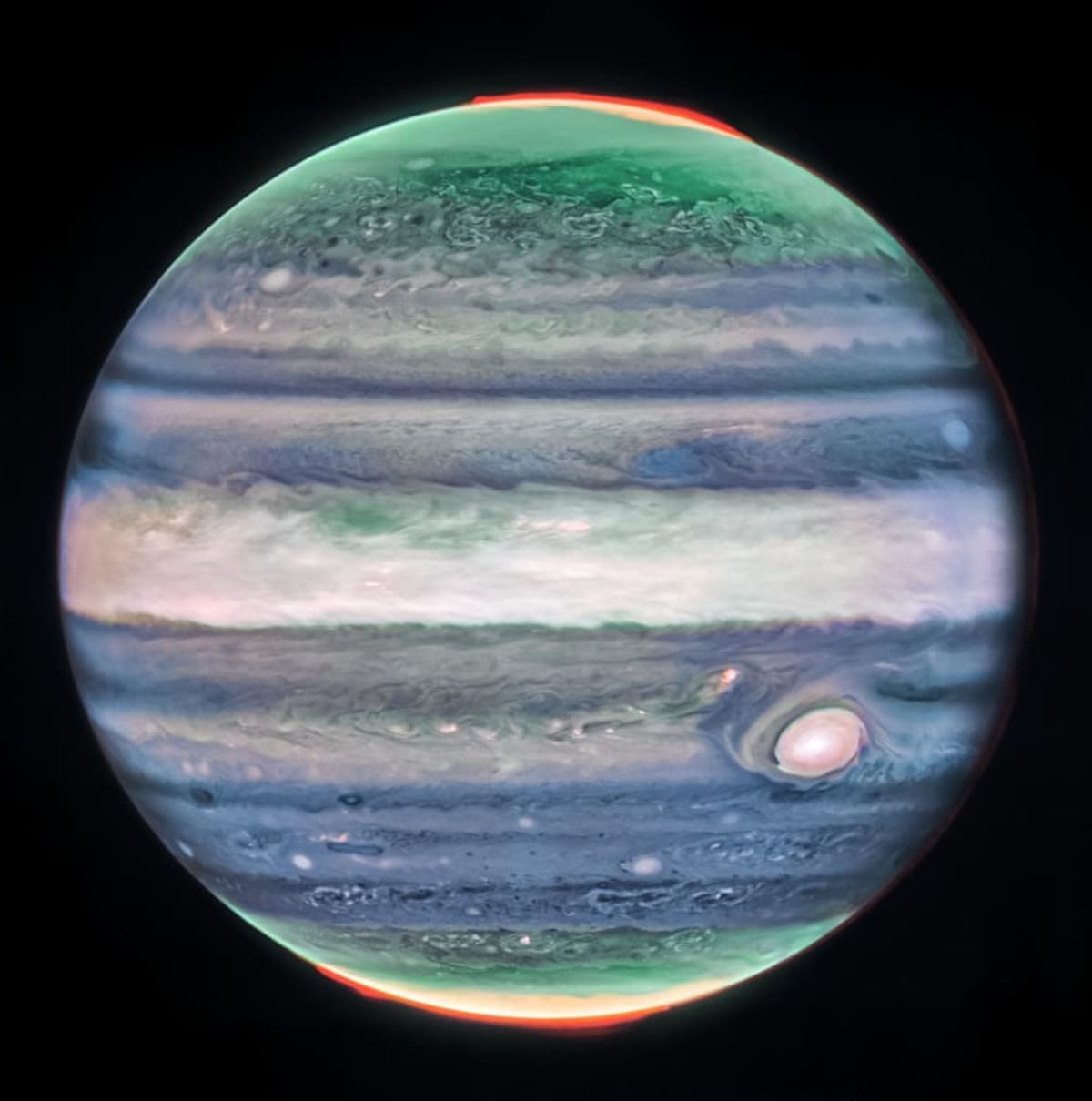
Scientists have been working around this by using dark filters and cropping the camera view down to tiny boxes. Early Jupiter photos from 2022 looked like a blurry mess because the planet's clouds moved while the camera struggled to process all that incoming light.
Now, engineers have developed a brilliant fix called "superstripe" that doesn't require any physical repairs to the telescope sitting a million miles from Earth. Instead of taking one long photo, the new software scans bright planets in thin, rapid slices—like quickly glancing at something bright instead of staring directly at it.
Each slice captures in a fraction of a second, so the camera doesn't get overwhelmed. The quick snaps also freeze fast-moving storms and auroras before they can blur. Then the software stitches all the slices together into one crisp, clear picture.
The upgrade will let Webb safely photograph targets that are 100 or more times brighter than it could handle before, according to Bryan Holler, a scientist at the Space Telescope Science Institute in Baltimore. That opens up entirely new research possibilities.
Why This Inspires
This simple software solution shows how creative problem-solving can unlock new potential in existing technology. Webb wasn't designed to study our solar system, but many astronomers want to use it for exactly that purpose because it sits above Earth's atmosphere, which blocks certain types of light.
The new capability will help scientists catch rare moments when a planet's moon or rings pass in front of distant stars, giving cleaner measurements of their sizes and atmospheres. It will also allow astronomers to study scorching-hot exoplanets orbiting ultra-bright stars, like the lava world 55 Cancri e located 41 light-years away.
The superstripe upgrade rolls out in July when Webb's next observing cycle begins. Sharper views of our cosmic neighbors are coming soon.
More Images

Based on reporting by Google: James Webb telescope
This story was written by BrightWire based on verified news reports.
Spread the positivity!
Share this good news with someone who needs it