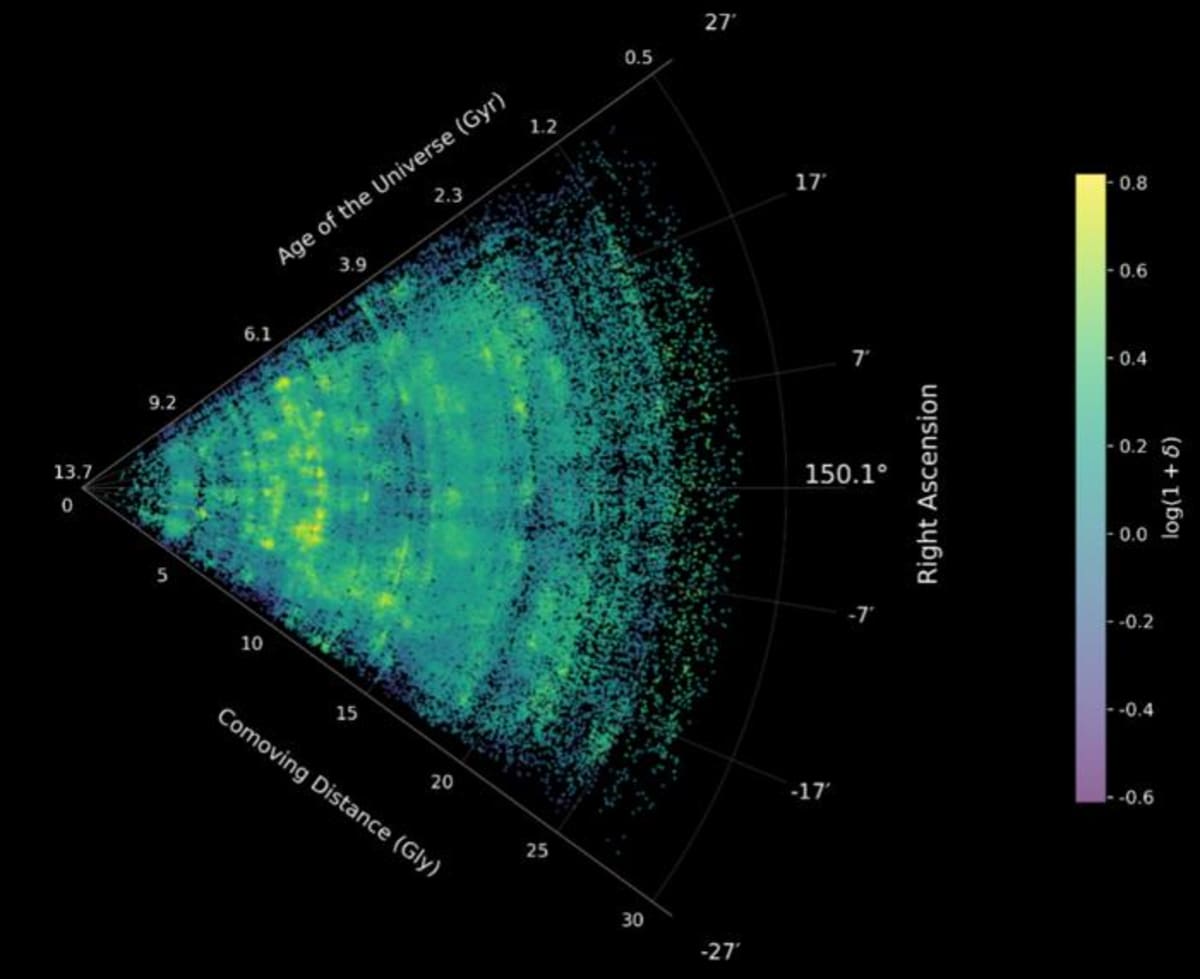
James Webb Telescope Maps 164,000 Galaxies Across 13.7B Years
The James Webb Space Telescope has created the most detailed map ever of the cosmic web, tracing 164,000 galaxies back to when the universe was just one billion years old. Scientists can now see the universe's skeletal framework with unprecedented clarity, revealing how galaxies have formed and evolved across nearly 14 billion years.
For the first time in human history, we can see the universe's hidden skeleton in stunning detail.
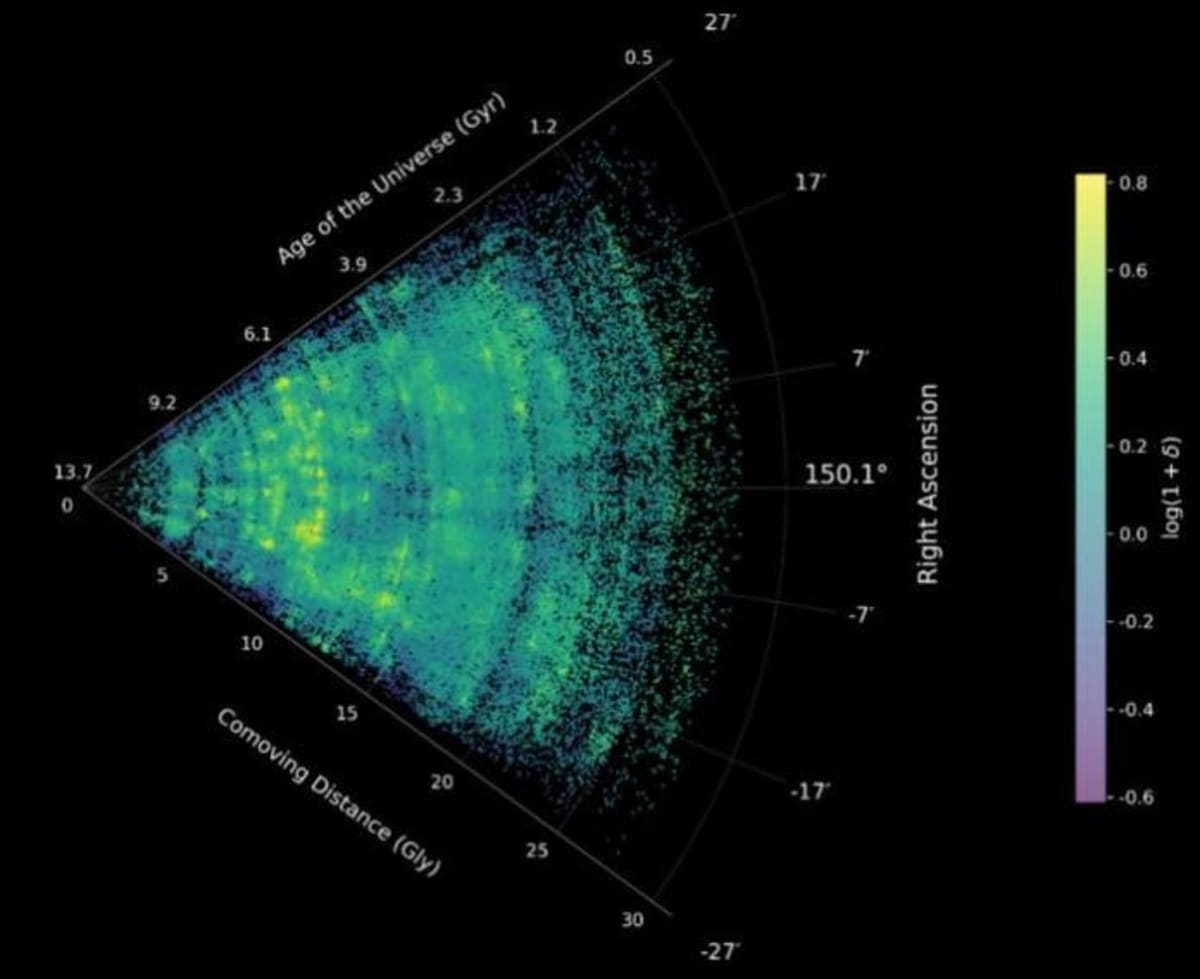
Using the James Webb Space Telescope's largest survey to date, astronomers have mapped the cosmic web, a vast network of dark matter and gas filaments that connects every galaxy in existence. The map traces 164,000 galaxies across 13.7 billion years, providing a crystal-clear view from the universe's infancy to today.
Think of the cosmic web as the universe's highway system. These invisible threads of gas and dark matter act as gravitational roads that link galaxies together, surrounding massive empty regions called voids. It's the underlying architecture that determines where galaxies form and how they grow over billions of years.
Previous telescopes like Hubble showed us a blurry version of this structure. The James Webb Space Telescope has brought it into sharp focus. Its infrared vision can see through cosmic dust and detect faint, distant objects that were completely invisible before.
The breakthrough comes from two game-changing improvements. The telescope detects significantly fainter galaxies in the same patch of sky, and it measures their distances with unprecedented precision. This allows scientists to place each galaxy into its exact moment in cosmic time.
The map reveals a visual timeline of the universe's growth. Scientists can now watch how the cosmos shifted from chaotic beginnings into the organized web we see today. Structures that appeared as single blobs in older data now resolve into multiple distinct galaxy groups.
Why This Inspires
What makes this achievement even more exciting is the team's commitment to sharing their discovery with the world. They've released the full pipeline, the complete galaxy catalogue, and a 3D video showing the web's evolution to the public. Any astronomer anywhere can now use this data to study how stars are born and die within these massive cosmic structures.
This isn't just about looking backward at ancient light. Understanding the cosmic web helps us grasp our place in the grand story of the universe. Every atom in our bodies was once part of these filaments, forged in stars connected by this vast network.
The telescope continues gathering data, and each new observation adds more detail to our cosmic family tree. We're living in the golden age of cosmic discovery, and the best views are being shared freely with everyone on Earth.
More Images
Based on reporting by Google: James Webb telescope
This story was written by BrightWire based on verified news reports.
Spread the positivity!
Share this good news with someone who needs it