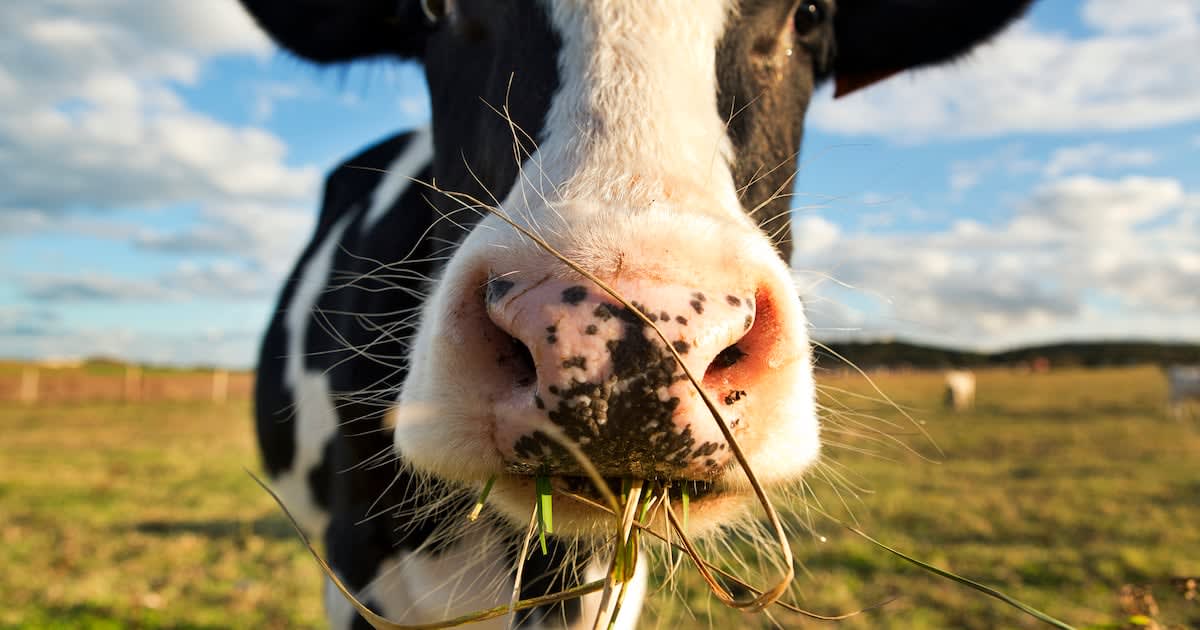
Japan Farms Methane-Cutting Seaweed to Slash Cattle Emissions
A Japanese startup and national research agency are growing a special seaweed in ocean farms that could dramatically reduce methane from cattle when added to their feed. The breakthrough moves climate-friendly seaweed from the lab to real-world production.
Scientists in Japan just took a major step toward solving one of agriculture's biggest climate challenges by growing methane-reducing seaweed in actual ocean farms.
JIRCAS, Japan's national agricultural research agency, has partnered with startup Kaginowa to cultivate Kagikenori, a native Japanese seaweed that slashes methane emissions when cattle eat it. The teams are testing ocean-based farming techniques in Yamakawa Bay through 2028, moving beyond laboratory experiments into production that could actually feed livestock.
The seaweed works remarkably well. When added to cattle feed in tiny amounts, Kagikenori inhibits the methane production process inside the animals. Methane is the second-biggest greenhouse gas after carbon dioxide, and cows are major contributors.
Leading the research is Tatsuya Matsuda from JIRCAS's Fisheries Division, who already figured out how to grow stable seaweed seedlings through work with Nagasaki University. That breakthrough made larger-scale farming possible.
Kaginowa recently completed its first outdoor harvest from land-based tanks, producing over 1,000 liters of Kagikenori. Now they're testing how the seaweed grows in actual ocean conditions, tracking how different environments affect both growth rates and the active compounds that reduce methane.
The Ripple Effect
This project could benefit two industries struggling with climate pressures. Livestock farmers get a natural way to cut emissions while fishing communities gain new income from seaweed cultivation.
Seaweed feed additives have attracted global attention, but reliable production has been the missing piece. Most methane-reducing seaweeds exist only in research settings or small batches. Japan's approach combines government research expertise with startup speed and a parent company, Alnur, that already knows how to grow aquatic organisms at scale.
The trials will generate crucial data on how Kagikenori performs across seasons and conditions. Researchers will also study how the methane-fighting compounds form and accumulate, knowledge needed to maintain consistent quality in commercial feed products.
Kaginowa envisions a dual-purpose model where the same seaweed farms that help the climate also revitalize coastal economies. Traditional fishing communities facing declining catches could find new purpose growing climate solutions.
The timeline extends to March 2028, giving scientists several growing seasons to refine techniques and build the knowledge base for commercial rollout. If successful, Japanese cattle farmers could access locally-grown feed supplements that meaningfully reduce their environmental footprint.
Japan is tackling a global problem with a solution that works with nature instead of against it.
More Images

Based on reporting by Google News - Emissions Reduction
This story was written by BrightWire based on verified news reports.
Spread the positivity!
Share this good news with someone who needs it