Japan GPS Breakthrough Makes City Self-Driving Cars Safer
Japanese researchers just solved one of the biggest problems holding back self-driving cars in cities. Their new GPS method works reliably even when tall buildings block signals.
Self-driving cars and delivery robots have struggled with a hidden weakness that could finally be solved: getting accurate GPS locations in crowded cities.
Researchers at Meijo University in Japan developed a new way to position autonomous vehicles using GPS satellites that stays accurate even when skyscrapers and tunnels interfere with signals. The breakthrough could make self-driving technology safer and more reliable in the urban environments where people need it most.
The problem has plagued autonomous vehicles for years. Traditional high-precision GPS systems work beautifully on open highways but fall apart in city centers where buildings block satellite signals or cause them to bounce around. When that happens, positioning errors can jump from inches to yards in seconds, creating serious safety risks for autonomous vehicles trying to navigate busy streets.
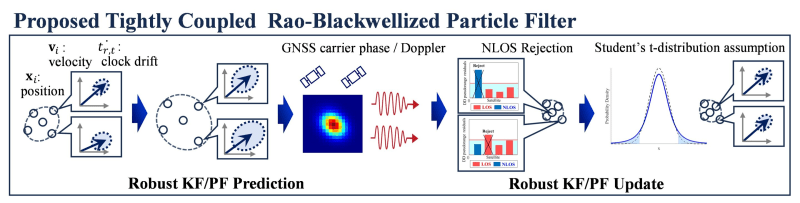
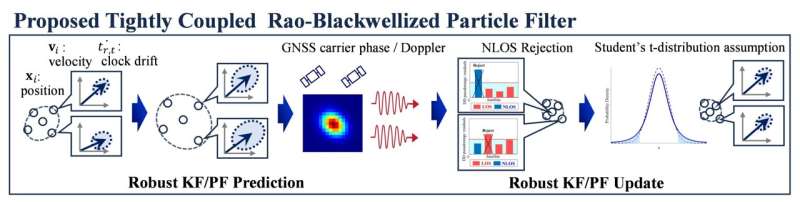
Associate Professor Junichi Meguro and graduate student Daiki Niimi created a system that thinks about location differently. Instead of trying to calculate one exact position, their method considers multiple possible positions and picks the most likely one based on available satellite data. This approach sidesteps the main failure point that causes conventional systems to break down in cities.
The team tested their system on real vehicles driving through six challenging urban areas in Nagoya and Tokyo. In five out of six test runs, the new method beat existing GPS approaches, consistently achieving accuracy within three feet. In the toughest scenario, it performed 30 percentage points better than the best conventional system.
The Ripple Effect
This breakthrough could accelerate the rollout of autonomous vehicles, delivery robots, and drones in cities worldwide. Better GPS reliability means safer self-driving systems that can navigate urban streets with confidence, potentially reducing traffic accidents and expanding transportation access for people who cannot drive.
The technology works with existing GPS satellites, requiring no new infrastructure or expensive equipment. That means autonomous vehicle companies could adopt it quickly without rebuilding their entire navigation systems.
Niimi emphasized that GPS has always had the potential to work well in cities. The perception that satellite positioning is unreliable in urban areas comes from limitations in how we process the signals, not from the technology itself.
The research demonstrates that autonomous vehicles do not need to rely solely on cameras, radar, and expensive laser sensors to navigate cities safely. With smarter algorithms, GPS alone can provide the reliable positioning that autonomous systems need to operate confidently in complex urban environments.
Safe, reliable self-driving technology in cities just got closer to reality.
More Images



Based on reporting by Phys.org - Technology
This story was written by BrightWire based on verified news reports.
Spread the positivity!
Share this good news with someone who needs it