Japan Railway Fully Reopens 6 Years After Devastating Flood
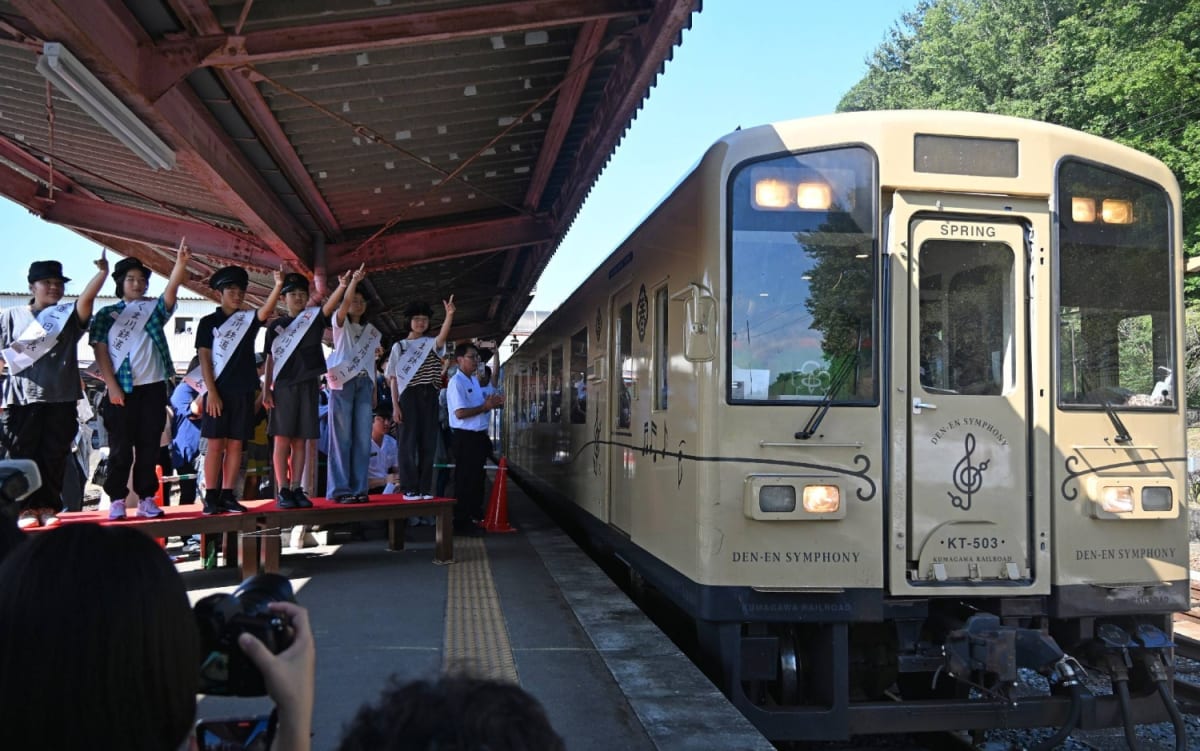
A beloved regional railway in Japan has fully reopened after six years of restoration work following catastrophic flooding that swept away bridges and train cars. High school students who depend on the line for their daily commute finally have their lifeline back.
Trains are running again on the Kumagawa Railroad in Kumamoto Prefecture, marking the end of a six-year rebuilding journey that refused to give up.
The regional railway fully resumed service on Sunday after the July 2020 Kumamoto rain disaster destroyed bridges, flooded all five train cars, and left a 6-kilometer section completely unusable. Workers spent over six years carefully restoring the route that connects three towns across 25 kilometers of rural Japan.
About 80% of the railway's passengers are local high school students who depend on it to get to school each day. For six years, these teens have had to find alternative routes, adding time and complexity to their daily lives.
At 9:50 a.m. Sunday, 12-year-old Takato Osaki gave the signal that sent the first commemorative train rolling out of Hitoyoshi Onsen Station. A high school student served as the onboard announcer, bringing the railway back to life with the voices of the young people who need it most.
"The railway is beloved by the people of Hitoyoshi, so I'm very happy to see it reopened," Osaki said. "I hope it will continue forever."
The Ripple Effect
This isn't just about transportation. Kumamoto Governor Takashi Kimura called the railway's restoration "a symbol of the revival and development of the Hitoyoshi-Kuma region."
The reopening carries extra weight this year. The region was hit by another massive earthquake in July 2024, leaving many residents discouraged. Seeing the railway restored after six years of patient work offers proof that recovery is possible, even when the damage seems overwhelming.
The railway connects the towns of Hitoyoshi, Nishiki, and Yunomae, serving as a daily thread binding rural communities together. When the Kuma River overflowed in 2020, it didn't just destroy infrastructure—it swept away a bridge designated as a cultural treasure, erasing part of the region's heritage.
Now that heritage lives again, carrying students to school and neighbors to visit each other, stronger than before.
More Images

Based on reporting by Japan Times
This story was written by BrightWire based on verified news reports.
Spread the positivity!
Share this good news with someone who needs it