Japan, US, South Korea Team Up to Predict Earthquakes
Three nations are joining forces to develop breakthrough technology that could pinpoint where earthquakes will hit hardest, potentially saving thousands of lives. The collaboration combines supercomputing power, simulation expertise, and disaster science to solve one of nature's deadliest puzzles.
Scientists from Japan, the United States, and South Korea are working together to crack the code on predicting earthquake damage before it happens.
The National Research Institute for Earth Science and Disaster Resilience in Japan is teaming up with the Lawrence Livermore National Laboratory and Korea's Institute of Geoscience and Mineral Resources. Their mission is to develop technology that can predict "quake damage bands," narrow zones where tremors concentrate and devastation multiplies.
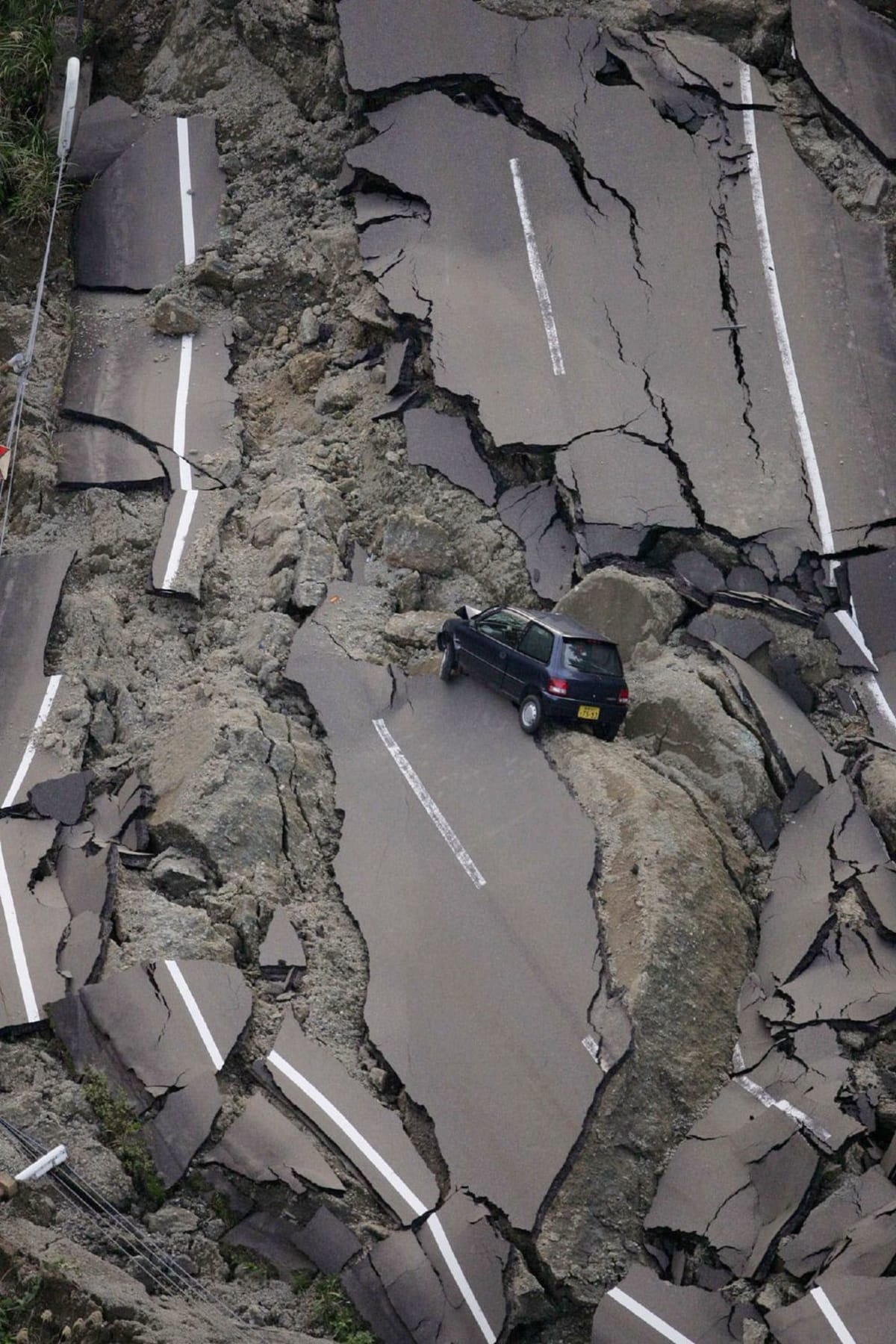
These mysterious damage bands have puzzled researchers for decades. During the 1995 Great Hanshin Earthquake, certain residential areas experienced maximum intensity tremors while neighboring streets emerged relatively unscathed. The same pattern appeared in the 2016 Kumamoto Earthquake, where serious damage clustered near fault lines in unexpected ways.
The international team brings unique strengths to the table. The United States contributes high-performance supercomputers capable of processing massive datasets. South Korea offers cutting-edge simulation technology. Japan provides decades of earthquake data and disaster resilience expertise.
Their approach focuses on mapping underground structures in stunning detail. The technology will create three-dimensional models extending hundreds of meters below ground, revealing how soil composition and geological features amplify tremors in specific locations.
The payoff could be enormous. Current government hazard maps might become 100 times more detailed by the project's 2027 completion. Cities could use these ultra-precise predictions for smarter urban planning, identifying which neighborhoods need reinforced buildings and where evacuation routes should run.
The Ripple Effect
This collaboration represents something bigger than earthquake science. When nations pool their greatest technological strengths, they multiply their power to protect human life.
The research addresses a critical gap in earthquake preparedness. Massive quakes with intensity 7 remain poorly understood because they happen so rarely. Each nation's contribution fills holes the others can't reach alone.
"We want to take in effective methods from the United States and South Korea and make use of them for the country's earthquake preparedness," said Hiromitsu Nakamura, director of the Japanese institute's earthquake research division.
Experts outside the collaboration see promise in the approach. Kojiro Irikura, professor emeritus at Kyoto University, praised the team for exploring new data collection methods like optical fibers. "It's important to advance research while taking in knowledge from other countries," he said.
The technology could transform how cities prepare for the inevitable. Instead of broad warnings covering entire regions, emergency managers could identify specific blocks requiring immediate evacuation or targeted infrastructure improvements.
Three nations, one mission: turning earthquake prediction from educated guessing into precise science that saves lives.
Based on reporting by Regional: south korea technology (KR)
This story was written by BrightWire based on verified news reports.
Spread the positivity!
Share this good news with someone who needs it