Japan's H3 Rocket Succeeds After December Launch Failure
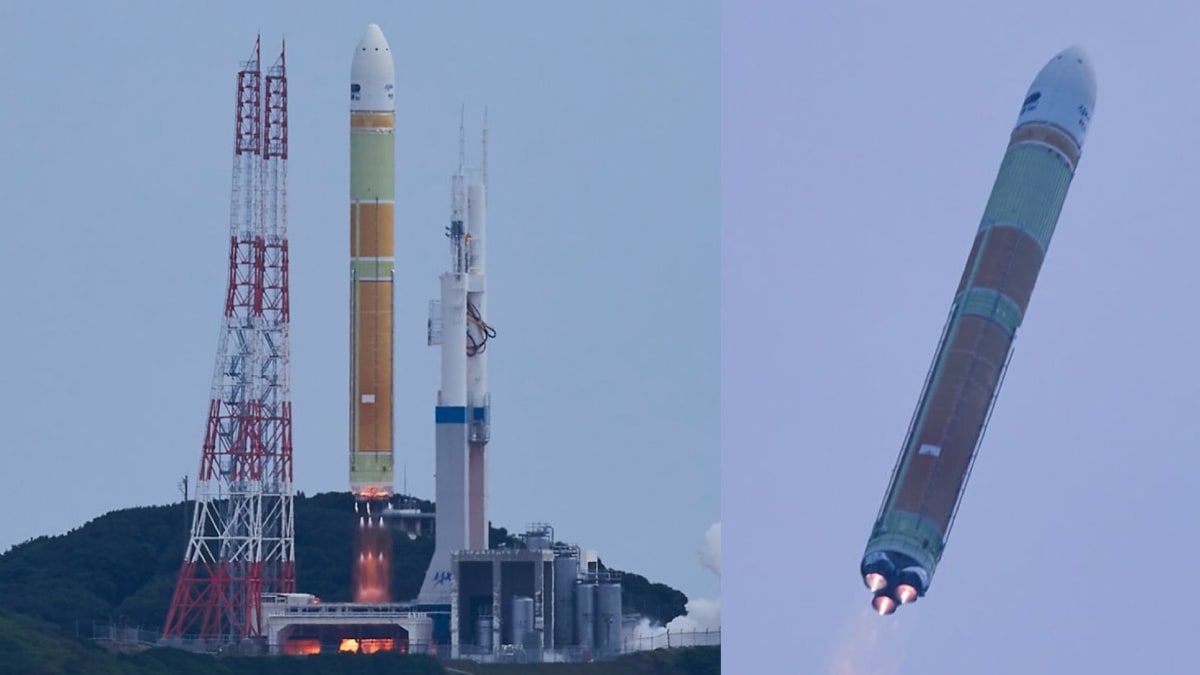
Japan's H3 rocket delivered six satellites to orbit in its first flight since a December failure, marking a crucial comeback for the country's space program. The upgraded three-engine configuration performed flawlessly during Thursday's launch from Tanegashima Space Center.
After losing a navigation satellite just six months ago, Japan's space agency proved that failure doesn't have to be final.
The Japan Aerospace Exploration Agency (JAXA) successfully launched its H3 rocket on Thursday evening, delivering all six payloads to their planned orbits. Liftoff occurred at 8:54 p.m. EDT from Tanegashima Space Center, marking the rocket's triumphant return after a December mishap that destroyed the Michibiki 5 satellite.
The previous failure stemmed from a damaged payload adapter that caused second-stage engine problems. JAXA engineers spent months investigating the issue, identifying the root cause, and implementing fixes to prevent a repeat disaster.
Thursday's mission represented more than just redemption. The rocket flew with three engines instead of the usual two, testing a more powerful configuration for the first time. All six satellites, including PETREL and STARS-X, separated successfully about 16 minutes after launch.
H3 serves as the successor to Japan's retired H-2A rocket and represents a major investment in the country's independent access to space. Developed jointly by JAXA and Mitsubishi Heavy Industries, the vehicle uses homegrown LE-9 engines designed for reliability and cost efficiency.
The rocket's journey hasn't been smooth. Its very first launch in March 2023 failed, followed by five successful missions, then December's setback. Each failure provided crucial data that engineers used to improve the design.
The Ripple Effect
Japan's space program success matters beyond national pride. As more countries and companies pursue space activities, having multiple reliable launch providers creates competition that drives down costs and increases access for scientific missions.
The H3's recovery also strengthens partnerships with international space agencies that rely on diverse launch options. When one provider faces setbacks, others can fill the gap, ensuring critical missions still reach orbit.
"Thank you for your support and cheers," Tanegashima Space Center posted after the mission. "Please continue to cheer for the H3 Rocket going forward."
With technical issues resolved and a successful three-engine flight under its belt, H3 now stands ready to carry Japan's space ambitions into the future.
More Images

Based on reporting by Google: SpaceX launch success
This story was written by BrightWire based on verified news reports.
Spread the positivity!
Share this good news with someone who needs it