Soviet Venus Capsule Returns to Earth After 53 Years
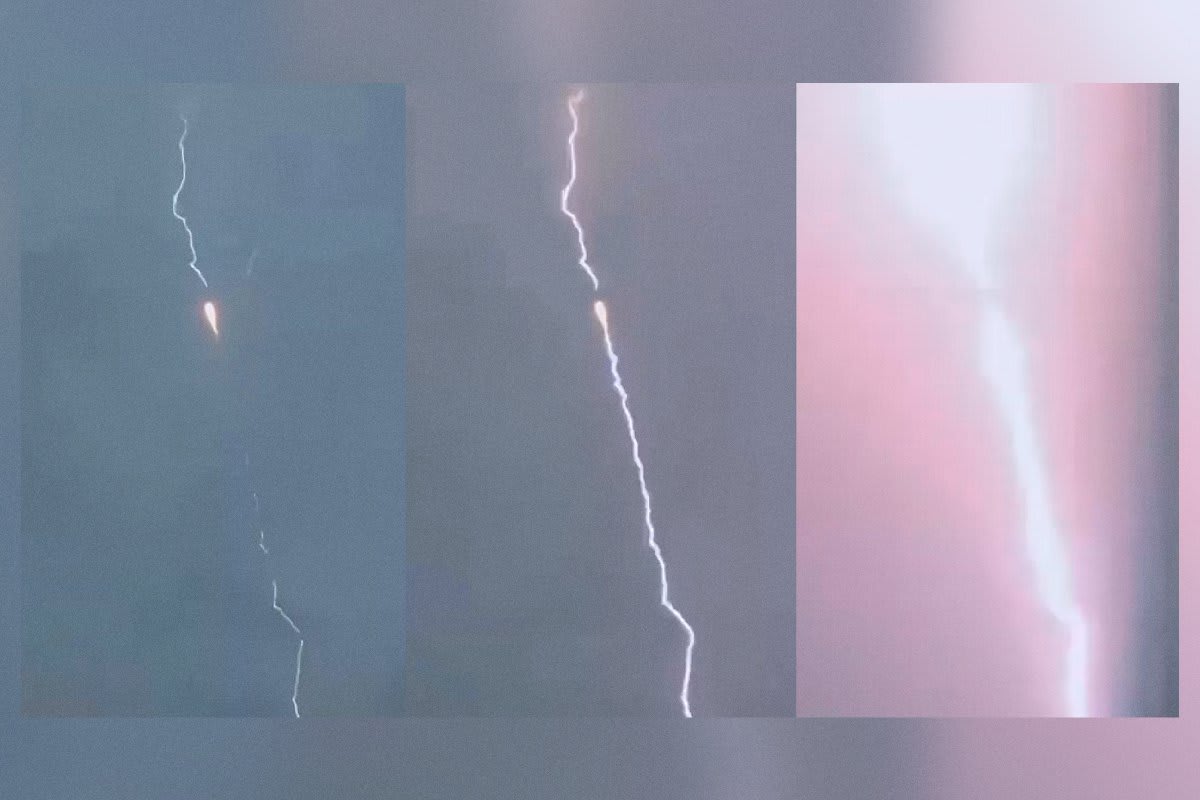
A titanium capsule built in 1972 to land on Venus finally came home on May 10, 2025, after spending more than five decades circling Earth. The hardy spacecraft may have survived its fiery return intact, proving that engineering built to conquer the hottest planet in our solar system can endure half a century in space. #
A spacecraft built to survive Venus just proved it could outlast five decades of waiting.
On May 10, 2025, the descent capsule from Kosmos 482 re-entered Earth's atmosphere after 53 years in orbit. The Soviet probe launched in March 1972, destined for Venus alongside its twin, Venera 8. But a timer failure stranded Kosmos 482 in orbit around Earth while its sister ship completed the journey and transmitted from Venus's scorching surface for 50 minutes.
The capsule that stayed behind was no ordinary satellite. Engineers had wrapped its core in a titanium pressure shell designed to withstand Venus's crushing atmosphere, where surface pressure reaches 90 times what we experience at sea level and temperatures melt lead.
That overbuilt design may have saved the capsule during its unplanned return. German radar tracked the object until 6:04 AM UTC on May 10, then it vanished from the sky. The European Space Agency confirmed it never appeared for its next predicted pass 88 minutes later.
No one spotted the final descent. No wreckage was found. But the engineering tells a hopeful story.
The titanium sphere at the capsule's heart was rated to handle about 100 bars of pressure. The entire descent craft weighed roughly 495 kilograms and had a compact, one-meter-wide shape built to punch through an atmosphere far thicker than Earth's. Researchers believe those features make near-intact survival plausible, even likely.
Estimates placed the final resting spot somewhere in a vast arc from southwest Asia to the waters south of Australia, with Russia's space agency suggesting the Indian Ocean west of Indonesia. The uncertainty spans thousands of kilometers because tracking stopped before re-entry, and even one minute of timing error shifts the predicted location by 500 kilometers.
Why This Inspires
This story isn't just about a lost spacecraft finding its way home. It's about human ingenuity building something so tough that it could wait in the void for 53 years and still have a fighting chance at survival.
The engineers who designed that titanium shell in the early 1970s never imagined it would protect their creation through half a century of cosmic radiation, temperature swings, and orbital decay. They built it to explore another world, and it ended up demonstrating something equally remarkable: our ability to create things that endure far beyond their intended mission.
Somewhere in an ocean or on a remote hillside, a piece of the space race may be sitting intact, a time capsule from an era when we dreamed of touching other planets.
#
More Images

Based on reporting by Google News - Science
This story was written by BrightWire based on verified news reports.
Spread the positivity!
Share this good news with someone who needs it