Johns Hopkins Solves 30-Year Mystery of Sharp Vision
Researchers have uncovered how vitamin A and hormones shape our sharpest sight before birth. The breakthrough offers a roadmap for lab-grown tissue transplants to reverse vision loss.
The ability to read a favorite book or recognize a familiar smile relies on a biological miracle that unfolds before birth. Now, scientists have discovered the precise chemical signals that grant humans their sharpest vision, pointing toward revolutionary therapies for vision loss.
A research team at Johns Hopkins University solved this decades-old mystery using tiny, lab-grown models of the human eye. Their study reveals that a vitamin A derivative collaborates with thyroid hormones to sculpt the retina into a high-definition marvel.
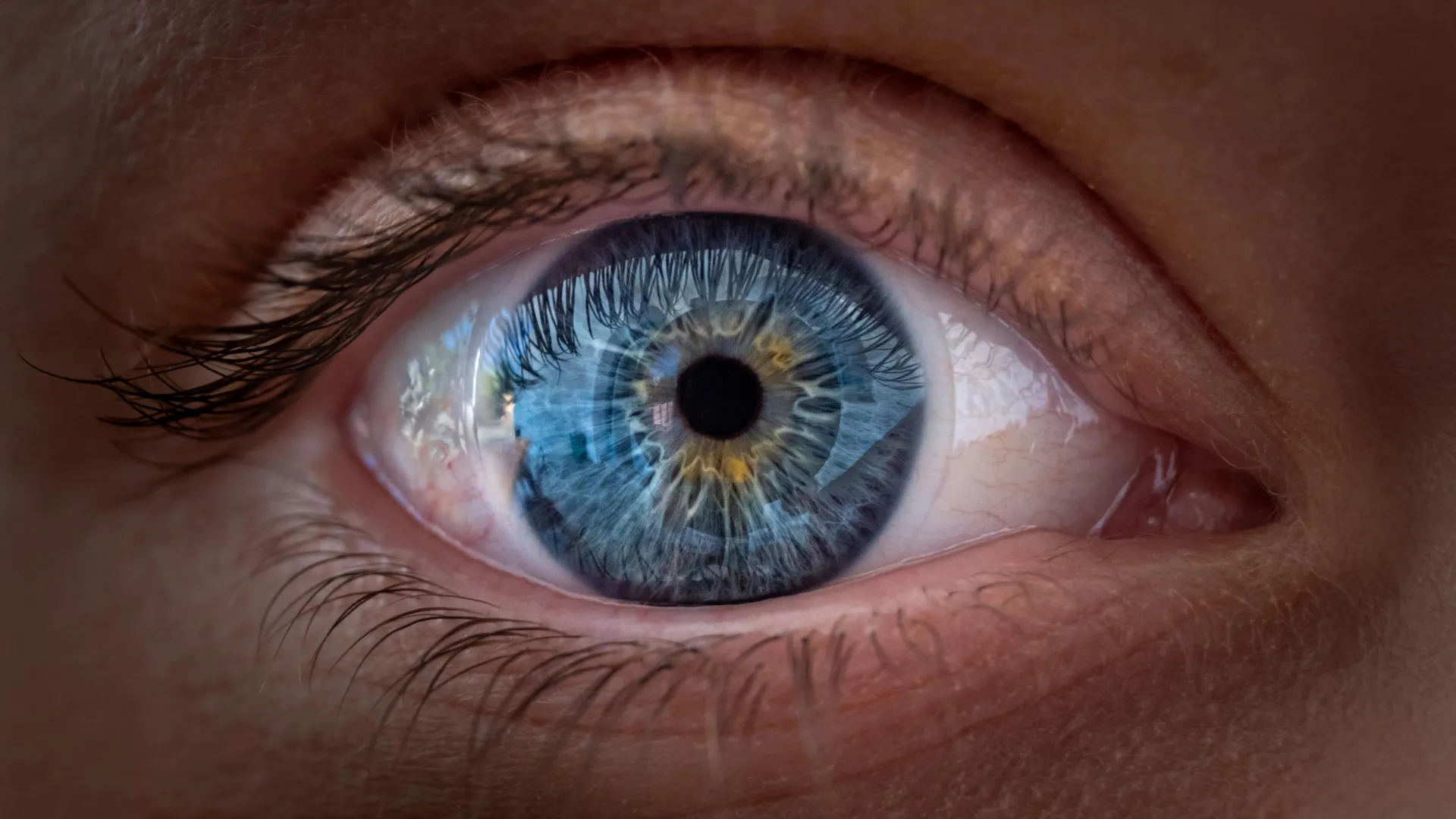
Human central vision depends on a microscopic zone at the core of the retina called the foveola. Even though this region occupies a tiny sliver of eye tissue, it accounts for roughly half of everything we perceive.
The foveola achieves its clarity through light-detecting cells known as cones. These cones come in red, green, and blue varieties, but the central foveola exclusively gathers red and green cones to maintain crisp focus.
Until now, researchers could not explain how the body purges blue cones from this central spot. Because mice and other common research animals lack this unique visual layout, traditional experiments offered few clues.
Biologist Robert Johnston Jr. and his team overcame that hurdle by cultivating retinal organoids from human cells. These miniature tissues allowed the team to track eye development across months with unprecedented detail.
Between the tenth and fourteenth weeks of growth, the researchers observed a remarkable cellular transformation. Immature cells that initially detected blue light shifted gears and turned into red and green sensors.
Two vital chemical drivers make this shift happen smoothly. First, retinoic acid, a compound formed from dietary vitamin A, sets the boundaries for where cells should settle.
Next, thyroid hormones arrive to prompt the remaining blue cones to change into red and green cells. Without this precise hormonal nudge, central vision would remain permanently blurry.
The Ripple Effect
This breakthrough offers far more than an update to biology textbooks. By uncovering the developmental recipe for human sight, the Johns Hopkins team has established a roadmap for manufacturing healthy central retinal tissue.
Macular degeneration and glaucoma steal independence by destroying the fragile foveola first. With this cellular manual in hand, scientists can now pursue growing lab-designed grafts to replace damaged ocular tissue and restore lost sight.
By understanding how human eyes gain their clarity, science brings us closer to a future where nobody has to lose their vision to disease.
Based on reporting by Health Daily
This story was written by BrightWire based on verified news reports.
Building Something New? Try the BrightWire Tech Stack Advisor
Compare modern frameworks, cloud hosting, and AI tools tailored to your project budget and scale.
Spread the positivity!
Share this good news with someone who needs it