Kashmir Village Turns Homes Into Libraries for Students
In a remote Kashmiri village once limited by conflict and poverty, families are transforming their homes into community libraries. Aragam now has thousands of books spread across dozens of households, giving hundreds of students access to education they thought was lost forever.
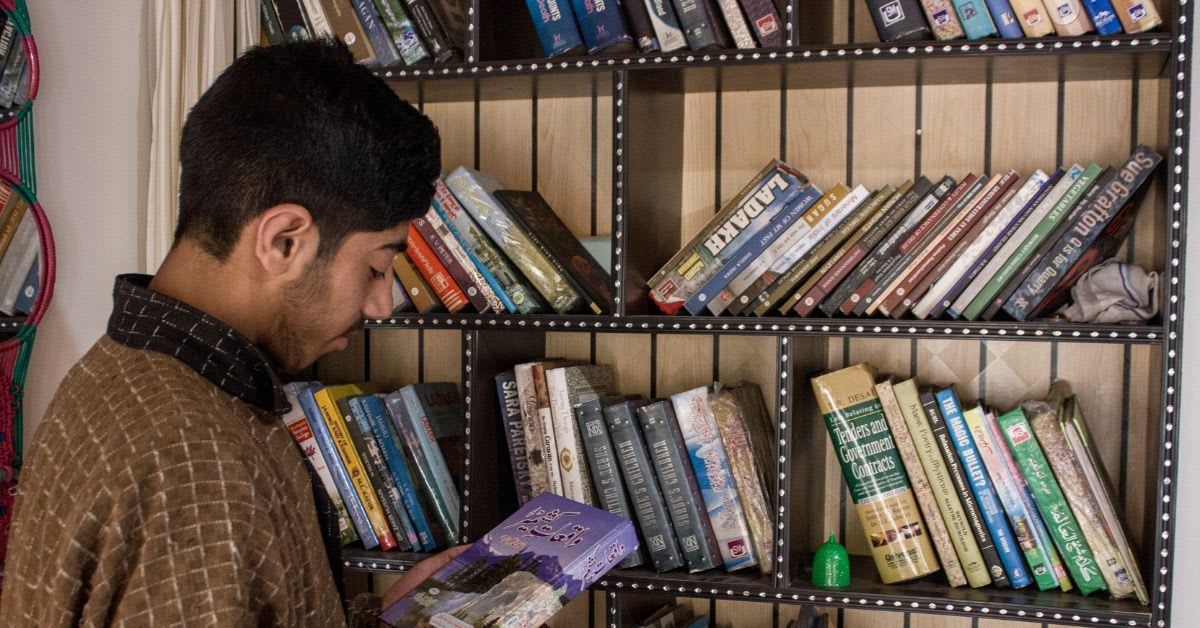
Sixteen-year-old Irfan Ahmad sits beside a dim bulb in his mud-plastered home in Aragam, Kashmir, reading books about history and nature that he never dreamed he'd access. Just a few years ago, he'd dropped out after sixth grade because his family couldn't afford school expenses, and this remote tribal village near Wular Lake had almost no books available.
Today, Irfan devours everything from Kashmiri history to Urdu fiction and dreams of resuming his education. After finishing each book, he gathers his younger siblings and retells the stories, transforming their evenings into learning sessions.
Aragam village in Bandipora district is becoming Kashmir's first major "book village," where ordinary homes have turned into neighborhood libraries. Instead of building one central library, organizers created a distributed system where each participating household maintains books on specific subjects.
The transformation began with a 2014 proposal by Sarhad NGO after surveying areas around Wular Lake. Aragam was chosen because residents were eager to participate despite limited infrastructure.
Books arrived through donations from publishers and educational organizations, focusing on Kashmiri literature, regional history, environmental topics, and school subjects. Some homes now specialize in fiction and novels, while others store books on history, religion, children's literature, or competitive exam preparation.
Students borrow books from different homes and return them after reading, creating what locals call "a community library without walls." Villagers themselves manage the circulation, giving families shared ownership that has kept the project thriving.
What started with 10 homes now spans dozens of households holding thousands of books. Local volunteers say hundreds of students regularly access the collections, especially those preparing for board exams and college entrance tests who couldn't otherwise afford study materials.
Nineteen-year-old Shahid, who also left school after sixth grade, now reads at home and shares what he learns with his parents. "It feels like I am going to school again," he says.
Teachers report that school attendance and interest in education have improved noticeably. Several students from Aragam have begun appearing for higher secondary and competitive examinations with access to reference books that were previously unavailable.
The Ripple Effect
The change reaches beyond individual students into entire families. Parents who once saw education as an impossible dream now watch their children reading every evening. "Books are available in our homes," says parent Mushtaq Ahmad, describing something that feels almost miraculous in a village where educational opportunities were once so scarce.
The village's transformation shows how community-driven solutions can overcome geographical isolation and economic barriers. By bringing books into homes rather than expecting students to travel to distant libraries, Aragam created access where none existed.
In the foothills of Harmukh Mountain, where dense pine forests meet Wular Lake, a village once defined by what it lacked is now reshaping its identity around shared learning and possibility.
More Images
.png)
%2Fenglish-betterindia%2Fmedia%2Fmedia_files%2F2026%2F06%2F05%2Fkashmir-reading-2026-06-05-16-36-05.jpg)


Based on reporting by The Better India
This story was written by BrightWire based on verified news reports.
Spread the positivity!
Share this good news with someone who needs it