Kaziranga Finds 57 Fishing Cats in Landmark Study
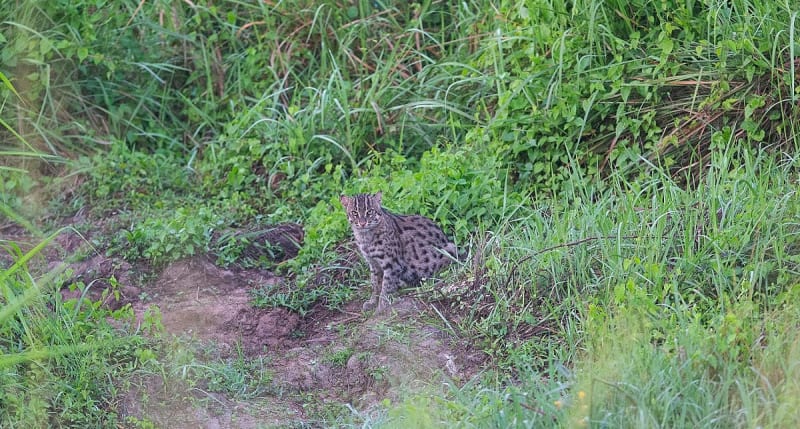
India's Kaziranga National Park just became the world's most important refuge for endangered fishing cats, with scientists discovering 57 unique individuals thriving across its wetlands. This first-ever scientific count reveals a healthy, reproducing population of one of the world's rarest wild felines.
Scientists just confirmed what conservationists had hoped for: Kaziranga National Park in Assam, India, is sheltering a thriving population of one of the world's most elusive wild cats.
The endangered fishing cat, a water-loving feline that hunts in shallow wetlands, has found its stronghold in the park's floodplains. Researchers identified 57 unique individuals spread across 450 square kilometers, marking the first scientific assessment of this rare species in the region.
The team analyzed camera trap images originally set up for tiger monitoring, turning existing data into a breakthrough discovery. What they found exceeded expectations: a healthy, reproducing population distributed throughout the entire reserve.
Fishing cats are built differently than their cousins. They're one of the few wild felines adapted specifically for aquatic hunting, with partially webbed paws and water-resistant coats. They patrol shallow beels (oxbow lakes), wet grasslands, and marshes, acting as natural indicators of wetland health.
The species faces serious threats globally. Populations have completely disappeared in Vietnam and Java, victims of habitat loss and hunting. South Asia now holds the core population, making Kaziranga's numbers even more significant for the species' survival.
The Ripple Effect
This discovery does more than count cats. It establishes Kaziranga as a vital "ark" for wetland biodiversity in the Brahmaputra floodplains, according to park director Sonali Ghosh.
The study also creates a baseline for monitoring how climate change and river modifications affect freshwater ecosystems. When fishing cat populations remain strong, it signals that the entire wetland network is functioning properly.
The research methodology itself is a win for conservation. By repurposing tiger monitoring data to assess smaller carnivores, scientists proved that existing camera trap networks can track multiple threatened species simultaneously without additional fieldwork costs.
The findings were launched during Fishing Cat Day celebrations on February 22, giving the park's conservation team hard data to inform future wetland management decisions. Researchers note the 57 individuals likely represent an undercount, since the cameras were positioned for tigers rather than optimized for smaller cats.
India protects fishing cats under Schedule I of its Wildlife Protection Act, offering the highest level of legal protection. With this new population data, Kaziranga can now design targeted conservation strategies to keep these wetland specialists thriving through seasonal floods and environmental changes.
Kaziranga proves that when we protect landscapes for flagship species like tigers, we create refuges for entire ecosystems and the countless species that depend on them.
Based on reporting by Google News - Conservation Success
This story was written by BrightWire based on verified news reports.
Spread the positivity!
Share this good news with someone who needs it