Kenya Farmers Earn 30% More Growing Trees With Crops
In one of Kenya's most crowded regions, farmers are discovering that planting trees alongside their crops can boost household income by 30 percent while restoring forests. Vihiga County's million-tree initiative proves environmental goals and food security can grow side by side.
In Vihiga County, Kenya, where families farm plots smaller than half a soccer field, a bold experiment is turning trees from competitors into cash crops.
The county faces a unique challenge: plant one million trees as part of Kenya's 15 billion tree goal by 2032, but do it where land is scarcer than almost anywhere else in the country. With over 1,000 people packed into every square kilometer and average farms measuring just 0.4 hectares, traditional reforestation won't work here.
So the government changed the game. Instead of asking farmers to choose between trees and food, they're helping them grow both together through agroforestry.
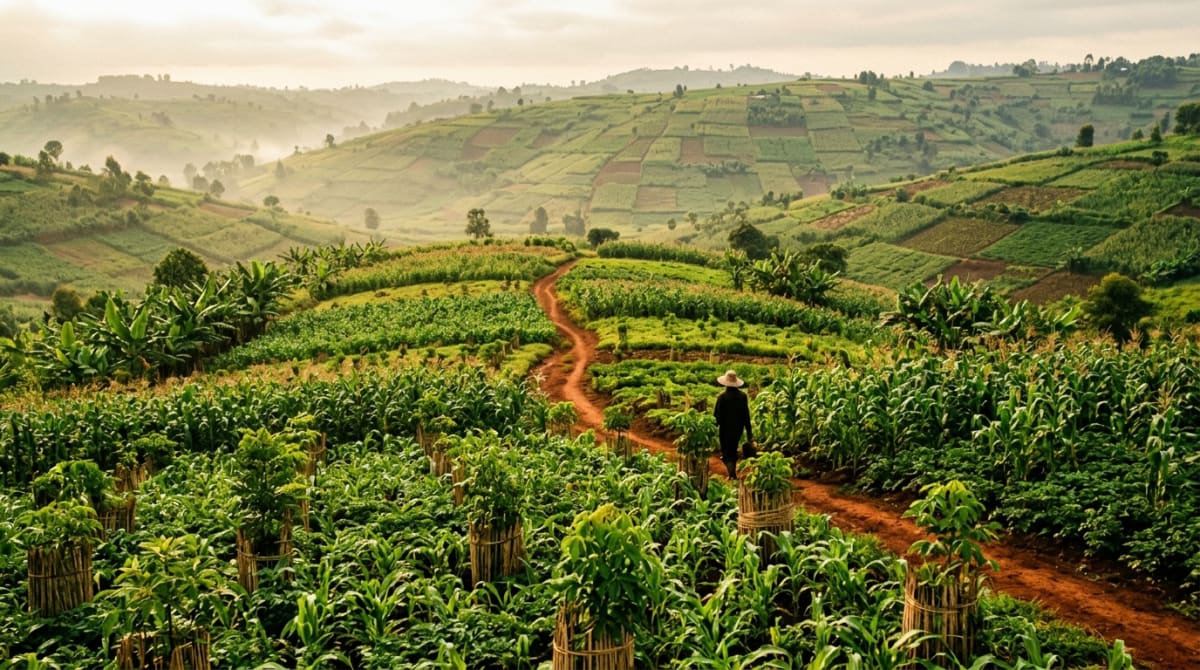
Farmers are now planting fruit trees like mango, avocado, and citrus along plot boundaries and between crops. The trees improve soil fertility and help retain moisture, making the farmland itself more productive. Early results show participating households are earning 30 percent more monthly income from selling fruit, firewood, and timber.
This isn't just about planting seedlings for a photo opportunity. The initiative focuses on "growing" rather than "planting," with community groups, schools, and local chiefs taking ownership of tree survival. Digital tracking through the JazaMiti platform monitors whether seedlings actually make it to maturity.
The shift addresses past failures where mass planting days resulted in high seedling death rates. By giving farmers economic reasons to care for trees long-term and integrating them into existing agricultural systems, the survival rate is climbing.
The Ripple Effect
What's happening in Vihiga could reshape reforestation across Africa's densely populated regions. For decades, conservation efforts assumed you needed vast empty spaces to grow forests. This project proves that millions of small farmers, each tending a few trees, can collectively restore landscapes while feeding their families.
The model also tackles a persistent tension between environmental goals and human needs. When trees produce income and improve crop yields instead of competing for space, farmers become eager participants rather than reluctant partners. Local schools are running nurseries, creating educational opportunities while building community investment in the forest's future.
The success here sends a powerful message: environmental restoration doesn't require choosing between nature and people. Smart integration creates wins on both sides, turning what seemed like an impossible land-use puzzle into a solution that makes everyone better off.
If Vihiga's farmers can anchor a million trees on plots smaller than most suburban backyards, imagine what's possible everywhere else.
Based on reporting by Google News - Reforestation
This story was written by BrightWire based on verified news reports.
Spread the positivity!
Share this good news with someone who needs it