Kenya Protects Carbon Rights Over Quick Foreign Cash
When a clean cooking company wanted to claim Kenya's entire carbon credit allocation, the government said no. Now Kenya is building one of Africa's strongest frameworks to ensure climate progress benefits its own people first.
Kenya just did something radical: it refused to sell its climate future to the highest bidder.
When KOKO Networks, a once-celebrated clean cooking company, asked to export carbon credits at a massive scale, Trade Cabinet Secretary Lee Kinyanjui delivered a firm answer. Kenya could not allow one foreign-backed firm to absorb the country's entire carbon allocation, leaving nothing for other businesses or the nation's own industrial growth.
The decision reflects a bigger shift. Kenya is responsible for just 0.1% of global emissions and emits roughly half a tonne of carbon per person annually. Yet under the Paris Agreement's Article 6, the country suddenly found itself in a position to export "mitigation outcomes" to high emitters in Europe, China, and the US.
The question became urgent: should Kenya sell credits for hard currency today, or retain them to preserve room for its own energy and industrial development tomorrow?
Kenya chose the latter. Since 2023, the country has built one of Africa's most ambitious carbon market frameworks through the Climate Change Amendment Act and Carbon Markets Regulations 2024.
Under the new system, every carbon project must pass through a Multi-Sectoral Technical Committee before final Cabinet approval. At least 40% of revenues from land-based projects must flow directly to communities. The National Environment Management Authority now serves as the Designated National Authority, creating a sovereign system rather than a corporate free-for-all.
The Bright Side
Kenya's framework is already influencing how other African nations approach carbon markets. By requiring transparency, community benefit-sharing, and government oversight, the regulations prevent a single company from monopolizing national climate assets.
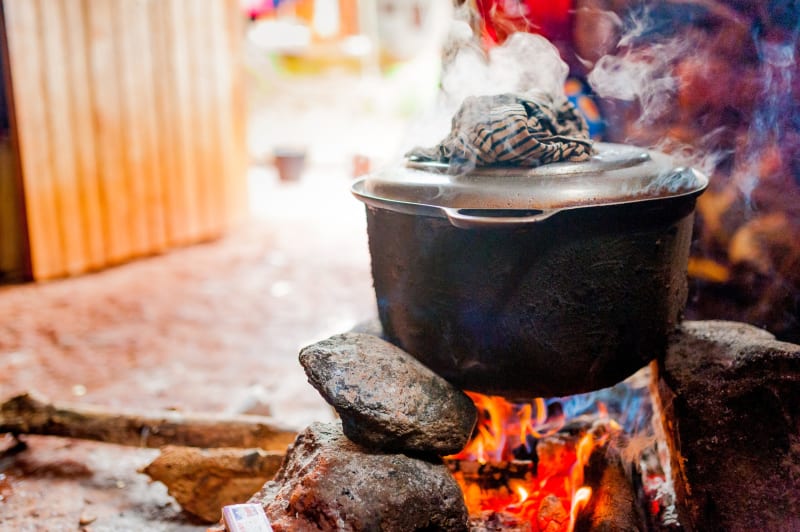
The clean cooking goal remains valid. In Nairobi neighborhoods like Mathare and Kibera, families still rely on smoky charcoal and kerosene because they're affordable. Transitioning to ethanol, biogas, or LPG would improve health outcomes and reduce deforestation.
But Kenya's regulators recognized that financing these transitions through carbon offsets created a troubling dynamic. A single AI data center in a wealthy country can consume as much electricity as a mid-sized African city. Yet it's the African household's cooking fire that becomes the offset commodity.
Sheena Raikundalia, chief growth officer at Kuza One, a Kenyan social enterprise, noted the structural tension. Kenya was being asked to constrain its future energy and industrial space at the lowest end of global consumption, while high emitters maintained their levels by purchasing mitigation elsewhere.
The regulations are layered and procedural, still finding their footing. But they represent a crucial principle: climate solutions should expand opportunity for vulnerable communities, not lock them into permanent subsidy dependence.
Kenya is learning in real time, and choosing its own people first.
Based on reporting by TechCabal
This story was written by BrightWire based on verified news reports.
Spread the positivity!
Share this good news with someone who needs it