Kerala Town Cuts Mosquito Breeding Sites by 87%
When neighbors in Alappuzha, India started checking each other's homes for standing water, dengue breeding sites plummeted from 64% of homes to just 9%. Their success shows how powerful community action can be in fighting disease.
Two neighbors walking door to door with clipboards might not sound like a public health revolution, but in Alappuzha, India, that's exactly what it became.
In 2016, researchers found mosquito breeding sites in 64 out of every 100 homes in the Vadackal ward. Flowerpots, old tires, buckets catching rainwater, clogged gutters. Each one was a potential nursery for dengue-carrying mosquitoes, and the threat was growing with every monsoon.
The usual approach wasn't working. Government inspectors would visit occasionally, spray some areas, and leave. But mosquitoes don't wait for inspection schedules.
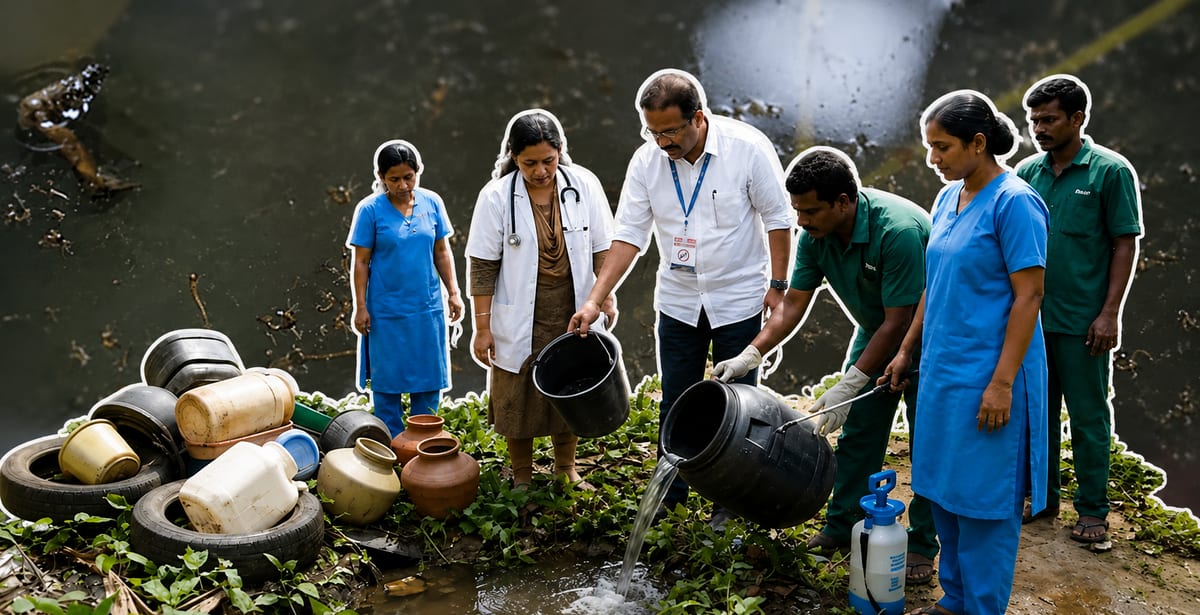
So researchers from ICMR-National Institute of Virology and TD Medical College tried something different. They asked residents to become their own inspectors.
Each ward formed steering committees that organized smaller neighborhood groups. These cluster committees put up posters, knocked on doors, shared pamphlets, and created WhatsApp groups to coordinate in real time. Checking for standing water became something neighbors did for each other every single week.
The change didn't happen overnight. Residents had to learn what to look for and why it mattered. They discovered that uncollected garbage was creating breeding pools too, so the committees started clearing waste themselves.
Week by week, the numbers started shifting. In Vadackal, breeding sites dropped from 64% of homes to just 9%. In nearby Pazhaveedu ward, they fell from 17% to 6%. Technical measures like the Breteau index, which counts positive breeding containers per 100 houses, dropped from 47.7 to 8.6 in Vadackal.
The study ran from November 2016 to October 2018, but the model it created has outlasted the research period.
The Ripple Effect
What happened in these two wards offers a blueprint for dengue control across India. Kerala logged over 8,000 dengue cases by mid-2024 alone, and monsoon alerts continue across the state. But this community-led approach proved that residents don't need to wait for government programs to protect their families.
The model drew inspiration from Kudumbashree, Kerala's famous women-led self-help network that started in Alappuzha. That same grassroots organizing spirit transformed how neighborhoods think about disease prevention. Instead of depending on periodic inspections, communities created their own sustained surveillance system.
Other districts facing similar dengue threats are now watching what Alappuzha achieved. The approach costs less than traditional control methods and reaches places government inspectors might miss. More importantly, it builds lasting awareness that survives beyond any single campaign.
Sometimes the most powerful public health tool isn't a new medicine or technology—it's neighbors who care enough to check each other's backyards.
More Images
%2Fenglish-betterindia%2Fmedia%2Fmedia_files%2F2026%2F08%2F13%2F1-2026-08-13-16-15-16.png)

%2Ffilters%3Aformat(webp)%2Fenglish-betterindia%2Fmedia%2Fmedia_files%2F2026%2F08%2F13%2F1-2026-08-13-16-24-03.png)
%2Ffilters%3Aformat(webp)%2Fenglish-betterindia%2Fmedia%2Fmedia_files%2F2026%2F08%2F13%2F1-2026-08-13-16-29-37.png)
Based on reporting by The Better India
This story was written by BrightWire based on verified news reports.
Spread the positivity!
Share this good news with someone who needs it