Kids Who Play Alone Develop Better Self-Control Skills
Children who spend more time in unstructured, self-directed play show stronger emotional regulation and problem-solving abilities years later. New research suggests stepping back might be one of the smartest things parents can do.
Two six-year-olds turned wooden boards into a bridge over an imaginary crocodile river, inventing rules and solving problems together. When a parent stepped in to show them the "proper" way to use the boards with hammers and nails, the magic ended and the children grew bored within minutes.
This moment, shared by psychologist Peter Gray, captures something many parents miss. Free play isn't just entertainment; it's how children naturally build the skills they'll need as adults.
Gray, a research professor at Boston College, defines real play as activity that's freely chosen, self-directed and driven by the child rather than an adult. No coaches, no referees, no parents hovering nearby with suggestions.
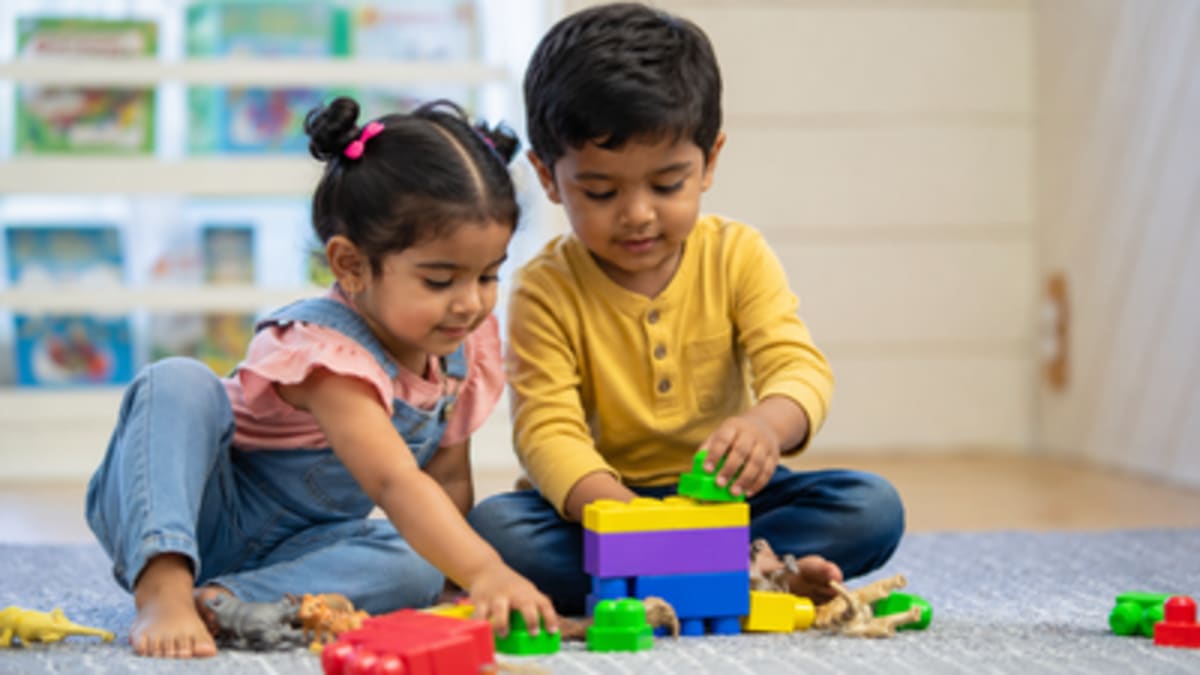
When children play this way, something remarkable happens. They negotiate fairness when there's no adult to settle disputes. They compromise, persuade, apologize and sometimes accept losing. They test boundaries and adapt when plans fall apart.
A recent Australian study followed more than 2,200 children over several years and found compelling evidence. Toddlers and preschoolers who spent more time in unstructured play showed significantly better self-regulation two years later, even after researchers accounted for other influencing factors.
Self-regulation means managing emotions, attention and impulses. It's one of the strongest predictors of success in school and life, often more important than IQ.
During pretend play, children constantly practice what psychologists call executive functions. Planning a game, switching roles, following self-created rules and imagining what another person might think all exercise the brain's management system.
A review in Early Childhood Research Quarterly found that pretend play is associated with better language development, creativity, social understanding and emotional skills. While researchers caution that more studies are needed to prove direct causation, the connections are promising.
Why This Inspires
Today's children spend more time in organized classes, structured sports and supervised activities than previous generations. Opportunities to roam neighborhoods, invent games with friends or simply figure things out have steadily shrunk.
Scientists are careful not to blame every childhood challenge on reduced playtime. Modern kids also navigate smartphones, social media, changing school pressures and altered sleep patterns. But the evidence increasingly suggests that stepping back gives children something structured activities can't.
When adults direct every moment, children miss the chance to practice being independent thinkers. They don't learn to handle boredom, settle their own disagreements or discover what happens when imagination leads the way.
The good news? The solution is beautifully simple. Sometimes the best thing parents can do is nothing at all, letting children discover what they're capable of when given the freedom to play.
More Images



Based on reporting by Times of India - Good News
This story was written by BrightWire based on verified news reports.
Spread the positivity!
Share this good news with someone who needs it