Knee Pain Treatment Offers Relief Without Surgery
A minimally invasive procedure called genicular artery embolization is helping people with knee osteoarthritis avoid joint replacement surgery while reducing pain for up to four years. About 70% of patients cut their pain in half or more after the one-hour outpatient treatment.
Imagine reducing years of knee pain with a single outpatient procedure that takes just an hour. For people suffering from osteoarthritis, that possibility is now becoming reality.
Cynthia Schraf-Fletcher knows the difference firsthand. The 74-year-old underwent genicular artery embolization (GAE) on her right knee nearly a year ago. She says the results rival her previous total knee replacement, but without the major surgery and lengthy recovery.
"I couldn't be more pleased," says Schraf-Fletcher, who now gardens, bikes, and enjoys daily activities with far less pain. After experiencing complications from her earlier knee replacement surgery, she was eager to try something less invasive.
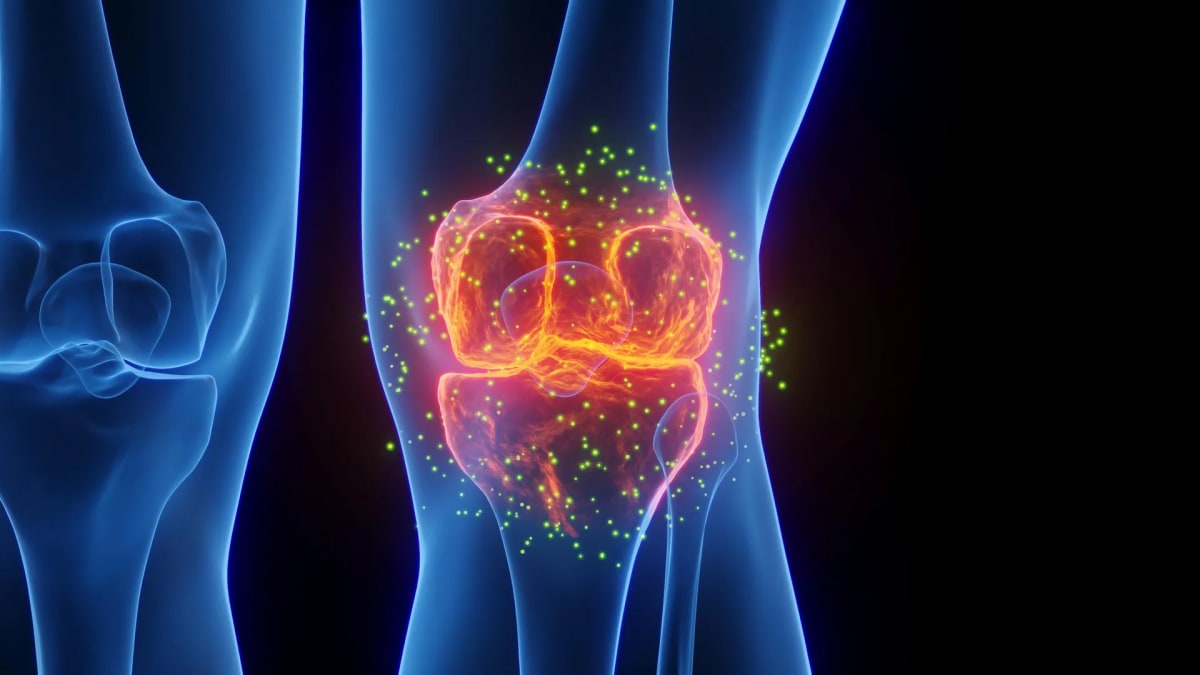
GAE works by targeting inflammation at its source. During the procedure, doctors thread a tiny catheter through the femoral artery to reach blood vessels around the knee. They then release microscopic beads into the vessels feeding inflamed tissue, reducing blood flow to painful areas.
The entire treatment happens under conscious sedation, meaning patients stay relaxed but awake. Most people go home the same day and recover within days, not months.
Dr. Leigh Casadaban, who performed Schraf-Fletcher's procedure at the University of Colorado Anschutz School of Medicine, explains the breakthrough. "For treating osteoarthritis in the knees, we often think of medications, physical therapy, maybe a steroid injection, and then on the far end is total knee replacement," she says. "There really hasn't been anything for patients in between."
The results speak for themselves. About 70% of patients see dramatic improvement, with pain scores dropping by half or more. Some patients report zero pain after treatment.
The Ripple Effect
The impact reaches beyond individual relief. Japanese researchers tracking patients for four years found sustained pain reduction from a single procedure. U.S. studies now show two-year benefits for patients who respond well.
The FDA has taken notice, granting "breakthrough device status" to several GAE devices since 2021. This designation fast-tracks technologies that could significantly help patients, signaling confidence in the procedure's potential.
Casadaban is leading clinical trials to understand exactly how GAE changes what's happening inside the knee. By studying inflammation markers and joint fluid, researchers hope to identify which patients will benefit most and potentially improve outcomes further.
People with mild to moderate osteoarthritis tend to see the best results, though those with advanced disease can still benefit. The procedure offers hope for millions who've exhausted conservative treatments but aren't ready for major surgery.
For Schraf-Fletcher and countless others facing chronic knee pain, GAE represents something rare in medicine: a genuine middle ground that actually works.
Based on reporting by Google News - New Treatment
This story was written by BrightWire based on verified news reports.
Spread the positivity!
Share this good news with someone who needs it