Kolkata Lawyer Builds India's First Dragonfly Pond
A Kolkata lawyer invested his life savings to transform forgotten Sundarbans land into India's first dragonfly conservation pond. Now it controls mosquitoes naturally, supports biodiversity, and teaches thousands of children about living ecosystems.
In the Sundarbans, schoolchildren press close to a pond's edge, watching dragonflies skim across the water like flying jewels. "Look, they're laying eggs!" one child shouts, pointing at the ripples spreading across India's first dedicated dragonfly pond.
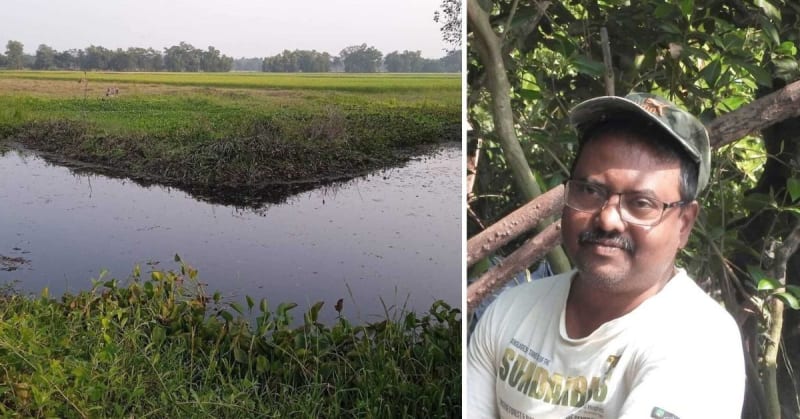
Mantu Hait stands nearby, smiling quietly. The 51-year-old civil lawyer from Kolkata has spent his entire life savings building something extraordinary.
Hait's journey started years ago when he spotted abandoned land near Kolkata's train stations, overgrown with garbage. Without permission, he began his guerrilla gardening campaign, scattering seeds collected from courthouses and markets across the wasteland.
He planted 25,000 trees over a one-kilometer stretch. The forgotten dump became "Mantu's Garden," a green oasis that birds and wildlife quickly claimed as home.
But Hait realized trees alone weren't enough. He wanted spaces where people could learn about nature firsthand, not just from textbooks.
So he invested Rs 75 lakhs of his own money and loans from friends to buy land across West Bengal. He built Nature Study Centres in different climate zones, from mangrove wetlands to dry plateaus, each designed for hands-on ecological learning.
The crown jewel sits on Bali Island in the Sundarbans. The eight-bigha centre includes indigenous fish conservation ponds, butterfly gardens, and camping grounds where families and researchers can stay overnight.
At its heart lies the dragonfly pond. Working with zoologist Prosenjit Dawn, Hait designed six water bodies with different microhabitats to support various dragonfly and damselfly species.
They opened in August 2021 as a completely new concept in freshwater conservation. The pond does more than look beautiful.
Dragonflies are nature's mosquito control, with each one eating hundreds of mosquitoes daily. The pond creates breeding grounds for these helpful insects while teaching visitors about ecological balance.
Students from zoology and botany programs now visit regularly to study aquatic plants and insect communities. Children who once learned about food chains from diagrams now watch them unfold in real time.
The Ripple Effect
Hait's work reaches far beyond one pond. His philosophy of micro-urban afforestation shows how small spaces, like rooftops or vacant plots, can collectively restore biodiversity in cities.
He collaborates with NGOs and volunteers rather than accepting government aid, keeping his independence while spreading his vision. Local admirers call him Aranyadev, meaning Forest God, but Hait remains practical about his mission.
"We were taught in school that trees give oxygen," he reflects. "But no one told us how much damage has already been done, or that restoration requires protecting big trees too, not just planting saplings."
His Nature Study Centres now teach that complete lesson. They integrate ecology, geography, and culture in ways textbooks cannot match.
When Cyclone Amphan damaged many of his trees, Hait simply continued replanting. For him, every rupee spent isn't an expense but an investment in future generations.
"I have invested my life's savings to pay my debts to the planet," he says. At the dragonfly pond, those debts transform into living lessons as children discover that nature isn't something distant but alive, shimmering right before their eyes.
More Images
%2Fenglish-betterindia%2Fmedia%2Fmedia_files%2F2026%2F02%2F27%2Ftbi-featured-image-33-2026-02-27-18-18-00.jpg)
%2Fenglish-betterindia%2Fmedia%2Fmedia_files%2F2025%2F11%2F20%2Fwild-at-heart-banner-image-microsite-banner-2025-11-20-16-17-04.jpg)
%2Ffilters%3Aformat(webp)%2Fenglish-betterindia%2Fmedia%2Fmedia_files%2F2026%2F02%2F27%2Fname-plate-of-dragon-fly-pond-2026-02-27-18-18-29.jpeg)
Based on reporting by The Better India
This story was written by BrightWire based on verified news reports.
Spread the positivity!
Share this good news with someone who needs it