Korea Team Achieves Real-Time 3D Hologram Video Calls
Scientists in South Korea just made Star Wars-style hologram communication a real possibility. Their system captures and replays actual light waves in 3D at video speed, bringing us closer to true holographic telepresence.
Imagine video calling someone and seeing them standing in your room as a true three-dimensional hologram, not just a flat image on a screen.
Researchers at the Korea Advanced Institute of Science and Technology just turned that science fiction dream into working reality. Professor YongKeun Park and his team developed a system that captures and replays the actual physical light waves from real objects and people, creating genuinely three-dimensional holograms that behave like real light.
Here's what makes this different from every other 3D technology you've seen. Current systems, even fancy virtual reality headsets, don't actually reproduce real light. They estimate what things look like, build computer models, and render images that appear three-dimensional. It's convincing, but it's still a visual trick.
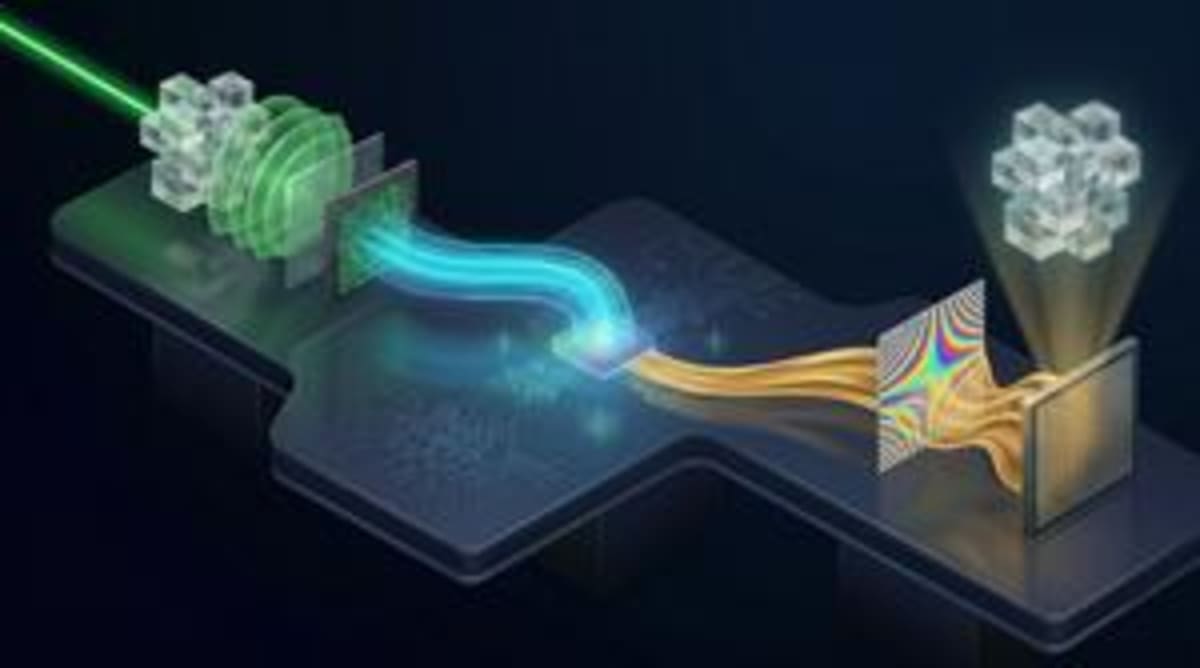
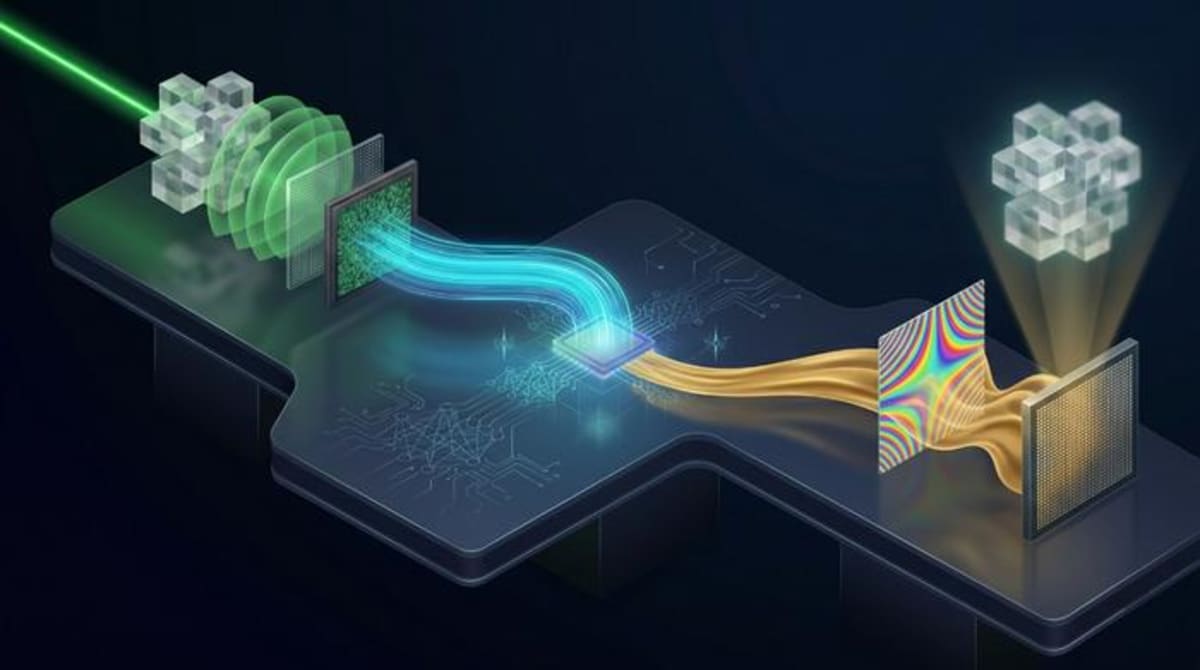
The KAIST team took a completely different approach. Their system directly measures the light waves themselves, capturing both their brightness and an invisible property called phase that determines how light travels through space. When you replay these measured waves, you get true optical depth with natural focusing, just like looking at a real object.
The technical challenge was enormous. Regular cameras can't see the phase of light, only its intensity. Traditional holography solves this with complex laser setups that shake apart if you bump the table. The Korean team bypassed all that using a special optical diffuser that converts light waves into patterns a regular camera can capture, then uses algorithms to decode the original wave.
The results speak for themselves. The system runs at 28 frames per second with only 50 milliseconds of delay, fast enough for real-time conversation. People viewing the holograms can naturally refocus their eyes at different depths, experiencing realistic three-dimensional presence.
The Ripple Effect
This breakthrough could transform how humans connect across distance. Today's video calls flatten us onto screens. Tomorrow's holographic telepresence could make remote collaboration feel like being in the same room, with all the natural depth cues our eyes expect.
The applications stretch far beyond social calls. Surgeons could examine patients remotely with true depth perception. Engineers could inspect machinery. Teachers could demonstrate complex three-dimensional concepts. Scientists could visualize data as if it existed in physical space.
The current prototype still needs work. It only produces green holograms, and image quality suffers from speckle noise common in laser systems. The team acknowledges these limitations come from prototype hardware, not the fundamental approach. Better sensors, full-color light sources, and faster processors should overcome these hurdles.
What matters most is the philosophical shift. Instead of asking "how can we make images look three-dimensional," the KAIST team asked "can we measure and transmit actual light?" That question opened a path toward communication systems that send physical light fields rather than digital approximations.
The researchers envision future systems combining their wavefront measurement technique with artificial intelligence, advanced displays, and data compression to make holographic communication practical and affordable.
The technology that once seemed impossible is now running at video speed in a Korean laboratory, bringing us one step closer to the future we imagined.
More Images
Based on reporting by Google News - South Korea Breakthrough
This story was written by BrightWire based on verified news reports.
Spread the positivity!
Share this good news with someone who needs it