Korea's First Science Hub Turns 60, Eyes Global Missions
South Korea's pioneering research institute started in a 10-pyeong room with three people and helped transform a poor nation into a tech powerhouse. Now KIST is tackling seven world-changing missions from AI to Alzheimer's drugs.
In February 1966, three people crammed into a tiny room in Seoul with a bold dream: use science to lift their country out of poverty.
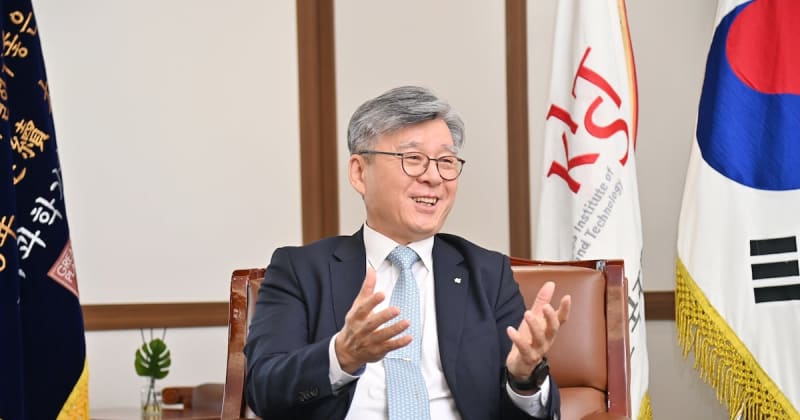
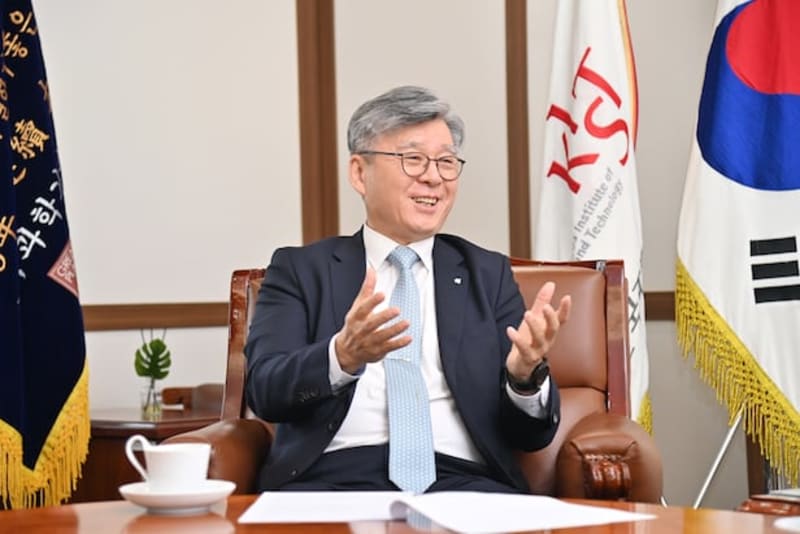
That humble beginning became KIST, the Korea Institute of Science and Technology, which celebrates 60 years this month as one of the forces that helped turn South Korea into a global innovation leader. Director Oh Sang-rok calls it "a period of accumulation leading to the maturity of South Korea's scientific and technological development."
The founding story reads like something from a movie. After South Korea sent troops to Vietnam, President Park Chung-hee asked U.S. President Johnson for help building a research institute. Johnson promised $10 million, South Korea matched it, and KIST was born with funding equal to about 6,600 bags of rice at the time.
To attract Korean scientists from overseas, KIST offered salaries two to three times higher than university professors and provided on-site apartments. In January 1970, 31 pioneer researchers returned home to lead the charge. They included Dr. Sung Ki-soo, the "father of Korean IT," and Dr. Kim Jae-kwan, who helped establish Pohang Iron and Steel Company.
The breakthroughs came fast. KIST developed South Korea's first color TV in 1972 and the first domestic minicomputer in 1975. In 2021, researchers built the world's second portable quantum computer that operates at room temperature. Last year, they signed a $370 million deal with an Italian pharmaceutical company for an Alzheimer's drug candidate, the largest single technology export by any government research institution.
The Ripple Effect
KIST's transformation mirrors South Korea's own journey from aid recipient to innovation powerhouse. The institute that once struggled to afford equipment now tackles challenges that could benefit millions worldwide.
Oh says the next chapter means thinking bigger. Instead of chasing individual successes, KIST reorganized around seven global missions: humanoid and physical AI, next-generation semiconductors, quantum technology, clean hydrogen, climate solutions, brain science, new drugs, and space materials.
Recent government changes allow researchers to focus on long-term projects instead of scrambling for short-term funding. Oh compared hiring new talent to "bringing in a star coach to manage a soccer team," recently appointing a former KAIST professor to lead the Physical AI division.
At the 60th anniversary ceremony attended by 400 science leaders, attendees heard a special message from KIST's late first director, Choi Hyung-seop, recreated using artificial intelligence. The moment captured how far the institute has traveled from that cramped room six decades ago.
"We will transform into a research institution that finds answers to improve the quality of life for future generations," Oh said, "beyond past achievements."
More Images
Based on reporting by Regional: south korea technology (KR)
This story was written by BrightWire based on verified news reports.
Spread the positivity!
Share this good news with someone who needs it