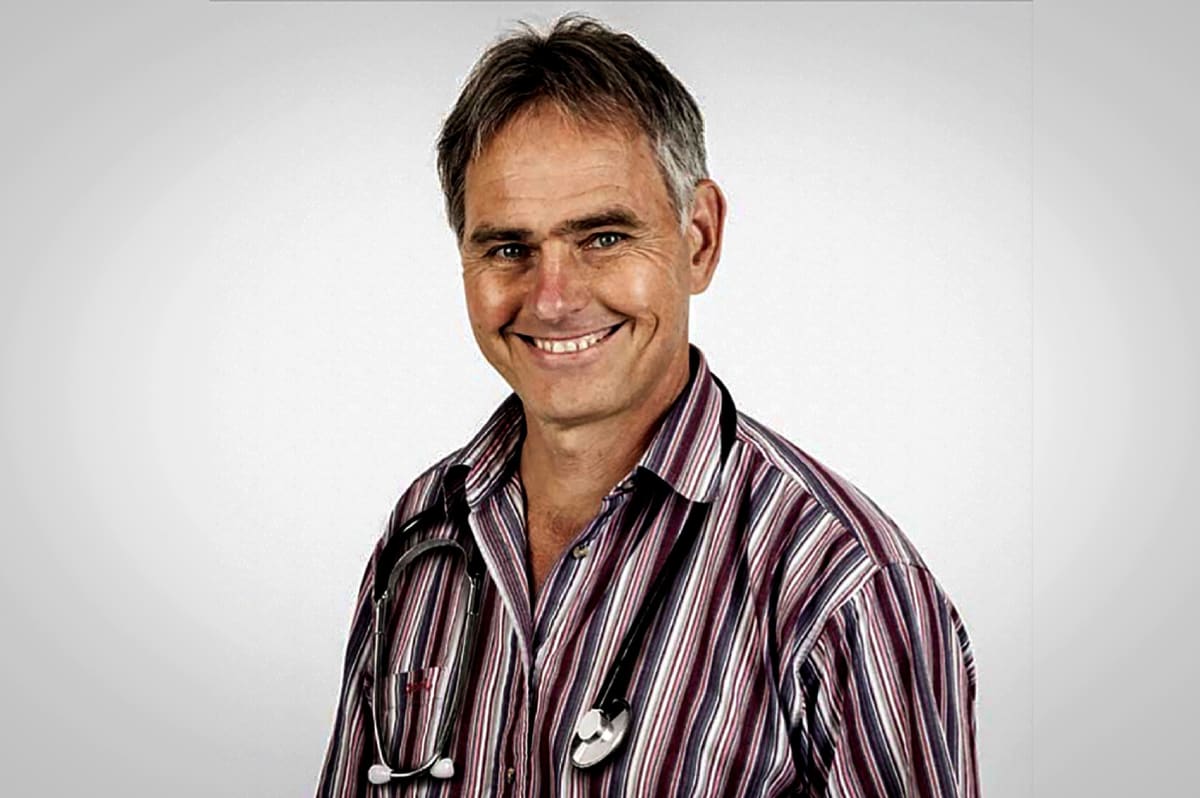
%2Ffile%2Fattachments%2Forphans%2FImage1ProfAndrewRoss_534320.jpg)
KZN Doctor's Scholarship Funds 663 Rural Health Graduates
A desperate rural hospital superintendent turned a R30,000 gamble into a scholarship program that's now graduated 663 health professionals from KwaZulu-Natal's poorest areas. Over 25 years, Dr. Andrew Ross's vision has transformed staffing at rural hospitals while giving hundreds of young people life-changing opportunities.
When Dr. Andrew Ross had just R30,000 in the bank and four eager students asking if he had their scholarship money, he said yes anyway.
It was 1999, and Ross was running Mosvold Hospital in rural Ingwavuma, KwaZulu-Natal, with only two doctors for an entire district. The HIV pandemic was surging, foreign doctor recruitment felt like "a working safari," and the government had left rural hospitals to find their own solutions.
Ross believed rural students could solve rural staffing problems forever. If young people from these communities could study healthcare professions and return home to work, hospitals would finally have staff who understood the language, culture, and challenges their patients faced.
The first four scholarship recipients showed up in January 1999 with acceptance letters to study optometry, physiotherapy, biomedical technology, and pharmacy. A fifth student, Siphamandla Mngomezulu, arrived soon after with news he'd gotten into psychology at the University of Zululand.
Mngomezulu's story captured everything Ross hoped to change. Raised by a single mother who rode a donkey into Eswatini each Saturday to buy sugar for resale, he attended a school without a math teacher and traveled to another school every Saturday to learn. He was preparing to work in the mines when the scholarship offer arrived.
Ross had convinced an American organization called Medical Education for South African Blacks to split costs with him. He'd pitched corporate funders who doubted rural students could succeed at university, especially in health sciences.
He'd rallied the local traditional leadership, community members, and hospital staff to contribute money and encourage children to study hard. Outreach teams visited schools teaching math and science, inviting interested students to tour hospital departments and meet healthcare professionals.
The deal was simple: students had to be from Ingwavuma, secure admission to a health sciences program, volunteer two weeks at the hospital, and sign a year-for-year work-back contract.
The Ripple Effect
Twenty-five years later, Ross's Friends of Mosvold organization, which became the Umthombo Youth Development Foundation, has graduated 663 students from rural KwaZulu-Natal. The program has produced 270 doctors, 99 pharmacists, and 45 nurses, all from communities that once struggled to attract any qualified health workers.
Those first four students all completed their degrees and took senior roles in public health, proving Ross's instinct right. Rural students weren't just capable of succeeding at university. They were exactly the healthcare workers their communities needed.
The model showed that investing in local talent creates lasting change in ways that recruiting foreign doctors for short stints never could. These graduates speak their patients' languages, understand their cultural context, and have personal stakes in improving their home communities.
What started as a desperate hospital superintendent's R30,000 gamble became a blueprint for solving rural healthcare staffing across an entire province.
More Images
%2Ffile%2Fattachments%2Forphans%2FImage2FranceNxumaloNkosingiphileNyawoDumsaniGumede2010_785125.jpg)
%2Ffile%2Fdailymaverick%2Fwp-content%2Fuploads%2F2024%2F08%2Fimage1-1.jpg)
Based on reporting by Daily Maverick
This story was written by BrightWire based on verified news reports.
Spread the positivity!
Share this good news with someone who needs it