Lego's "Solution Diversity" Metric Challenges Business Norms
What if success wasn't measured by everyone getting the same answer, but by everyone discovering different ones? Lego Education has built an entire philosophy around this radical idea, and it's changing how we think about leadership.
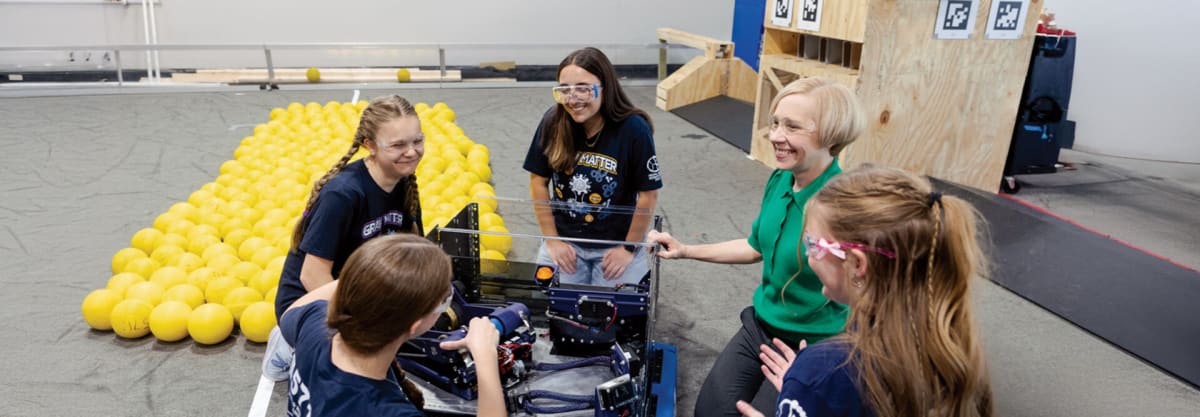
When Andrew Sliwinski's team at Lego Education sends 10 groups of kids into a room to build something, they're hoping for 10 completely different creations. If everyone builds the same thing, they consider it a failure and go back to the drawing board.
This approach has a name: solution diversity. It's the metric Lego uses to measure whether their learning experiences are truly opening minds or just funneling everyone down the same path.
Sliwinski, who leads product experience at Lego Education and previously codirected Scratch at MIT Media Lab, has spent his career building tools used by hundreds of millions of children worldwide. His core belief challenges traditional education and business thinking: real learning isn't about converging on one right answer but discovering many possible solutions.
The contrast with traditional business education is striking. About 75% of Fortune 500 top CEOs hold MBAs or graduate degrees, and those programs typically reward students for finding "the right answer." But in the real world, there isn't just one reality to navigate.
Consider how AI means different things to different people right now. Those varied meanings affect everything from product adoption to infrastructure policy. A leader who trains their organization to quickly converge on a single answer has essentially built a company-wide blind spot.
The Ripple Effect
This thinking is spreading beyond Lego's colorful bricks into real workplaces. When someone goes "off topic" in a brainstorm, we usually redirect them to stay focused. But what if those detours are actually reframes that unlock paths nobody had considered?
Business schools are starting to take notice. The push isn't to abandon analytical skills or strategic thinking but to add perspective-widening experiences that help future leaders see the world's kaleidoscope of possibilities.
Lego Education has taken this from Detroit to Seoul to Copenhagen, transforming how schools think about learning. The company's commitment to play isn't just about fun. It's about preserving the social, imaginative, and emotionally messy play patterns that produce the most divergent thinking.
In most classrooms and offices, those patterns get crowded out as distractions. But they might be the very thing that unlocks breakthrough thinking.
The lesson extends far beyond education. Organizations that can hold multiple realities at once, that value different perspectives reaching different conclusions, may be better equipped for a world that's constantly renegotiating what things mean.
Progress isn't always about everyone marching in the same direction—sometimes it's about celebrating when everyone discovers their own path forward.
Based on reporting by Fast Company
This story was written by BrightWire based on verified news reports.
Spread the positivity!
Share this good news with someone who needs it