Living Walls Grow, Breathe, and Fix Their Own Cracks
Scientists created building materials embedded with living bacteria that capture carbon from the air, repair themselves, and strengthen over time. A massive installation at the Venice Architecture Biennale is testing whether these living walls can survive for months.
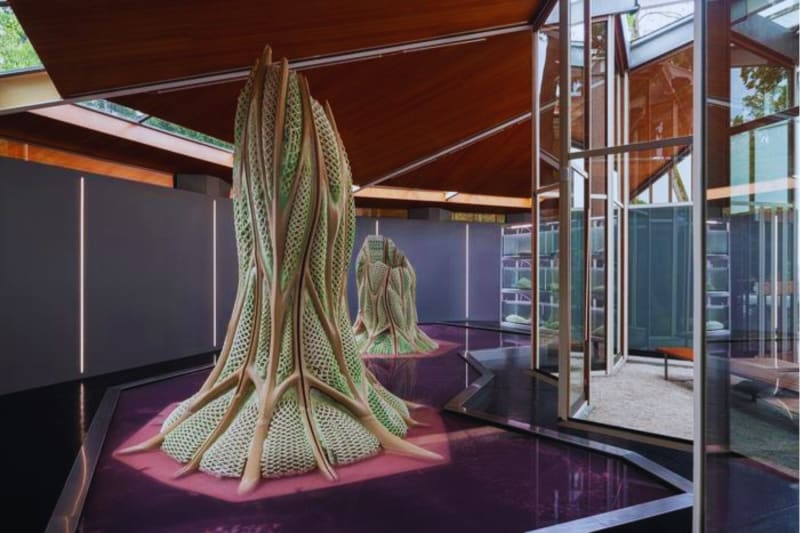
Imagine walls that breathe, grow stronger with age, and heal their own damage without human intervention. That future just took a major leap forward at the Venice Architecture Biennale, where the largest living building material ever created is now on display.
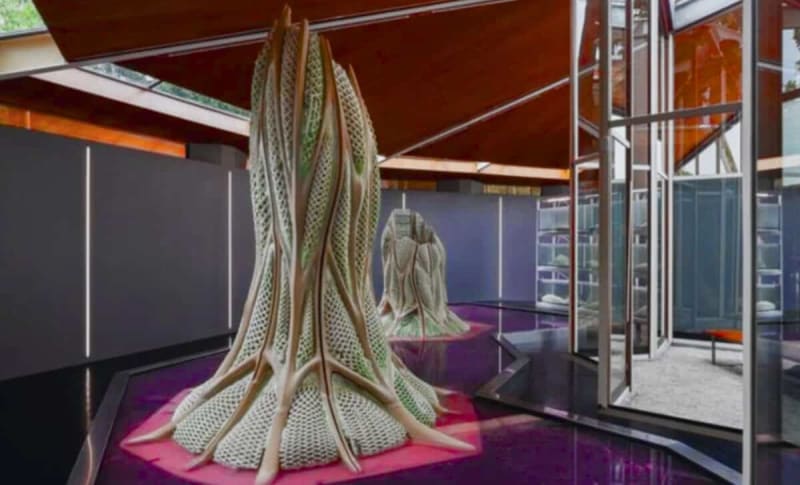
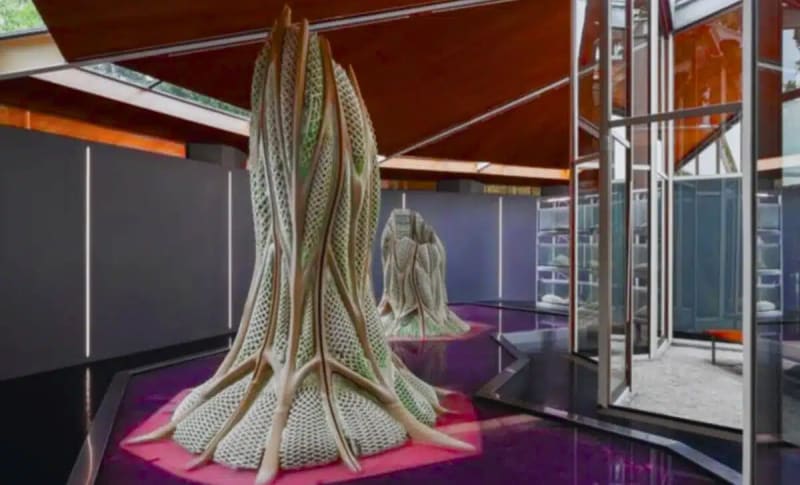
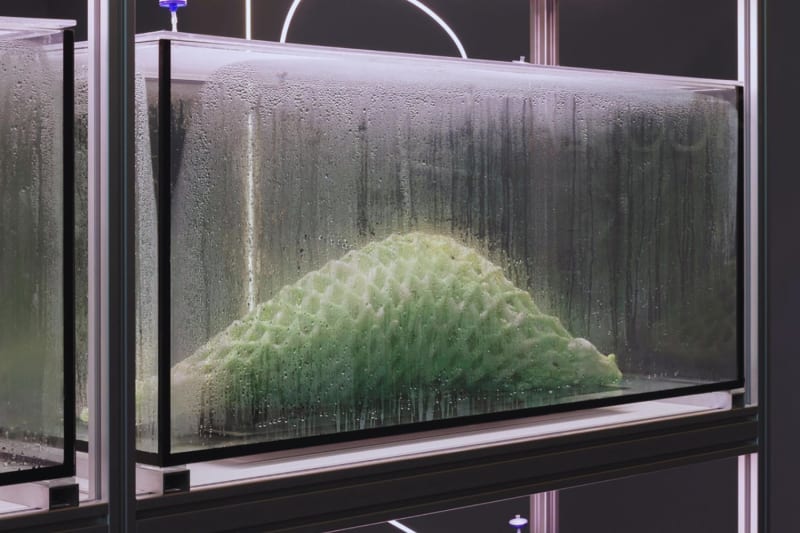
The installation features 3D printed structures embedded with living cyanobacteria that continuously pull carbon dioxide from the air. Scientists published research showing these organisms survived in building materials for over 400 days, actively capturing carbon and strengthening the structure the entire time.
The breakthrough involves tiny bacteria living inside a specially designed gel that transmits light for photosynthesis. As the organisms multiply, they do two remarkable things simultaneously: they convert CO₂ into biomass through photosynthesis, and they trigger a chemical process that creates calcium carbonate, essentially growing minerals inside the material.
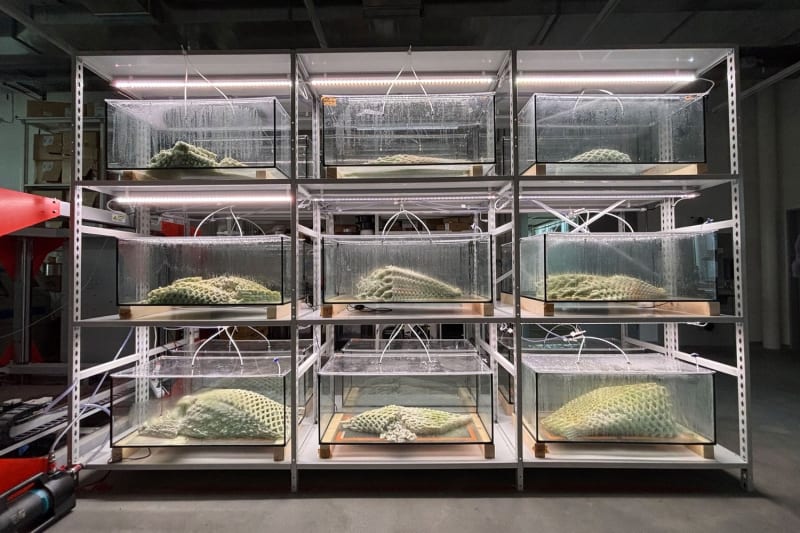
Over 400 days, researchers measured the materials capturing 26 milligrams of CO₂ per gram of gel. The bacterial colonies also deposited calcium carbonate throughout the structure, potentially reinforcing it over time. Control samples without bacteria showed no mineral accumulation whatsoever.
The Venice installation spans an entire pavilion at the Canada Pavilion, requiring full time caretakers to maintain the proper light, humidity, and temperature. If the organisms die, the entire installation fails. This nine month experiment will test whether living materials can survive at architectural scale, not just in laboratory petri dishes.
Andrea Shin Ling, the Canadian architect leading the project, developed the installation over four years with the Living Room Collective. The team used a biofabrication platform from ETH Zürich capable of printing living materials at building scale, something never attempted before.
The Ripple Effect
Beyond carbon capture, these materials represent a fundamental shift in how we might construct buildings. Traditional concrete production accounts for roughly 8% of global CO₂ emissions. Living materials flip that equation, removing carbon instead of releasing it.
The materials require no external energy once installed and produce zero toxic byproducts. They just need sunlight, nutrients, and water, growing stronger and capturing more carbon as time passes. This contrasts sharply with other biological reinforcement methods that require constant chemical supplies and create harmful ammonia waste.
The Venice experiment runs until November 23, 2025. Every day the bacteria survive proves these materials can move from laboratory curiosity to real world application, opening doors to buildings that actively help heal the planet rather than harm it.
More Images
Based on reporting by Google News - Science
This story was written by BrightWire based on verified news reports.
Spread the positivity!
Share this good news with someone who needs it