Maine Floats First Deep Ocean Wind Turbine to Grid
Maine just proved floating wind turbines can deliver clean power from deep ocean waters where traditional turbines can't reach. The breakthrough could unlock massive renewable energy potential along steep coastlines worldwide.
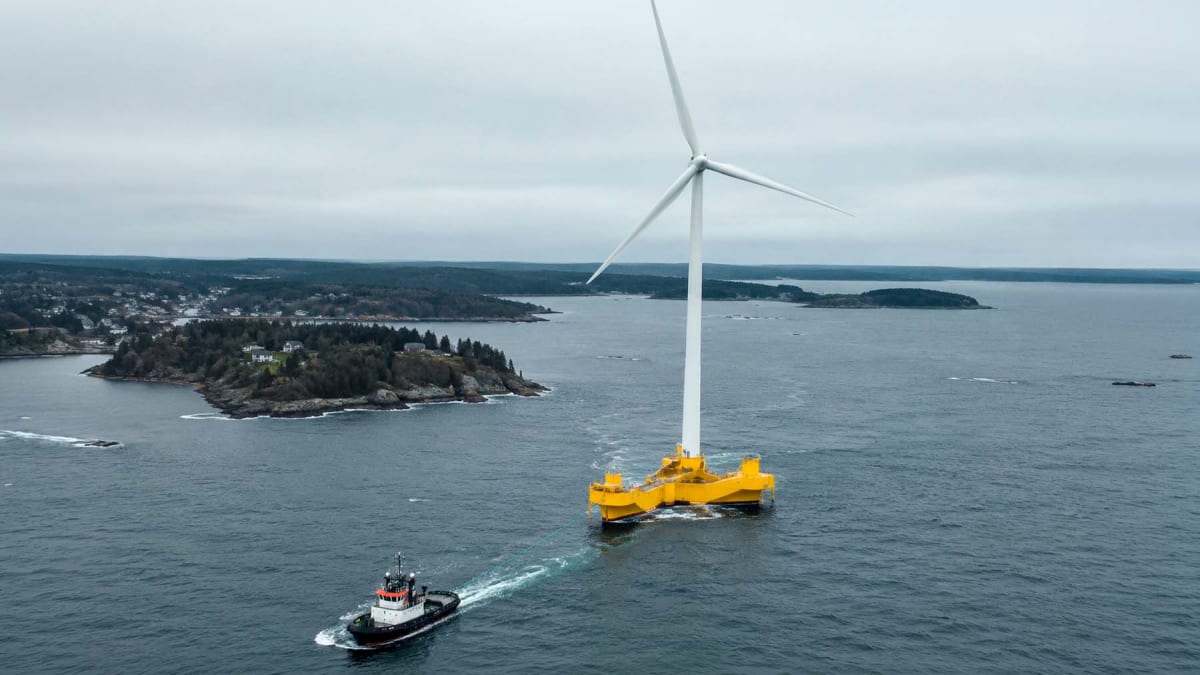
A concrete platform floating off the coast of Maine is now sending clean electricity to homes, marking a breakthrough in how we harvest ocean wind power.
The University of Maine designed the VolturnUS, a floating wind turbine that solves a problem that's stumped coastal energy for decades. Traditional offshore turbines need shallow water under 200 feet deep because they're anchored to the seafloor with massive steel foundations. But 80% of the ocean's strongest winds blow over waters far deeper than that.
Along Maine's coast and much of the Pacific shoreline, the seafloor drops steeply just offshore. That means the best winds have been completely out of reach until now.
The team built the entire turbine at a facility in Brewer, Maine, then towed it 30 miles down the Penobscot River to Castine Harbor and out to sea. No expensive offshore construction crews needed. No specialized vessels struggling in deep water.
The floating platform uses locally sourced concrete instead of imported steel, cutting costs dramatically. The concrete design creates a naturally low center of gravity that keeps the turbine stable without complex ballast systems. It also resists saltwater corrosion better than steel, meaning less maintenance over its lifetime.
An undersea cable connects the floating turbine directly to Maine's power grid. Right now, hundreds of sensors on the platform are collecting performance data as it faces real ocean conditions.
The Ripple Effect
This isn't just about one turbine bobbing in the Atlantic. Coastal regions around the world face the same challenge Maine just solved. As electricity demand surges from data centers and new technology, land-based renewables can't scale fast enough to keep pace.
The U.S. Department of Energy invested in floating wind specifically because deepwater access could transform coastal energy. Countries with steep underwater slopes like Japan, Norway, and nations along the U.S. West Coast have been waiting for technology exactly like this.
Maine's commercial-scale research installations are now gathering the proof that floating wind can withstand severe storms while delivering reliable power at reasonable costs. Every data point collected brings the technology closer to widespread deployment.
The VolturnUS prototypes are already deployed across different ocean sites, stress-testing the design in varying conditions. If they perform as hoped, floating wind farms could finally tap the ocean's full clean energy potential.
Deep ocean winds that seemed forever out of reach are now powering homes in Maine, and coastal communities worldwide are watching closely.
More Images

Based on reporting by Google News - Wind Energy
This story was written by BrightWire based on verified news reports.
Spread the positivity!
Share this good news with someone who needs it