Man Spends 15 Years Hauling Water to Thirsty Forest Animals
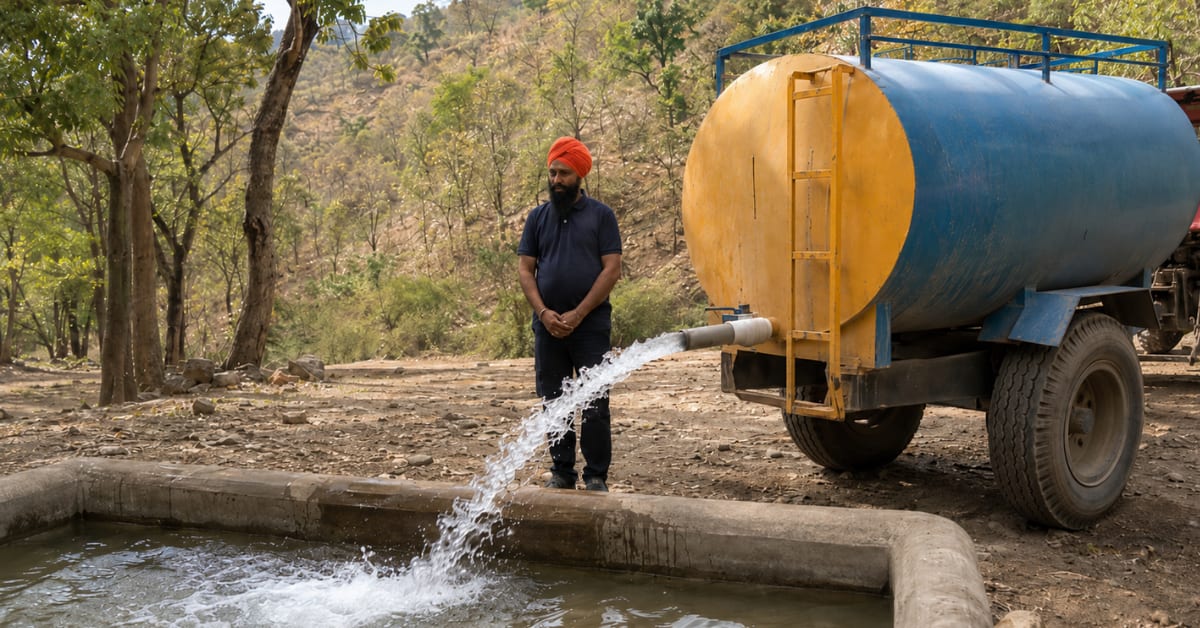
Every summer for 15 years, Harpal Singh Pali has driven his personal water tanker into Punjab's parched Shivalik hills to refill 25 water holes for desperate wildlife. His solo mission keeps hundreds of animals alive and prevents dangerous encounters with nearby villages.
Every other day through Punjab's brutal summer heat, a tractor rumbles up dry hillsides carrying something more precious than gold: water for animals who would otherwise die of thirst.
Harpal Singh Pali starts before sunrise, driving his personal tanker through five kilometers of Shivalik forest near Ropar district. By the time heat blankets the hills, wild boars, sambar deer, blue bulls, and peacocks are already gathering at shallow pits and concrete troughs carved into the landscape.
They recognize the sound of his tractor. For 15 years, they've been waiting for him.
Pali, now called Ropar's "Water Man," has made it his life's work to keep wildlife alive during the harshest months. Using his own money and equipment, he fills 25 water holes and several rainwater harvesting ponds spread through the forest.
The Shivalik belt transforms after March when seasonal water sources vanish. Desperate animals wander into villages searching for water, creating dangerous conflicts with people.
Pali saw this pattern repeating year after year and decided to act. He built 15 concrete-reinforced water holes that can withstand intense summer conditions and repeated refilling.
During peak heat, he hauls water nearly every other day. Fuel costs have climbed, and maintaining the tanker drains his wallet, but Pali has never accepted outside funding.
"I have never accepted a single rupee," he said. "I fund it from my own pocket."
His reason is simple and profound. "I believe the blessings of wild animals have helped my livelihood prosper. That is why I dedicate 10 percent of my income to wildlife welfare."
The mission started with a childhood memory that never faded. At six years old, Pali walked with his mother to a small water hole near their village, carrying earthen pots to pour water for peacocks.
"When I was young, I decided I would continue her work in a bigger way when I grew up," he said. That promise became a network of water points running through the forest.
The Ripple Effect
Officials say Pali's work reaches far beyond thirsty animals. Ropar Divisional Forest Officer Kanwardeep Singh explained that water retention created by the ponds helps preserve vegetation in this vulnerable region prone to severe soil erosion.
The water sources also prevent animals from wandering into settlements, reducing crop damage and protecting both people and wildlife. "Any community contribution towards preserving wildlife and forests is welcome," Singh said.
Over the years, Pali has rescued injured animals hurt in poaching attempts or attacked by stray dogs. One sambar deer he saved still visits his home regularly.
"That sambar comes to our house regularly," he said. "It feels like part of the family."
In hills stripped bare by heat and silence, the arrival of Pali's tanker means survival for hundreds of creatures waiting in the shade for water to arrive.
More Images
.png)
%2Fenglish-betterindia%2Fmedia%2Fmedia_files%2F2026%2F05%2F21%2Fwildlife-shivalik-2026-05-21-21-51-44.png)
%2Fenglish-betterindia%2Fmedia%2Fmedia_files%2F2025%2F11%2F20%2Fwild-at-heart-banner-image-microsite-banner-2025-11-20-16-17-04.jpg)
%2Ffilters%3Aformat(webp)%2Fenglish-betterindia%2Fmedia%2Fmedia_files%2F2026%2F05%2F21%2Fwildlife-shivalik-1-2026-05-21-21-57-20.png)
Based on reporting by The Better India
This story was written by BrightWire based on verified news reports.
Spread the positivity!
Share this good news with someone who needs it