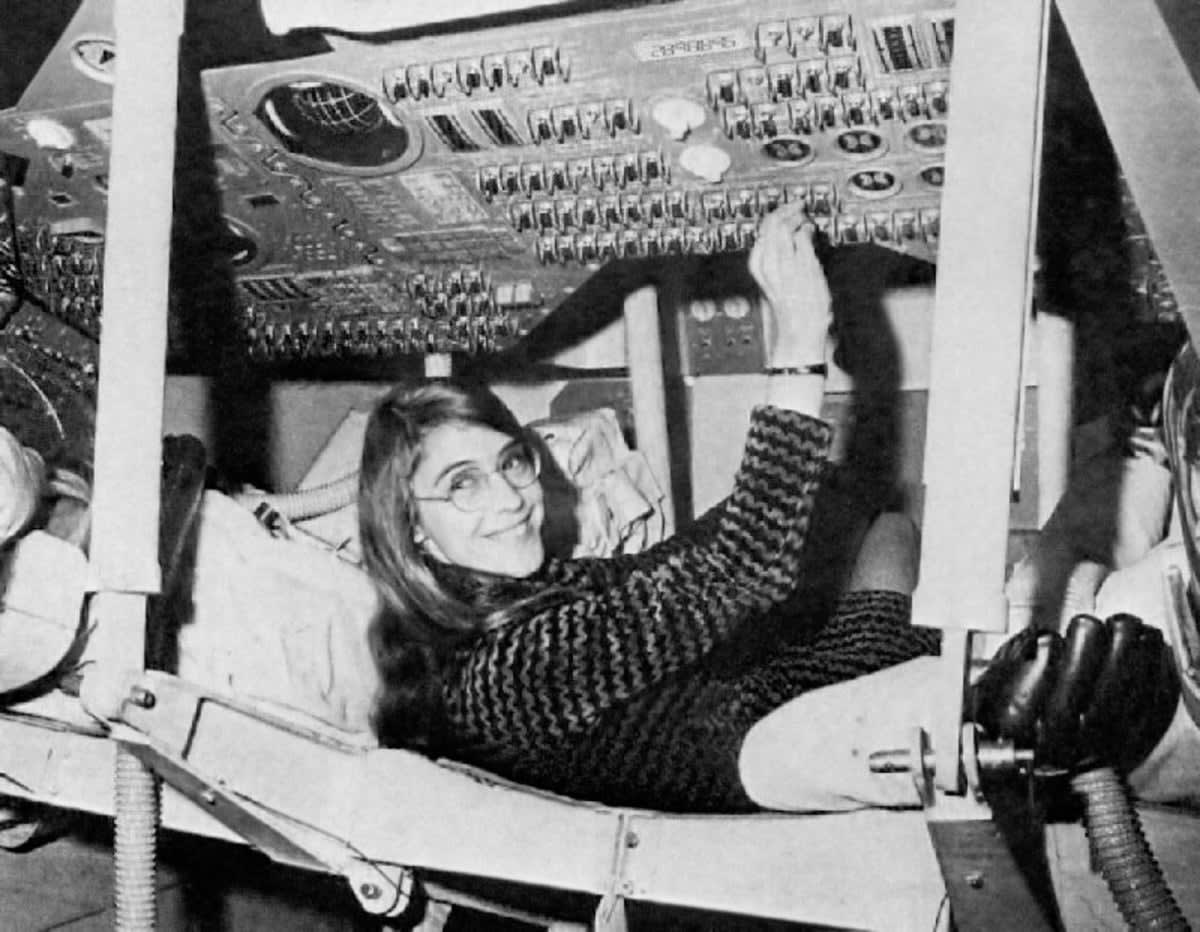
Margaret Hamilton's Code Saved the 1969 Moon Landing
When Apollo 11's computer threw five alarms during the moon landing, Margaret Hamilton's safety features kept the mission alive. The computer scientist's innovative programming made humanity's first steps on the moon possible.
When Neil Armstrong and Buzz Aldrin approached the moon on July 20, 1969, their computer started screaming. Five alarms flashed in 278 seconds, signaling the system was overloaded.
But thanks to computer scientist Margaret Hamilton, the mission didn't fail. She had programmed safety features that let NASA understand exactly what was happening and guide the astronauts safely down.
Hamilton worked with technology that sounds impossible today. The Apollo 11 lunar module's computer had just 74 kilobytes of storage. Your smartphone has two million times more memory for scrolling social media.
Programming looked completely different in the 1960s too. Hamilton couldn't type commands into modern languages like Python. She had to translate complex math into sequences of 0's and 1's, then punch holes in paper tape to create executable code.
The lunar module's computer solved differential equations to track speed, altitude, and rotation in real time. Hamilton had to make these calculations work with extremely limited computing power, creating efficient code that could handle the unexpected.
Her career started at MIT with meteorologist Edward Lorenz. She learned to wrangle complex systems of equations that described how things change over time. This mathematical foundation became crucial for space flight.
Hamilton and her team didn't just write code. They invented new ways of thinking about software reliability and error handling. Her daughter, then four years old, may have even inspired some safety considerations.
Why This Inspires
Hamilton worked in an era when women in computer science faced enormous barriers. She persevered anyway, becoming a director of software engineering at NASA. Her innovations didn't just land humans on the moon. They established principles of software design still used today in everything from medical devices to your car's computer systems.
The alarms that flashed during Apollo 11's descent would have crashed most systems. Hamilton's code kept running, prioritizing critical landing functions while alerting the crew to non-essential overloads. Mission Control trusted her work enough to say "go" for landing.
Modern programmers work with infinitely more powerful computers, yet Hamilton's fundamental approach to solving problems remains relevant. She showed that careful mathematical thinking combined with innovative safety design can achieve the impossible.
Fifty-five years later, her code stands as proof that human ingenuity can overcome massive technical limitations when lives depend on it.
More Images
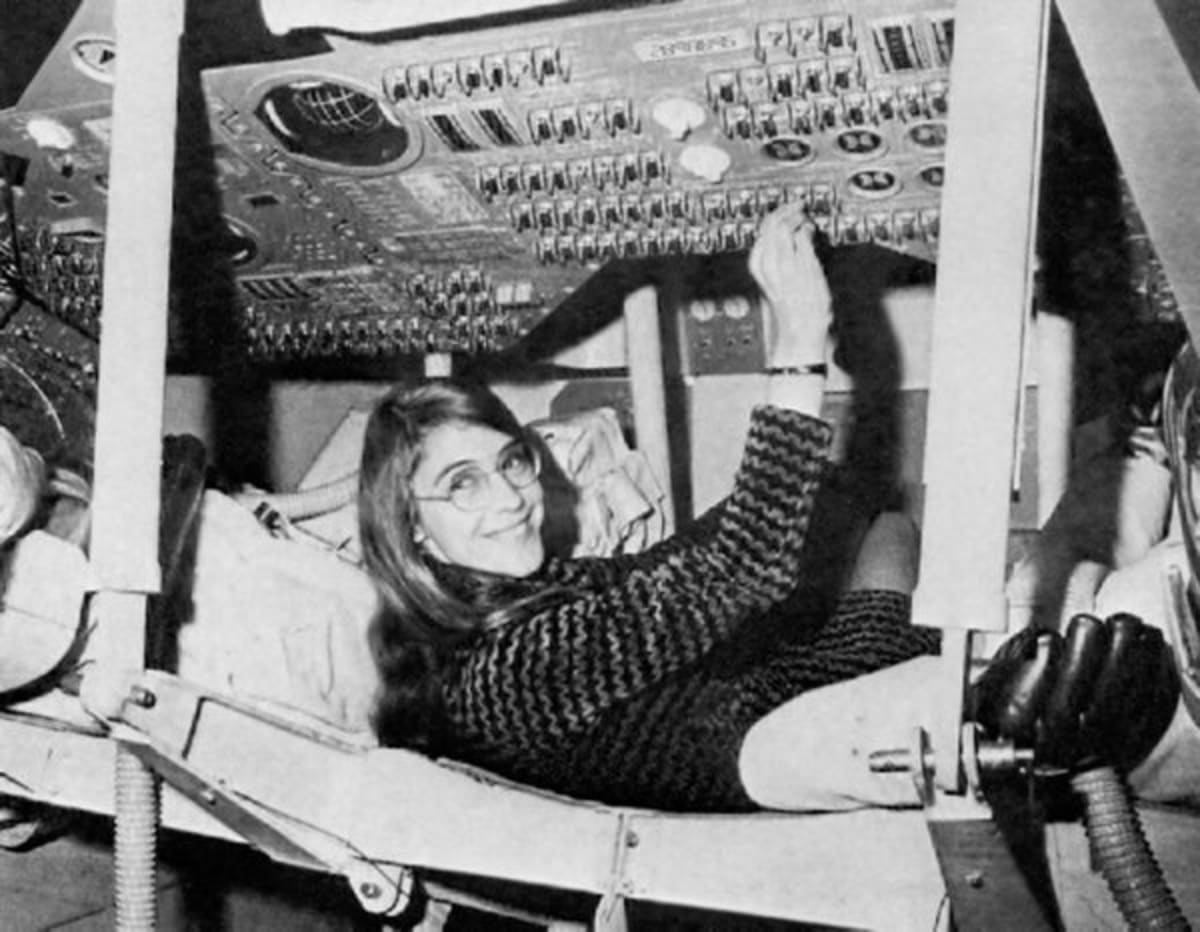

Based on reporting by Scientific American
This story was written by BrightWire based on verified news reports.
Spread the positivity!
Share this good news with someone who needs it