Marilyn Monroe's Hidden Legacy: Hollywood Pioneer at 100
A century after her birth, Marilyn Monroe is finally being recognized not just as a glamorous icon, but as a fearless businesswoman who challenged Hollywood's sexist system decades before #MeToo. Her 1954 decision to start her own production company changed what female stars could demand.
When Marilyn Monroe founded her own production company in 1954, Hollywood executives thought she was crazy. Today, feminist scholars recognize her as one of the first women to challenge an industry that treated actresses like property.
Born Norma Jeane Mortenson on June 1, 1926, Monroe grew up bouncing between foster homes and orphanages in Los Angeles. The instability taught her early that women in Hollywood were valued primarily for their looks, a lesson that would shape both her career and her rebellion against it.
Studios molded her into the stereotypical blonde bombshell, casting her in films like "Gentlemen Prefer Blondes" and "Some Like It Hot." Behind the scenes, however, Monroe was reading James Joyce, studying politics and art, and working intensely on her acting craft at a time when studios wanted her to simply look pretty and giggle.
In 1955, photographer Eve Arnold captured Monroe on a playground, absorbed in Joyce's notoriously difficult novel "Ulysses." When critics claimed she posed with the book just for show, Monroe fired back, saying people preferred turning her into a character rather than accepting who she really was.
Her most revolutionary act came with that production company. At a time when studios controlled nearly every aspect of their stars' lives, Monroe demanded better contracts, higher salaries, and more serious roles. She publicly contradicted producers and refused parts she considered demeaning.
Monroe understood exactly how her body and image were marketed, and she made the strategic decision to use that system's restrictions to her advantage. She wasn't just a victim of Hollywood sexism; she actively fought it with the tools available to her.
Why This Inspires
Monroe's story resonates because she faced the same double bind that strong women still navigate today. The media celebrated her beauty and charisma, then used those same qualities to dismiss her as unstable or difficult when she demanded respect.
The terms used against Monroe in the 1950s are the same ones directed at outspoken women today. Yet she pushed forward anyway, creating space for the actresses who followed.
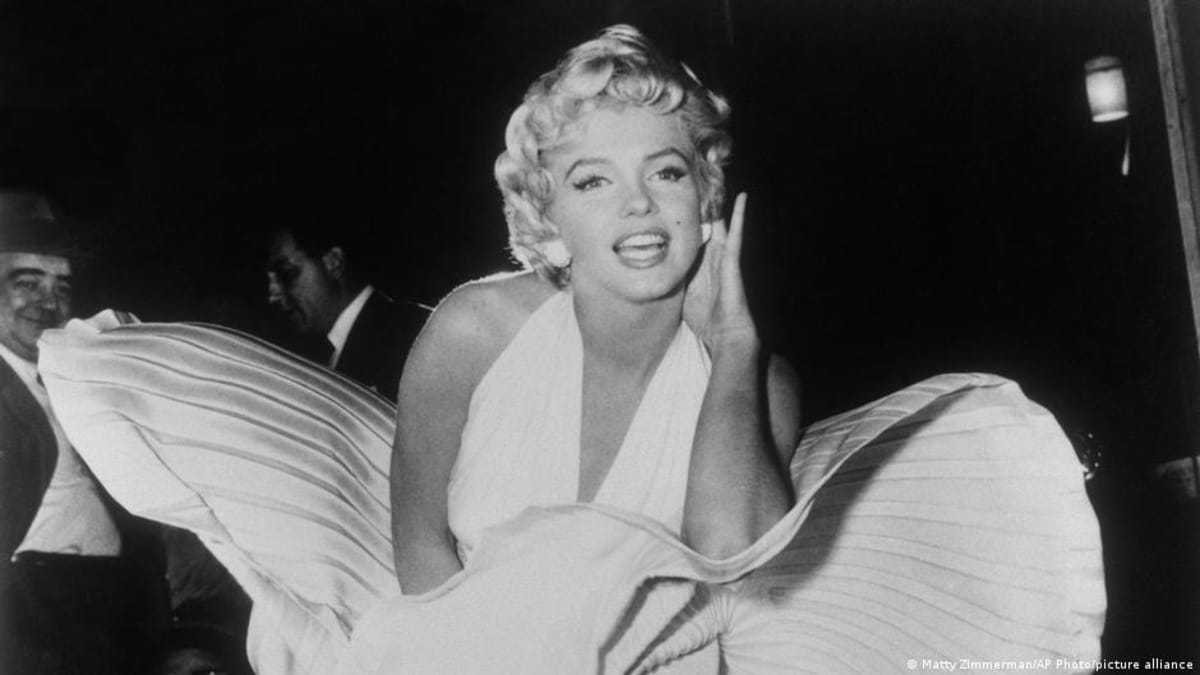
A century after her birth, we're finally seeing the full picture: not just the white dress billowing over a subway grate, but a complex woman who refused to be limited by Hollywood's narrow expectations. Her courage to demand more helped change what was possible for women in entertainment.
More Images

Based on reporting by DW News
This story was written by BrightWire based on verified news reports.
Spread the positivity!
Share this good news with someone who needs it