Mars Gullies Carved by Frozen CO₂, Not Water
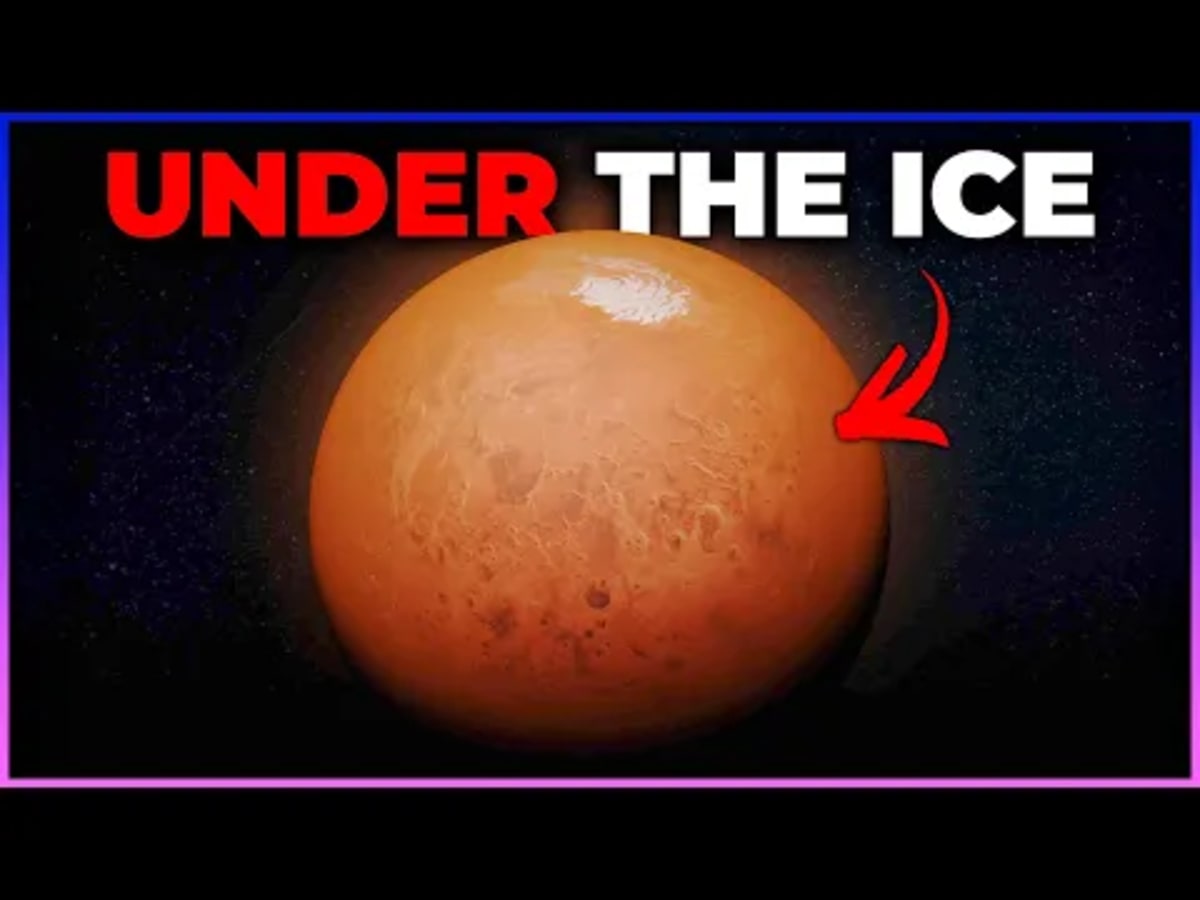
Scientists have solved a decades-old Martian mystery: the Red Planet's Earth-like gullies aren't carved by water but by seasonal carbon dioxide frost that flows like liquid. The discovery shows how Mars reshapes itself through processes we've never seen before.
Mars just revealed one of its coolest tricks, and it doesn't involve a single drop of water.
For decades, scientists puzzled over channels and gullies on Mars that looked exactly like water-carved features on Earth. Some even appeared to change over time, sparking hope that liquid water might still flow on the Red Planet's surface.
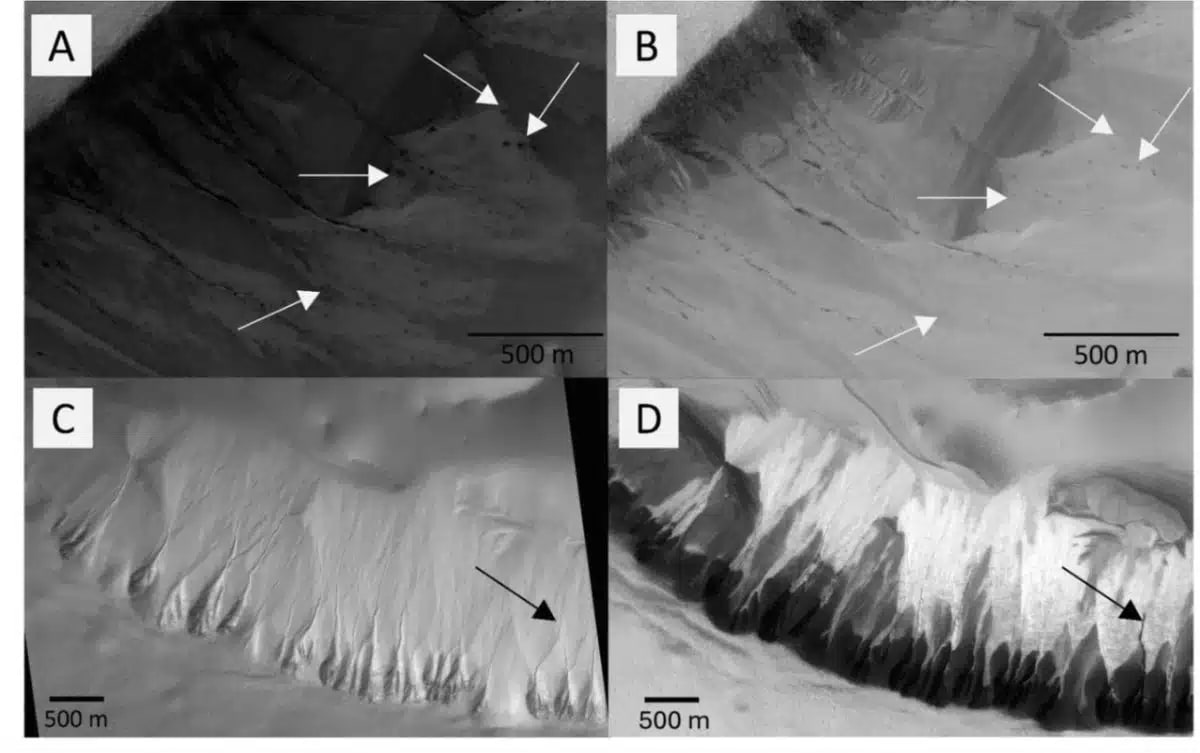
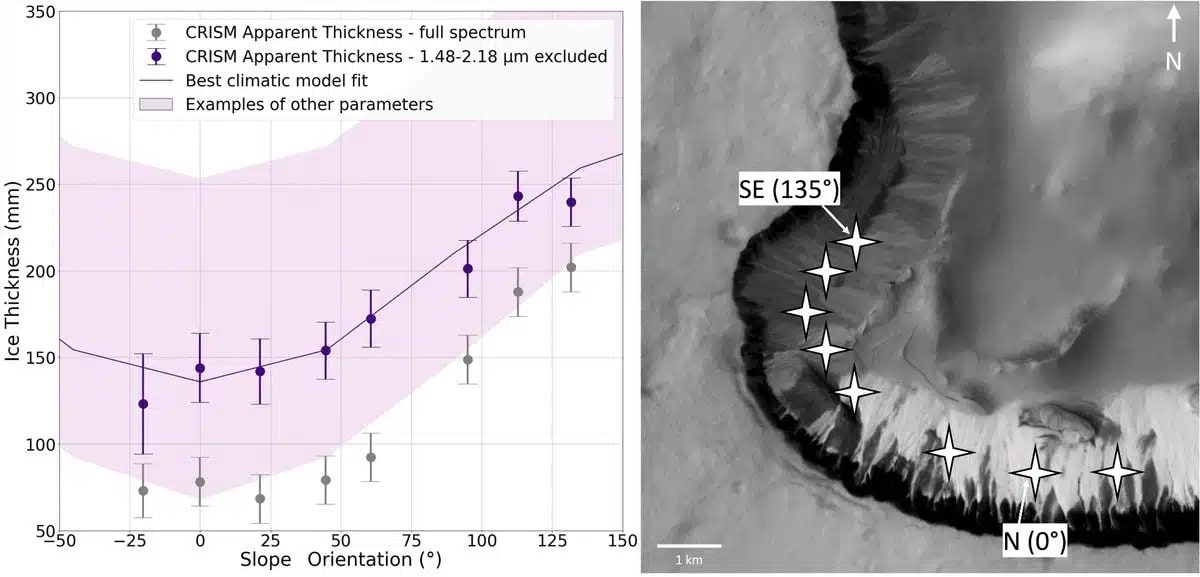
But new research led by Apolline Leclef from Université Paris-Saclay tells a completely different story. The team studied deep polar pits near Mars' south pole using data from NASA's Mars Reconnaissance Orbiter and the European Space Agency's Mars Express.
They found no evidence of water where active gullies form. Instead, they discovered something far more surprising: frozen carbon dioxide creating Earth-like erosion through a process that doesn't exist on our planet.
Here's how it works. During Martian winter, layers of dry ice cover parts of the surface. When spring sunlight warms the ground beneath this frozen CO₂, gas builds up and escapes, creating a slippery cushion that acts like an air hockey table.
This cushion lets ice and sediment glide downhill fast enough to carve channels and leave deposits that look identical to water erosion. Scientists call it carbon dioxide frost fluidization, and it's reshaping Mars right now.
The timing gave researchers their biggest clue. While CO₂ geysers peak around the spring equinox, the gullies don't show activity until mid to late spring, pointing to frost movement as the real sculptor.
The discovery also explains why scientists couldn't find water's spectral signature at locations where gullies actively form. Salts and clays exist in the wider region, but on higher plateaus and crater rims, not in the channels themselves.
Why This Inspires
This discovery reminds us that nature finds countless ways to create beauty and complexity. Mars doesn't need liquid water to carve landscapes that mirror Earth's; it uses the materials it has in ways we're only beginning to understand.
The finding also shows how persistence in science pays off. What started as a mystery decades ago finally has an answer, thanks to teams analyzing years of spacecraft data with fresh eyes.
Understanding these processes helps scientists predict what other worlds might look like and how planets evolve under conditions wildly different from Earth. Sometimes the most inspiring discoveries come from realizing how much we still have to learn.
Mars keeps teaching us that familiar doesn't mean identical, and that's exactly what makes exploring other worlds so thrilling.
More Images
Based on reporting by Google News - Scientists Discover
This story was written by BrightWire based on verified news reports.
Spread the positivity!
Share this good news with someone who needs it