Mars Rover Completes First AI-Planned Drive Solo
NASA's Perseverance rover just navigated Mars using fully AI-planned routes, completing a historic test that could transform how we explore other worlds. The breakthrough means future missions could explore farther and faster without waiting for human directions from Earth.
For the first time in history, a rover on Mars just drove itself using routes planned entirely by artificial intelligence, and it worked beautifully.
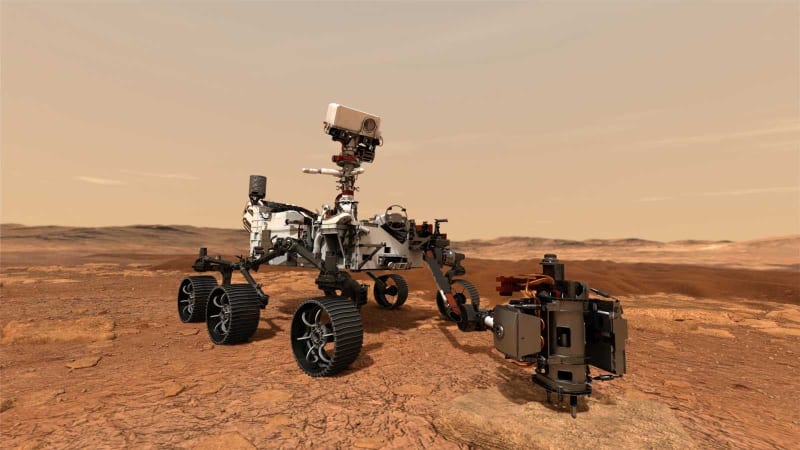
NASA's Perseverance rover completed two successful AI-planned drives on December 8 and 10, traveling nearly 1,500 feet across the rugged terrain of Jezero Crater. The car-sized rover followed routes mapped out by Anthropic's Claude AI models, analyzing the same orbital images and terrain data that human planners normally use.
This might sound like a small step, but it solves a huge problem. Mars sits an average of 140 million miles from Earth, creating communication delays that make real-time control impossible. For decades, human "drivers" on Earth have spent hours each day mapping out careful routes with waypoints spaced about 330 feet apart, then beaming those instructions to Mars via NASA's Deep Space Network.
The AI changed that equation completely. It studied images from the Mars Reconnaissance Orbiter and computer models of terrain slopes, identified hazards like rocks and steep areas, then plotted safe paths forward without any human input.
Before the actual drives, NASA's team tested the AI's instructions using a detailed "digital twin" of Perseverance to make absolutely sure the rover could safely execute the plan. Only after those virtual test runs did they send the commands to Mars.
Why This Inspires
This breakthrough opens doors we've only dreamed about. Future missions venturing farther from Earth could operate more independently, responding to hazardous terrain on their own and exploring more ground in less time.
"We are moving towards a day where generative AI and other smart tools will help our surface rovers handle kilometer-scale drives while minimizing operator workload," said Vandi Verma, a space roboticist at NASA's Jet Propulsion Laboratory. The AI could even flag interesting geological features by scanning through huge volumes of rover images, helping scientists discover things they might otherwise miss.
NASA Administrator Jared Isaacman called it "a strong example of teams applying new technology carefully and responsibly in real operations." That careful approach matters because this isn't just about speed. It's about expanding what's possible as we push deeper into the solar system.
The technology could help rovers avoid getting stuck in dangerous spots, increase the amount of science they can accomplish, and free up human teams to focus on bigger questions instead of plotting every single turn. As spacecraft venture farther from home, operating more efficiently isn't just convenient. It becomes essential.
A robot on another planet just learned to find its own way forward, and that's a giant leap for exploration everywhere.
More Images

Based on reporting by Space.com
This story was written by BrightWire based on verified news reports.
Spread the positivity!
Share this good news with someone who needs it