Mars Rover Finds Hidden Ancient River Delta Underground
NASA's Perseverance rover just discovered evidence of a second, older river delta buried 35 meters beneath Mars' surface. The find suggests Mars stayed wet and habitable far longer than scientists thought.
Scientists just uncovered a hidden chapter in Mars' watery past, and it rewrites what we know about the Red Planet's potential for ancient life.
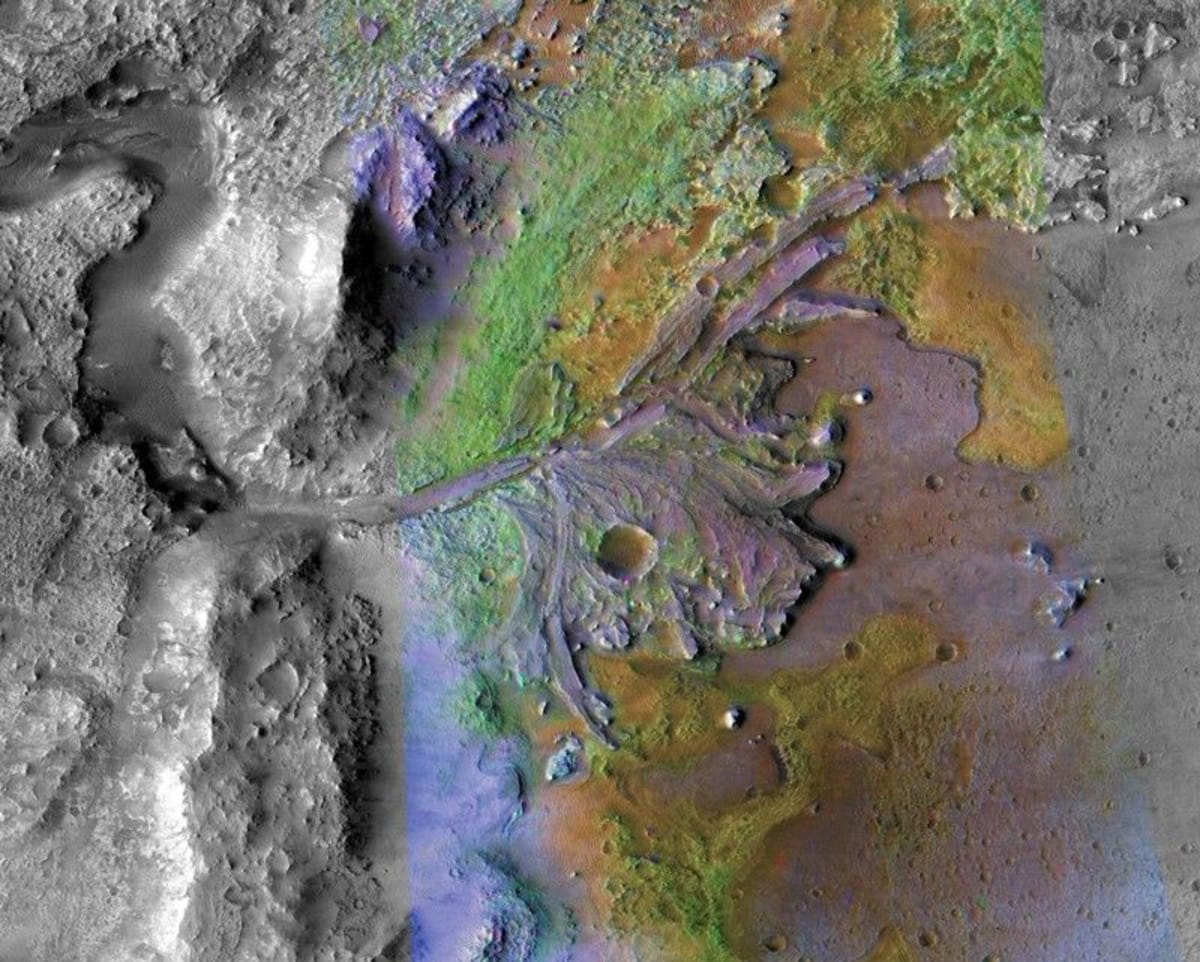
NASA's Perseverance rover used ground-penetrating radar to peer deep beneath the Martian surface and spotted something remarkable: an entire ancient river delta buried tens of meters underground. The discovery happened while the rover crossed a region called the Margin unit between September 2023 and February 2024.
The rover's radar instrument, called RIMFAX, works like a sonogram for Mars. It fires radio waves into the ground every 10 centimeters as the rover drives, and when those waves bounce off different rock layers, they create a picture of what lies beneath.
What emerged from the data stunned astrobiologist Emily Cardarelli and her team at UCLA. They saw sweeping, angled layers of sediment stretching hundreds of meters across, the exact pattern geologists see in river deltas on Earth.
The structures tell a story of flowing water, rushing rivers, and sediment building up over time. Heavy materials settled quickly in flat layers while finer sediments cascaded down underwater slopes, creating the distinctive ramps scientists call clinoforms.
Here's what makes this discovery so exciting: this buried delta is older than the massive Western Delta visible from space that originally made scientists choose Jezero Crater for exploration. Mars didn't just have water once. It had enough water for long enough that entirely separate river systems built massive deltas in the same location across different eras.
The ancient delta formed during the Noachian period, roughly 3.7 to 4.2 billion years ago, when Mars was significantly warmer and wetter. The radar penetrated more than 35 meters deep, revealing the Margin unit measures at least 85 to 90 meters thick.
The region is rich in magnesium carbonates, the same rock type that preserves fossils beautifully on Earth. Think of England's famous White Cliffs of Dover, packed with ancient life signatures locked in carbonate rock for millions of years.
Why This Inspires
This discovery doubles our understanding of habitable environments on ancient Mars. Where scientists saw one opportunity for life to develop, they now see two distinct eras, each lasting long enough for rivers to transport massive amounts of sediment and potentially support microbial communities.
Cardarelli sees this buried delta as a promising hunting ground for biosignatures. Microbes could have thrived in these underwater environments, and their chemical fingerprints might still be preserved deep in the carbonate-rich rocks.
The rover's six-kilometer journey across the Margin unit revealed that early Mars maintained stable, long-lived wet conditions across vast stretches of time. Each buried layer represents not just a moment of water, but potentially millions of years of flowing rivers and standing lakes.
Mars keeps revealing it was once more Earth-like than we imagined, and every discovery brings us closer to answering humanity's biggest question: are we alone?
More Images


Based on reporting by Ars Technica Science
This story was written by BrightWire based on verified news reports.
Spread the positivity!
Share this good news with someone who needs it