Bacteria Survives Mars Impact Forces in Lab Test
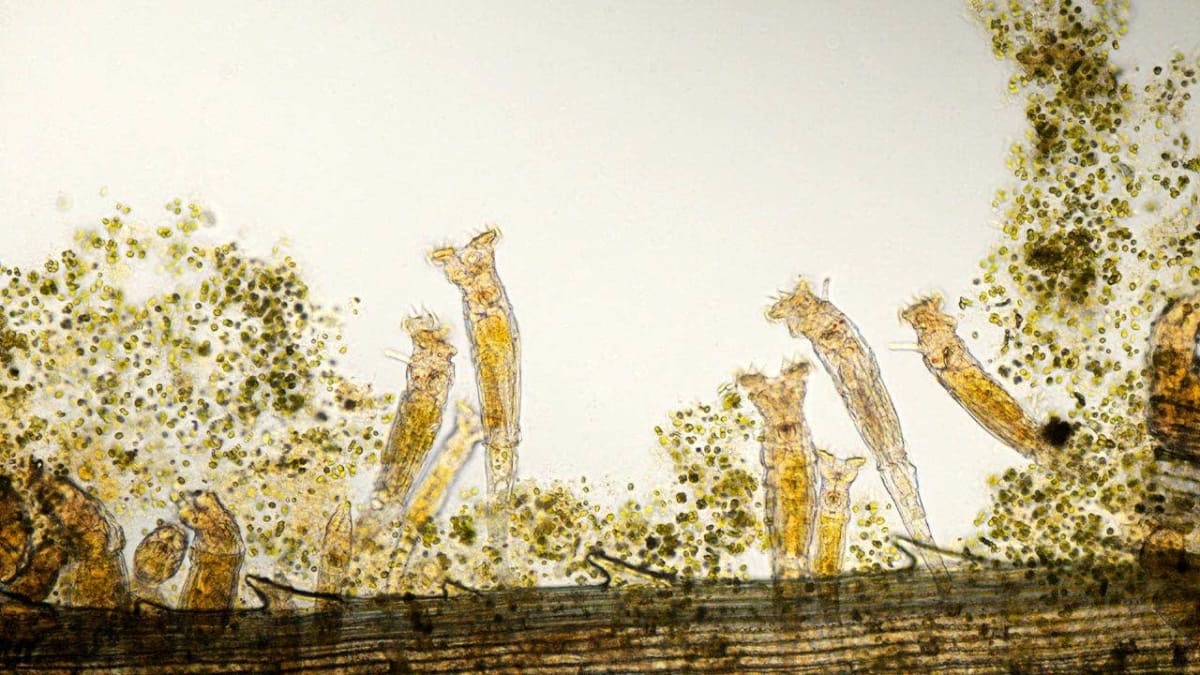
Scientists blasted a super-tough microbe with pressures 30,000 times stronger than Earth's atmosphere, and 60% survived. The discovery suggests life could hitchhike between planets on asteroid debris.
Find uplifting stories about heroes, innovations, and solutions
39 results for "astrobiology"

Scientists blasted a super-tough microbe with pressures 30,000 times stronger than Earth's atmosphere, and 60% survived. The discovery suggests life could hitchhike between planets on asteroid debris.

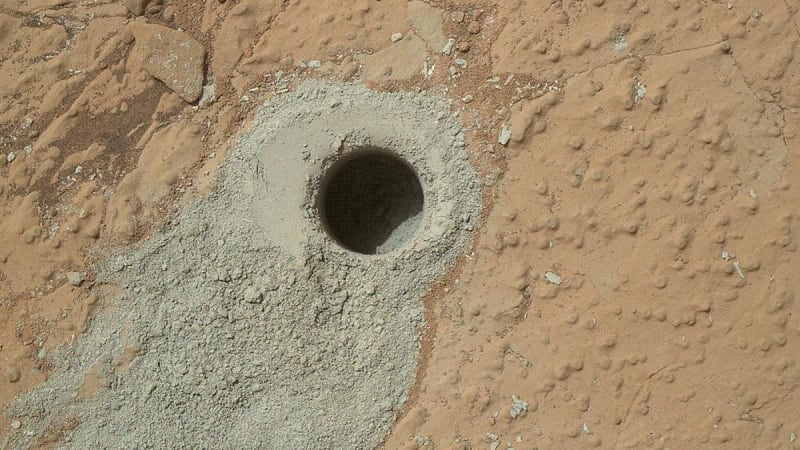
NASA's Curiosity rover discovered the longest organic molecules ever found on Mars, and scientists say they can't explain them without considering the possibility of ancient life. The fatty acid fragments found in ancient mudstone are the kind of molecules living things create.

Scientists discovered a hidden galaxy nucleus churning out complex organic molecules at rates far beyond what models predicted. The finding reveals cosmic rays are transforming carbon-rich materials into building blocks that could lead to life's essential chemistry.

NASA's Perseverance rover discovered potential evidence of past life in a Martian rock sample, bringing us closer to answering one of humanity's biggest questions. The rover also navigates Mars independently using groundbreaking technology that lets it locate itself without human help.

NASA's Curiosity rover has spent six months exploring mysterious ridge formations on Mars that look like giant spiderwebs from space. The discovery suggests water existed on the Red Planet far longer than scientists thought, meaning ancient microbial life could have survived there much longer too.

NASA's Curiosity rover discovered 12-atom carbon chains preserved in ancient Martian rocks, the largest organic molecules ever found beyond Earth. The finding suggests Mars sustained complex chemistry for billions of years.

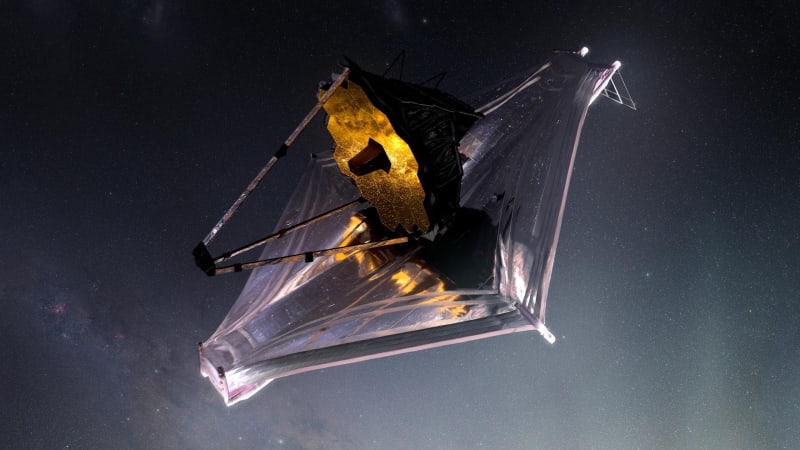
Scientists using the James Webb Space Telescope found hydrogen sulfide around four gas giant planets 133 light-years away, solving mysteries about how massive planets form. The breakthrough technique will help astronomers search for life on distant worlds.

A comet from another star system sprayed organic molecules past Earth in December, giving scientists a rare glimpse at the chemistry that could seed life across the universe. NASA's SPHEREx telescope captured the ancient visitor releasing methanol, cyanide, and methane as it warmed near our sun.

NASA's Curiosity rover discovered the largest organic molecules ever found on Mars in rocks that formed 3.7 billion years ago. The finding could point to ancient life or reveal Mars had more complex chemistry than scientists thought.

Scientists discovered organic molecules on Mars that are hard to explain without biology. While not proof of life, the finding opens exciting new questions about our planetary neighbor.

Scientists discovered life's building blocks formed in frozen, distant regions of space, not just in warm water near the sun. This means the ingredients for life could exist throughout the universe.

NASA's 1976 Viking missions may have actually discovered life on Mars, but scientists misread the data for half a century. New analysis suggests the experiments detected microbial life all along.

Scientists discovered Earth formed under incredibly precise chemical conditions that allowed it to retain the exact elements needed for life. Most planets miss this narrow sweet spot, making our world a fortunate cosmic exception.

Scientists discovered Earth formed under incredibly precise chemical conditions that let it keep phosphorus and nitrogen, two elements essential for life. Most planets miss this narrow sweet spot, making our world a fortunate exception in the universe.

New research suggests NASA's Viking missions detected signs of life on Mars nearly 50 years ago, but scientists misinterpreted the data. A breakthrough discovery about Martian chemistry could rewrite what we know about life beyond Earth.

The James Webb Space Telescope discovered an unexpected treasure trove of organic molecules in a distant galaxy that could be the precursors to life itself. Scientists found molecules never before seen outside our Milky Way, opening new possibilities for understanding how life begins.
The James Webb Space Telescope discovered an unexpected treasure trove of organic molecules in a distant galaxy's dust-shrouded core, including some that could lead to the formation of life's essential ingredients. Scientists found benzene, methane, and even a carbon molecule never before seen outside our Milky Way.

The James Webb Space Telescope discovered complex organic molecules in a nearby galaxy that could be the first steps toward life. Scientists found chemicals never before seen outside the Milky Way, revealing how life's ingredients form across the universe.

NASA scientists discovered ammonia on Jupiter's moon Europa, a key ingredient for life, buried in old data from a spacecraft mission that ended over 20 years ago. The finding makes Europa one of the most promising places to search for extraterrestrial life in our solar system.

NASA's Curiosity rover just reconnected with Earth after Mars hid behind the Sun, and it's preparing for a once-in-a-lifetime experiment to search for organic molecules. The rover will drill into Mars rock using its last precious drop of special chemicals that could reveal signs of ancient life.
Showing 20 of 39