Space Telescope Finds Life's Building Blocks in Far Galaxy
The James Webb Space Telescope discovered an unexpected treasure trove of organic molecules in a distant galaxy that could be the precursors to life itself. Scientists found molecules never before seen outside our Milky Way, opening new possibilities for understanding how life begins.
Scientists just discovered something remarkable hidden in the heart of a faraway galaxy: the chemical ingredients that might one day lead to life.
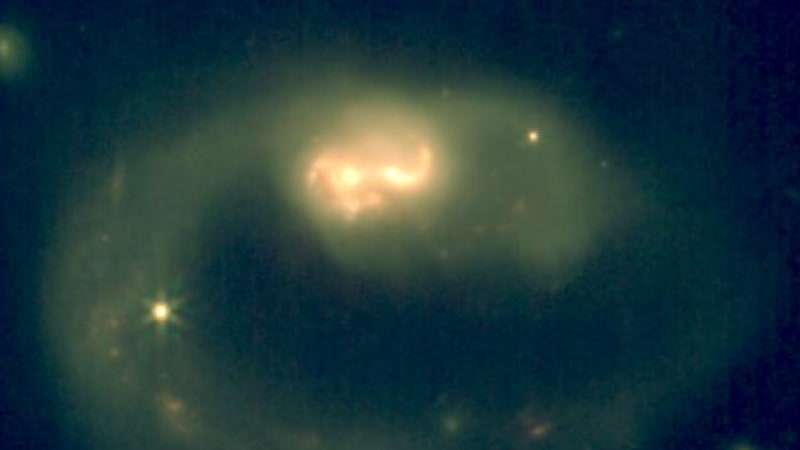
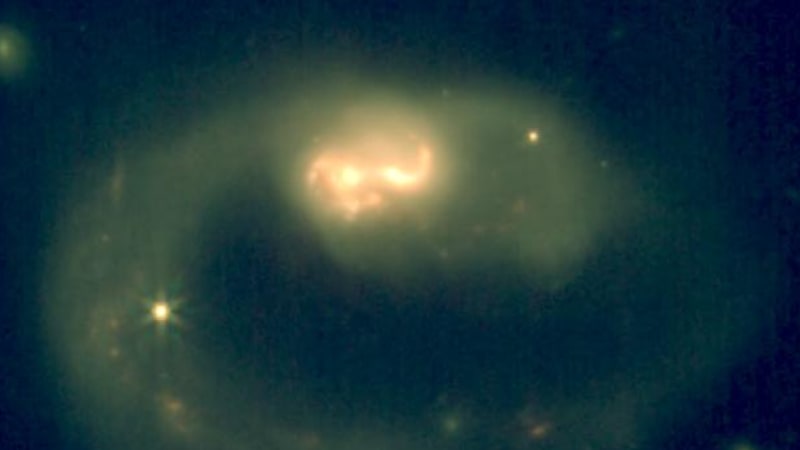
Using the James Webb Space Telescope, astronomers peered through massive clouds of dust and gas into IRAS 07251-0248, an ultra-bright galaxy located relatively close to Earth. What they found surprised everyone: a rich collection of small organic molecules, including benzene, methane, and several carbon-based compounds that serve as nature's starter kit for more complex chemistry.
The discovery matters because these aren't just random chemicals floating in space. These molecules represent the first steps on the path toward amino acids and nucleotides, the fundamental components that eventually make life possible.
"We found an unexpected chemical complexity, with abundances far higher than predicted by current theoretical models," said Ismael García Bernete, the lead researcher from the Center for Astrobiology. The team even detected the highly reactive methyl radical, a molecule never spotted beyond our own Milky Way until now.
The galaxy's dense core acts like a giant chemistry lab. Cosmic rays, high-energy particles zipping through space, smash into larger molecules and break them apart, releasing smaller organic building blocks in the process.
Why This Inspires
This discovery shows that the ingredients for life aren't rare or unique to Earth. Galaxies across the universe might be churning out these chemical precursors in their dusty cores, creating countless opportunities for life to eventually emerge.
The research, published in the journal Nature, demonstrates how the James Webb Space Telescope can reveal secrets hidden in places we could never see before. Its infrared vision cuts through dust and darkness to show us what's really happening in the cosmos.
Dimitra Rigopoulou from the University of Oxford explained that while these small organic molecules aren't found in living cells themselves, "they could play a vital role in prebiotic chemistry, representing an important step towards the formation of amino acids and nucleotides."
The findings suggest that heavily obscured galactic cores like this one could be cosmic factories, continuously producing organic molecules and enriching their galaxies with the raw materials needed for life. It's a production line that might be running in galaxies throughout the universe.
The universe is preparing the ingredients for life on a scale we're only beginning to understand.
More Images



Based on reporting by Google News - Science
This story was written by BrightWire based on verified news reports.
Spread the positivity!
Share this good news with someone who needs it