NASA Finds Possible Signs of Ancient Life on Mars
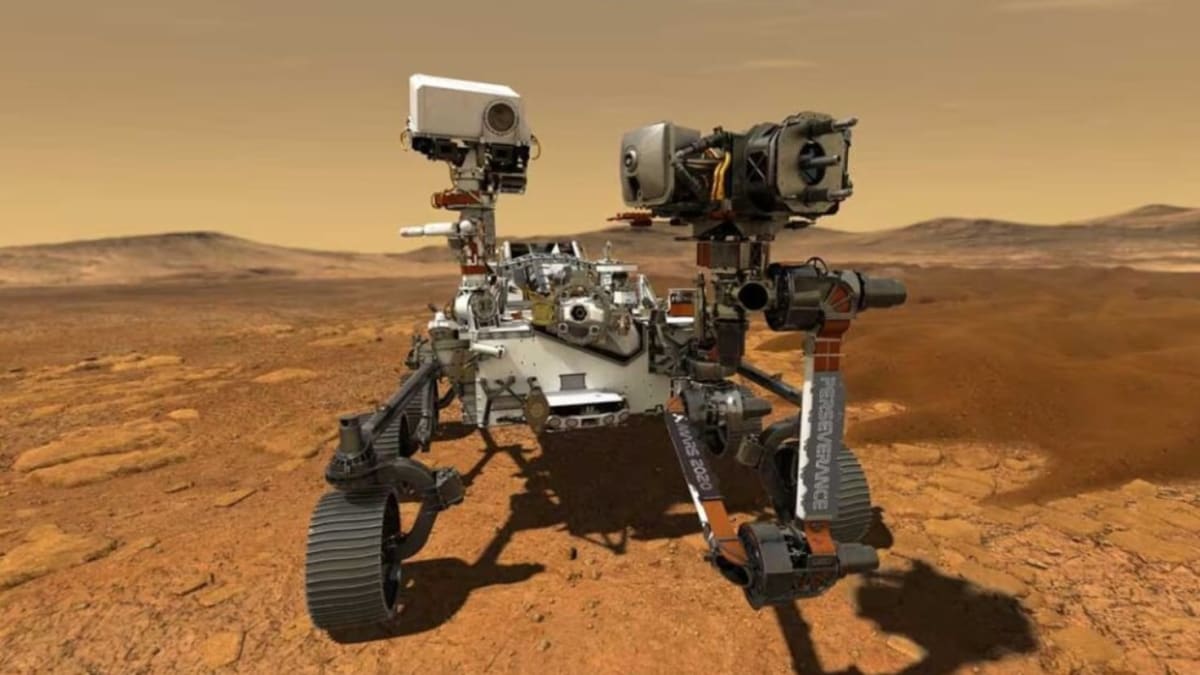
NASA's Perseverance rover has discovered complex carbon molecules in Martian rocks that could be traces of ancient microbial life. The finding suggests habitable environments may have once been widespread across the Red Planet.
NASA's Perseverance rover just found something remarkable on Mars: complex carbon molecules that might be evidence of ancient life.
The rover detected macromolecular carbon in rocks at a site called Bright Angel, located along an ancient river channel that once flowed into Jezero Crater millions of years ago. This type of carbon can come from living organisms, though it can also form through non-biological processes.
"Macromolecular carbon can come from biological sources such as fossil organic matter found in microbial mats and coal," explained Ashley Murphy, a researcher at the Planetary Science Institute in Arizona. While scientists aren't calling this definitive proof of past life, the discovery opens exciting possibilities.
What makes this finding particularly thrilling is its scale. Perseverance's detection marks the second time organic compounds have been found on Mars, with NASA's Curiosity rover making a similar discovery more than 1,860 miles away. Two separate sites separated by such a vast distance suggest something profound: habitable environments might have once covered much of the Martian surface.
Mars has long been humanity's best bet for finding life beyond Earth. The Red Planet once had liquid water flowing across its surface, creating conditions that could have supported microorganisms. Every new discovery brings scientists closer to answering one of our most fundamental questions: Are we alone in the universe?
The Ripple Effect
This discovery doesn't just advance our understanding of one planet. It transforms how we think about life's potential throughout the cosmos. If Mars hosted habitable conditions across vast areas, other worlds with similar histories might have done the same.
The implications reach beyond pure science. Understanding whether life arose independently on Mars would reveal whether biology is common or rare in the universe. Each rock sample Perseverance analyzes could rewrite our place in the cosmic story.
The search continues, but today's news reminds us that answers to humanity's biggest questions might be hiding in plain sight, waiting in ancient rocks on our neighboring world.
More Images


Based on reporting by Google: NASA discovery
This story was written by BrightWire based on verified news reports.
Spread the positivity!
Share this good news with someone who needs it