Webb Telescope Finds Lava Planet With Molten Ocean Atmosphere
Scientists using NASA's James Webb Space Telescope discovered that a nearby "lava planet" has a hydrogen-rich atmosphere fed by its molten surface. The findings reveal a completely new type of world where volcanic gases continuously reshape the sky above oceans of liquid rock.
Scientists just confirmed that a hellish world 41 light-years away has an atmosphere created by its own lava, opening a window into how some of the universe's most extreme planets form and evolve.
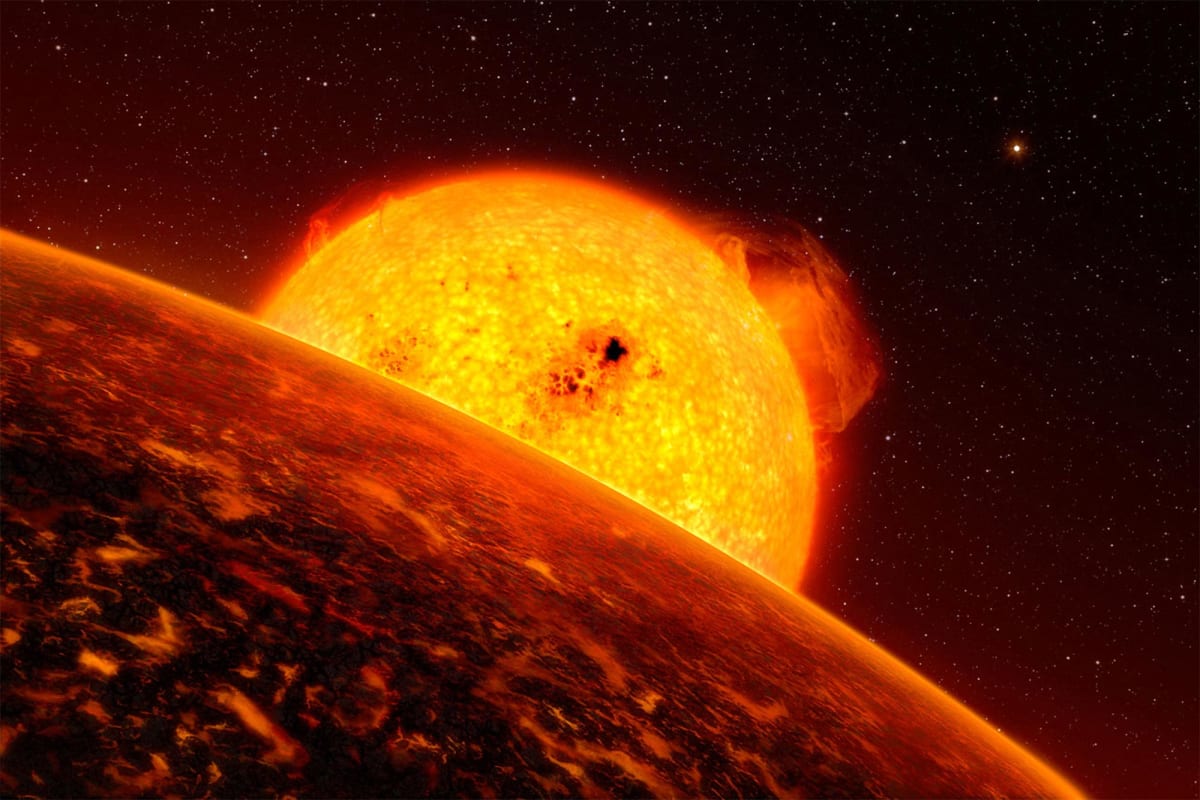
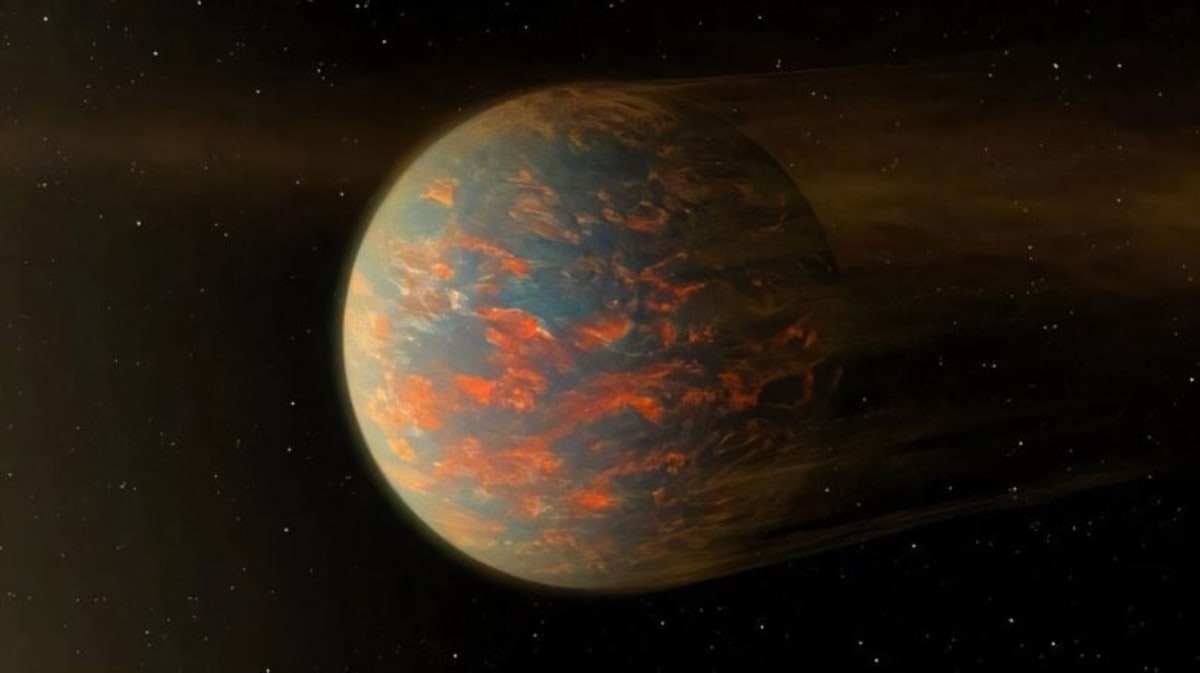
The planet, called 55 Cancri e, is a super-Earth about twice the size of our home world but eight times heavier. It orbits so close to its sun that one year there lasts just 17 hours, keeping its star-facing side hot enough to melt rock into churning oceans of lava.
Using NASA's James Webb Space Telescope, researchers observed the planet five times as it passed behind its star. The data revealed something unexpected: an atmosphere rich in hydrogen and carbon monoxide, likely burped out continuously from the molten surface below.
The atmosphere itself appears to be unstable, changing between observations. Scientists think fresh volcanic gases create clouds that briefly cool the surface before being cleared away by new outgassing, creating a constant cycle of atmospheric renewal.
This discovery marks the first time scientists have detected this type of atmosphere on a rocky planet. The chemical makeup tells a story about what's happening deep inside the planet, where extreme heat keeps rock in a liquid state and drives gases upward into space.
Why This Inspires
Lava planets like 55 Cancri e were once thought to be bare rocks stripped of any atmosphere by their proximity to their stars. Finding active outgassing changes that understanding completely.
The discovery also helps scientists better understand how rocky planets evolve under extreme conditions. While Earth's volcanoes shaped our early atmosphere billions of years ago, 55 Cancri e offers a living laboratory where that process continues today.
Several other lava worlds have been discovered in recent years, including planets with surfaces entirely covered in magma oceans. Each new discovery adds pieces to the puzzle of how planets form and what makes some worlds habitable while others remain molten hellscapes.
The findings demonstrate how far space exploration has come. Just two decades ago, scientists were still debating whether planets existed around other stars at all.
The research shows that even the most extreme worlds in our cosmic neighborhood still have secrets to reveal.
More Images
Based on reporting by Google: James Webb telescope
This story was written by BrightWire based on verified news reports.
Spread the positivity!
Share this good news with someone who needs it