Milky Way Galaxy May Be Larger Than Scientists Thought
Scientists using powerful space telescopes discovered our galaxy's spiral arms stretch farther into space than we knew. The breakthrough came from measuring light bouncing off dust clouds during rare cosmic explosions.
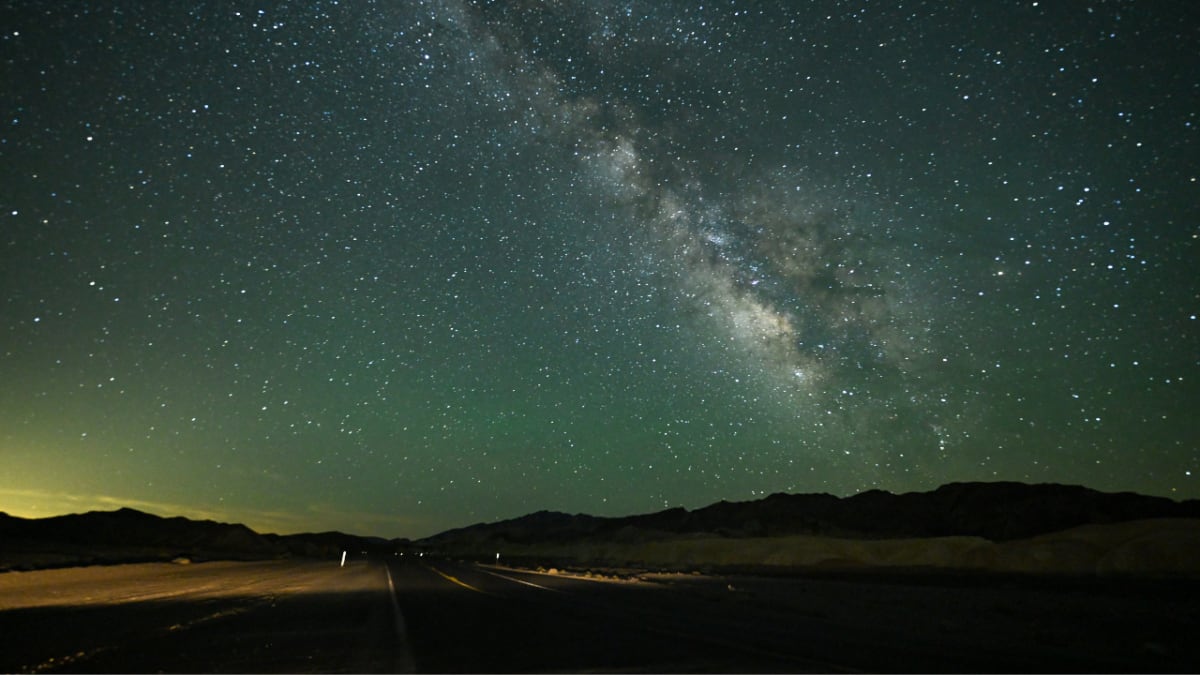
Our home galaxy just got a whole lot bigger, and the discovery came from watching some of the universe's most powerful explosions.
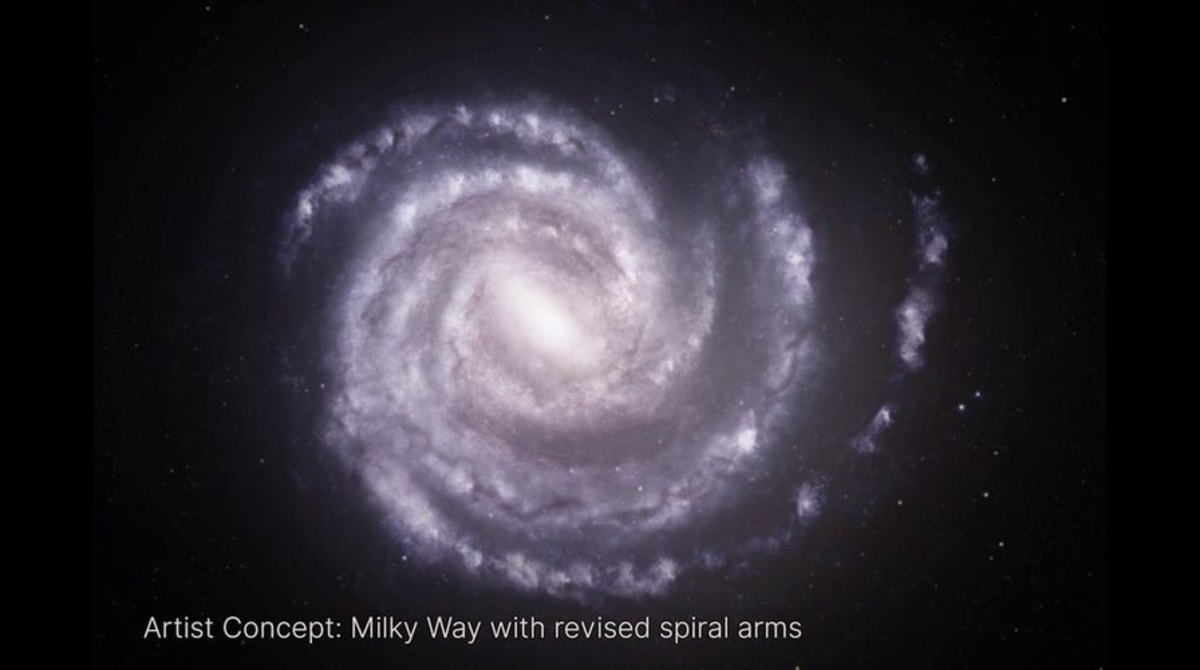
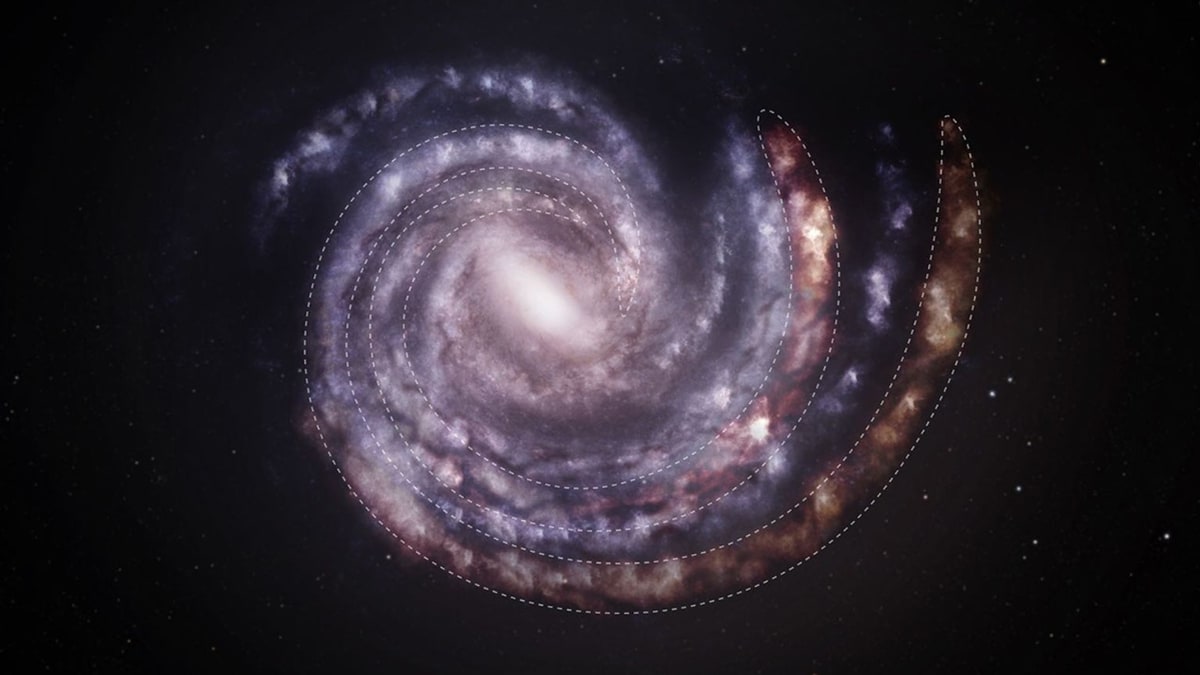
Astronomers using NASA's Chandra X-ray Observatory and Europe's XMM-Newton telescope found that the Milky Way's spiral arms may extend much farther into space than previously mapped. The team made this discovery by tracking X-rays from distant gamma-ray bursts as they traveled through our galaxy.
Here's how it worked: When these rare cosmic explosions happened in far-off galaxies, their X-rays journeyed through the Milky Way on their way to Earth. Some of that light bounced off dust clouds in our galaxy's arms, creating measurable rings that revealed precise distances.
"This is a very direct way, relying only on geometry, to precisely measure distances to the Milky Way's spiral arms," said Beatrice Vaia, the Italian PhD student who led the study. The team found one dust cloud in the galaxy's outer arm stretches about 3,500 light-years wide.
The discovery matters because mapping the Milky Way has always been challenging. We live inside one of its spiral arms, making it hard to see the full picture, like trying to understand the layout of your house while standing in the living room.
This new method sidesteps that problem entirely. Unlike other techniques that rely on assumptions about how the galaxy rotates, this approach uses pure geometry and doesn't get thrown off by our position inside the galaxy.
Why This Inspires
Understanding our cosmic address has profound implications for how we see ourselves in the universe. When we revise the size of the Milky Way's arms, scientists may need to recalculate the entire mass of our galaxy, fundamentally changing our understanding of our cosmic home.
The research shows how creativity solves seemingly impossible problems. For a century, astronomers struggled to map the galaxy from the inside out, but this team found an elegant solution by watching distant explosions light up the cosmic dust.
The only catch is that suitable gamma-ray bursts are extremely rare. Over the past 25 years, researchers found only a handful bright enough and positioned correctly to measure the Milky Way's structure. But the team isn't giving up.
Our galaxy keeps revealing new secrets, reminding us there's always more to discover about the place we call home.
More Images
Based on reporting by Google News - Science
This story was written by BrightWire based on verified news reports.
Spread the positivity!
Share this good news with someone who needs it