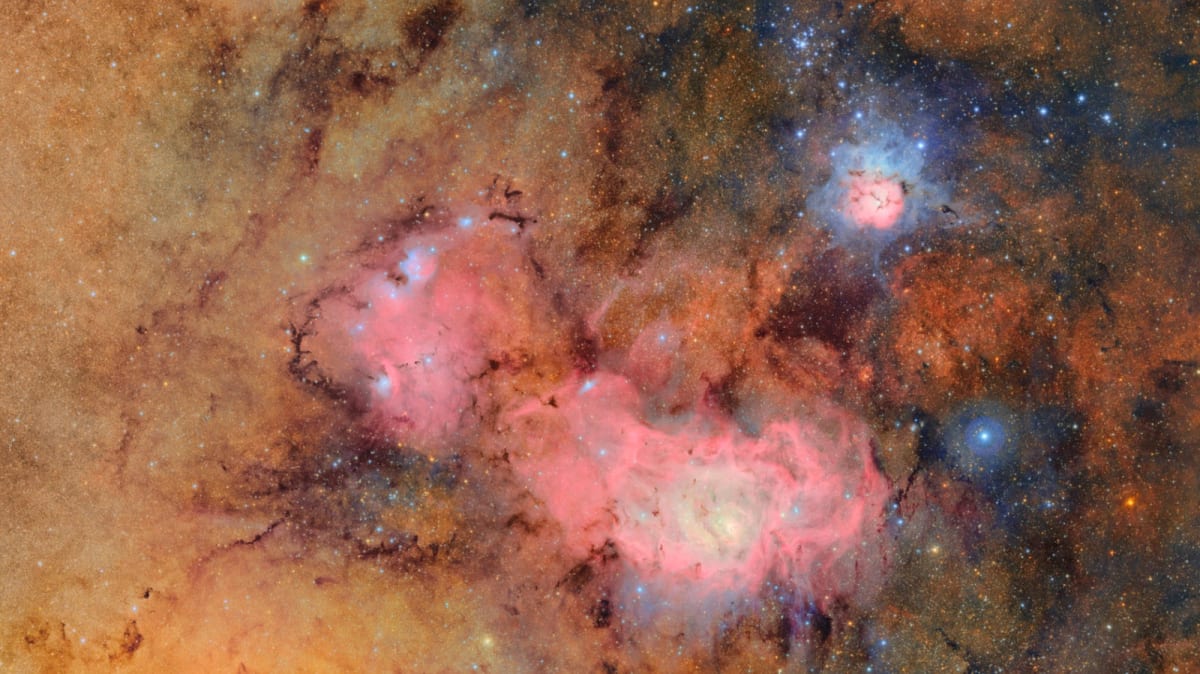
World's Largest Camera Begins 10-Year Universe Time-Lapse
The Vera C. Rubin Observatory in Chile just started the most ambitious sky survey in history, filming the universe every 40 seconds for the next decade. This cosmic movie could unlock mysteries about dark matter, dark energy, and how our universe actually works.
Imagine creating a time-lapse video of the entire universe, capturing every flicker, every change, every cosmic event for ten straight years. That's exactly what just started happening in Chile.
The Vera C. Rubin Observatory kicked off its Legacy Survey of Space and Time on June 30, marking the beginning of a project more than 20 years in the making. For the next decade, its 3,200-megapixel camera (the world's largest digital camera) will photograph the entire southern sky every few nights, snapping a new image roughly every 40 seconds.
That adds up to about 1,000 images per night and 10 terabytes of data daily. Over ten years, the observatory will revisit each point in the sky around 800 times, creating what scientists call an "ultrawide, ultrahigh-definition time-lapse record of the universe."
"Today, we begin filming the greatest cosmic movie ever made," said Brian Stone of the National Science Foundation at the launch. The comparison fits perfectly because, like a movie, this survey will capture motion and change across the cosmos in ways we've never seen before.
The observatory already proved its power last summer during test runs, capturing millions of galaxies and stars along with thousands of previously unknown asteroids in just its first images. Now, operating at full capacity, it's poised to revolutionize our understanding of space.
Scientists are particularly excited about what this survey could reveal about dark energy and dark matter, two mysterious forces that make up most of our universe but remain poorly understood. The constant observation will also help track asteroids, study how galaxies form and change, and monitor cosmic events as they unfold in real time.
"By seeking to understand the enigmatic phenomena of dark energy and dark matter, we are not just observing the stars; we are striving to grasp the fundamental laws that govern our existence," said Darío Gil, Under Secretary for Science at the US Department of Energy.
The Bright Side: While space can feel impossibly distant from our daily lives, this survey represents something beautifully human: our endless curiosity and commitment to understanding our place in the cosmos. The fact that this project took over 20 years to launch shows the dedication of countless scientists, engineers, and dreamers who believed it was worth doing.
Every image captured over the next decade brings us closer to answering questions humans have pondered for millennia.
More Images



Based on reporting by Engadget
This story was written by BrightWire based on verified news reports.
Spread the positivity!
Share this good news with someone who needs it

%2Fhttps%3A%2F%2Ftf-cmsv2-smithsonianmag-media.s3.amazonaws.com%2Ffiler_public%2F4e%2F9f%2F4e9f0fe8-aa48-438a-b88f-3a29cd71107e%2Fhttps___wwwfrontiersinorg_files_articles_1758862_xml-images_fmats-13-1758862-g001.jpeg)
%2Fhttps%3A%2F%2Ftf-cmsv2-smithsonianmag-media.s3.amazonaws.com%2Ffiler_public%2F8e%2F83%2F8e837bc6-e2b3-4bb6-bb1c-4f1287b45a6f%2Fcastillo-39-rincon_de_los_signos.jpg)