Space Sugar Found Near Milky Way's Heart Could Seed Life
Scientists discovered erythrulose, a simple sugar found in raspberries, floating in a massive dust cloud near the center of our galaxy. The finding suggests building blocks of life form naturally in space and rain down onto planets.
A sweet discovery near the heart of our galaxy is rewriting how scientists think life begins.
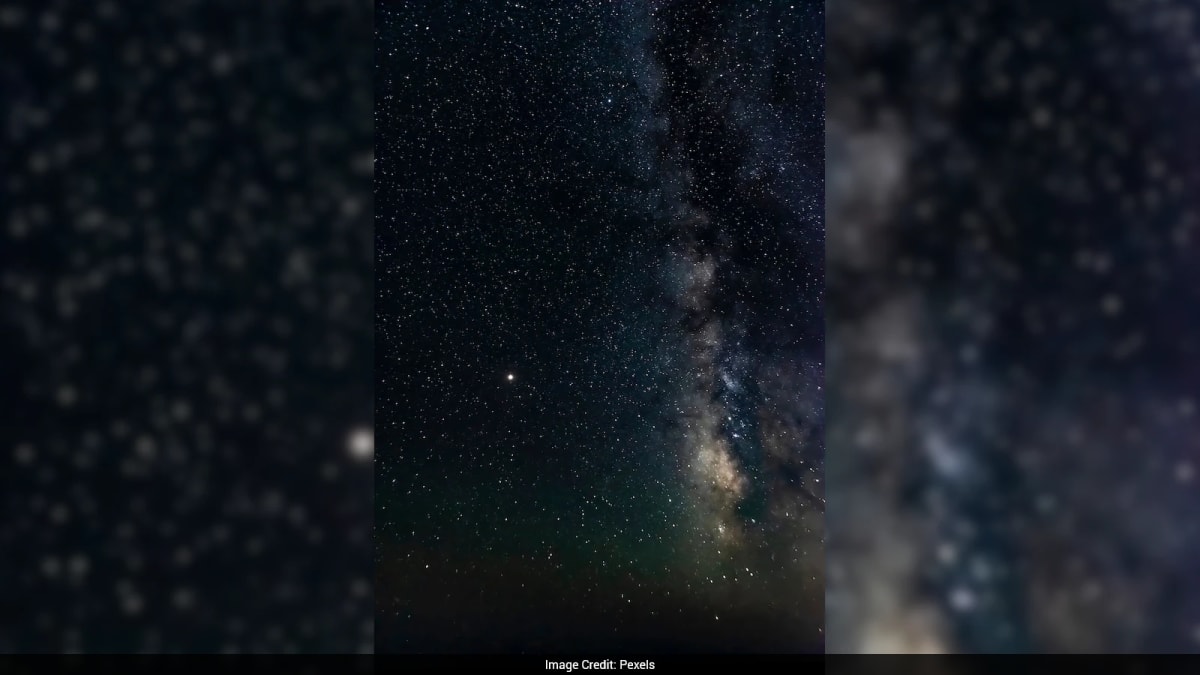
Researchers from Spain's Centre for Astrobiology detected erythrulose, a simple sugar also found in red raspberries, in a giant dust cloud near the Milky Way's center. This marks the first time any sugar has been directly observed floating in interstellar space, not just in meteorites that have already reached Earth.
Dr. Izaskun Jimenez-Serra led the team that made the discovery using Spanish radio telescopes pointed at a dust cloud called G+0.693-0.027. The sugar forms through chemical reactions on tiny dust grains, even in temperatures hovering around negative 250 degrees Celsius.
The finding solves a puzzle that has stumped scientists for decades. Laboratory studies showed simple sugars wouldn't form easily on young Earth, yet they became abundant enough to kickstart life. Earlier discoveries of sugars in ancient meteorites hinted they came from space, but this is the first direct proof that these compounds form between the stars.
Here's how it works: two organic compounds, glycolaldehyde and ethylene glycol, combine on microscopic dust grains floating in space. These grains can later fall onto nearby planets or become part of comets that eventually collide with worlds like Earth.
The researchers weren't even expecting to find erythrulose. They had searched unsuccessfully for simpler sugars with three carbon atoms, but detected signals from this four-carbon sugar instead. "To my surprise, I saw the signals," Jimenez-Serra said.
Why This Inspires
This discovery opens a window into how life might emerge across the universe. Simple sugars like erythrulose provide energy for living things, but they also react to form ribonucleotides, the building blocks of RNA, probably the first genetic material on Earth.
The implications stretch far beyond our planet. Scientists estimate millions of tonnes of erythrulose fell to Earth during the Late Heavy Bombardment, when asteroids and comets pounded the young planet. This rain of organic material contributed to the prebiotic soups where the first biomolecules formed.
The same process could be happening on countless other worlds right now. If these life-building sugars form naturally in the cold regions between stars throughout the galaxy, planets everywhere receive the same chemical care packages that helped spark life on Earth.
The discovery suggests we live in a universe chemically prepared for life to emerge. Every dust cloud between the stars might be cooking up the ingredients for biology, ready to seed any planet lucky enough to catch them.
More Images



Based on reporting by Google News - Scientists Discover
This story was written by BrightWire based on verified news reports.
Spread the positivity!
Share this good news with someone who needs it